Energy efficiency drives Scottish subcontractor’s sliding-head lathe purchases
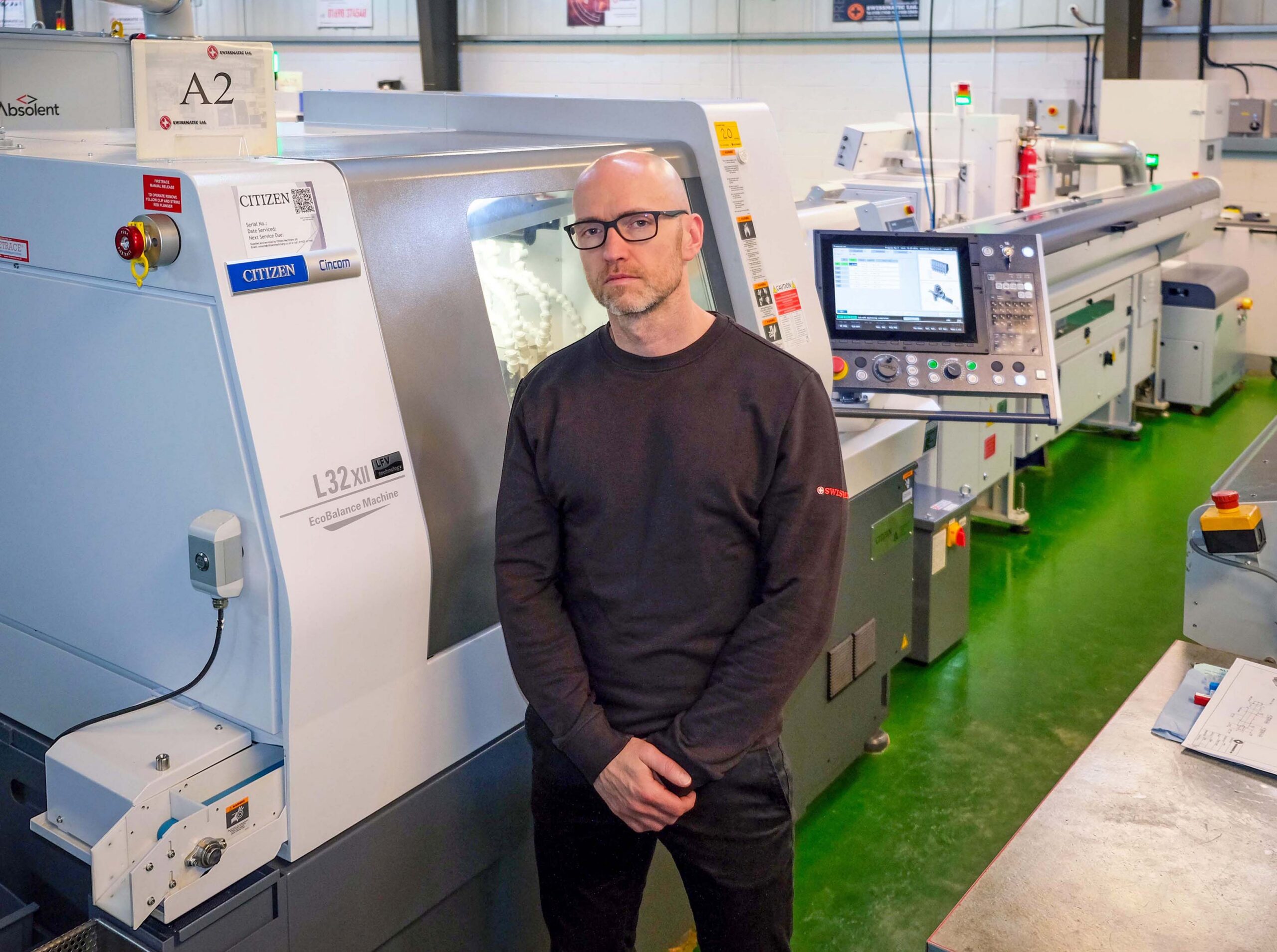
Ian Corbally in front of the latest Citizen sliding-head lathe to be installed in Swissmatic’s Wishaw factory. It is a Series 2 L32-XII B5 LFV and is the 22nd Cincom to arrive since the subcontractor started buying this make of sliding-head lathe in the early 1980s.

Citizen Machinery UK has supplied six of the sliding-head CNC lathes most recently installed at the Wishaw, near Glasgow, factory of turned parts subcontractor Swissmatic. Ian Corbally, son of the company’s founder Jim, says it is principally because the Japanese-built, bar-fed, turn-milling centres have many outstanding attributes, in particular their reliable productivity even when left to run unattended and their low power consumption.
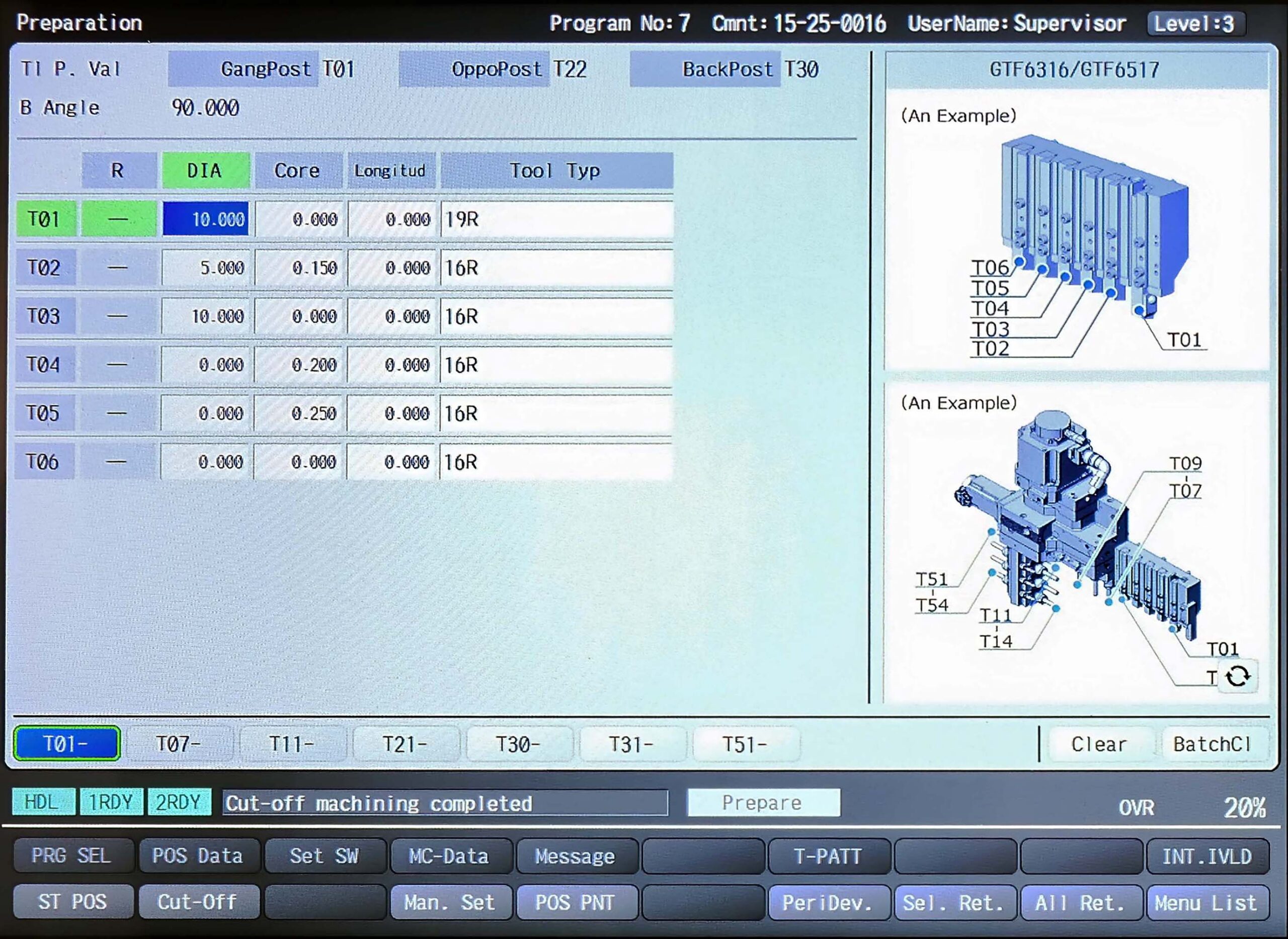
A screen shot of the L32-XII B5 LFV’s Mitsubishi control.

Trouble-free lights-out machining is largely down to Citizen Machinery’s low frequency vibration (LFV) chip-breaking functionality, which is especially effective when machining malleable materials. Built into the Mitsubishi control’s operating system, LFV breaks what would otherwise be stringy swarf into short, manageable chips, without lengthening run times by inserting macros into cutting cycles. It prevents damage to the workpiece and/or tooling and avoids the need for an operator to be in attendance to clear accumulated swarf periodically from the working area. It is a decade since LFV was rolled out globally and the sliding-head turning community is now well versed in its merits. 
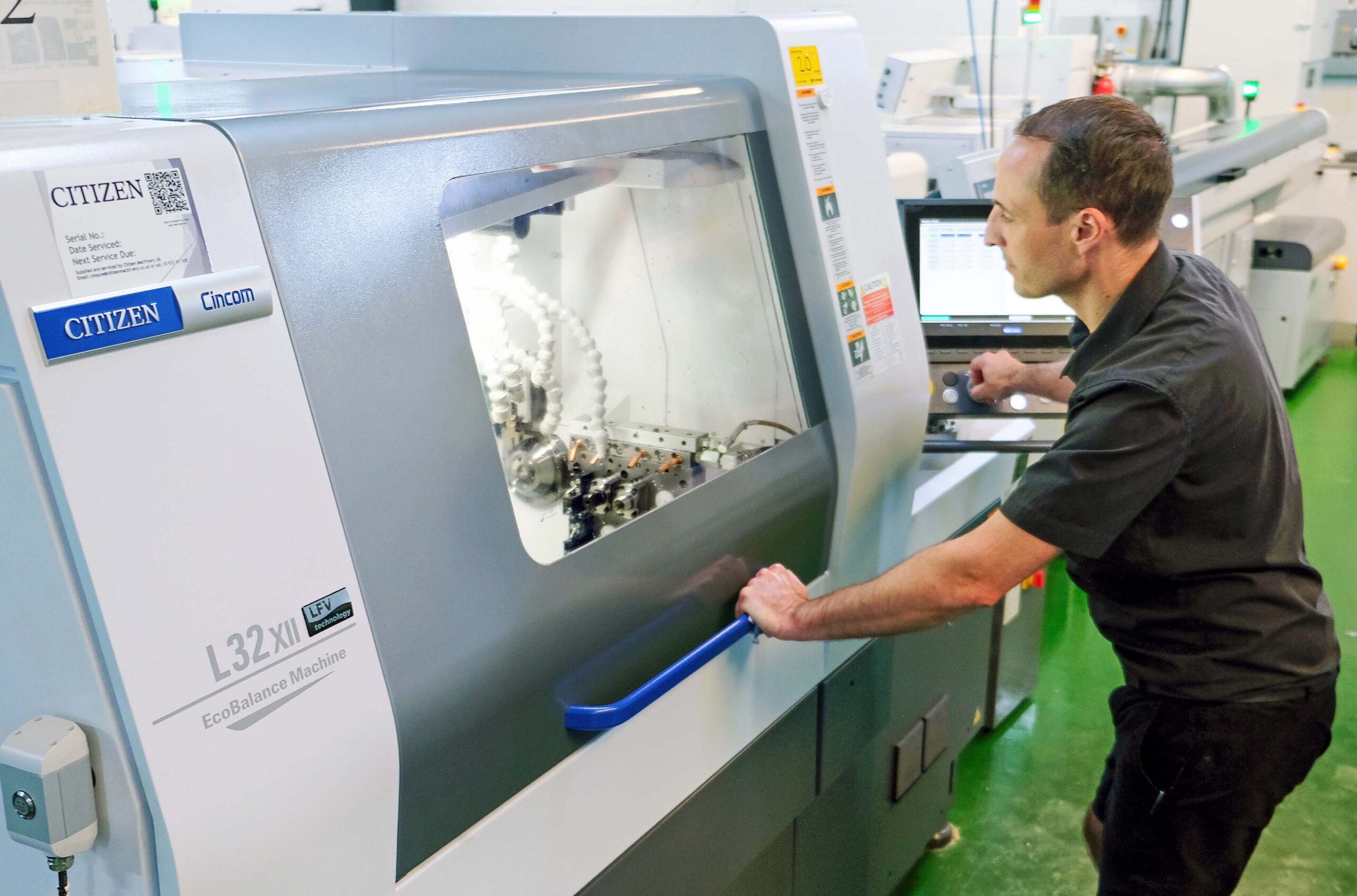
A Swissmatic engineer tending the L32-XII B5 LFV.

Less familiar are Citizen Machinery’s environmentally-friendly technologies, Eco II and EcoBalance (see descriptions below). In a similar time period since the mid-2010s, one of the most significant changes in manufacturing has been the inexorable move towards reducing the power consumption of machine tools. The issue is now viewed just as seriously as a machine’s productivity, since geopolitical tensions and shifting energy markets have caused the price of electricity to skyrocket, especially in the UK. Due to the negative impact this has on profit margins, what used to be a minor afterthought has morphed into a major consideration.

Mr Corbally is adamant that energy efficiency is “100 percent” at the forefront of Swissmatic’s purchasing decisions and has been for many years. It is factored into the total cost of owning each item of capital plant and heavily influences purchasing decisions. It is noteworthy in this connection that in October 2023 the subcontractor installed 319 solar panels on the factory roof, which have reduced by about a quarter the power drawn from the grid, averaged over a 12-month period.
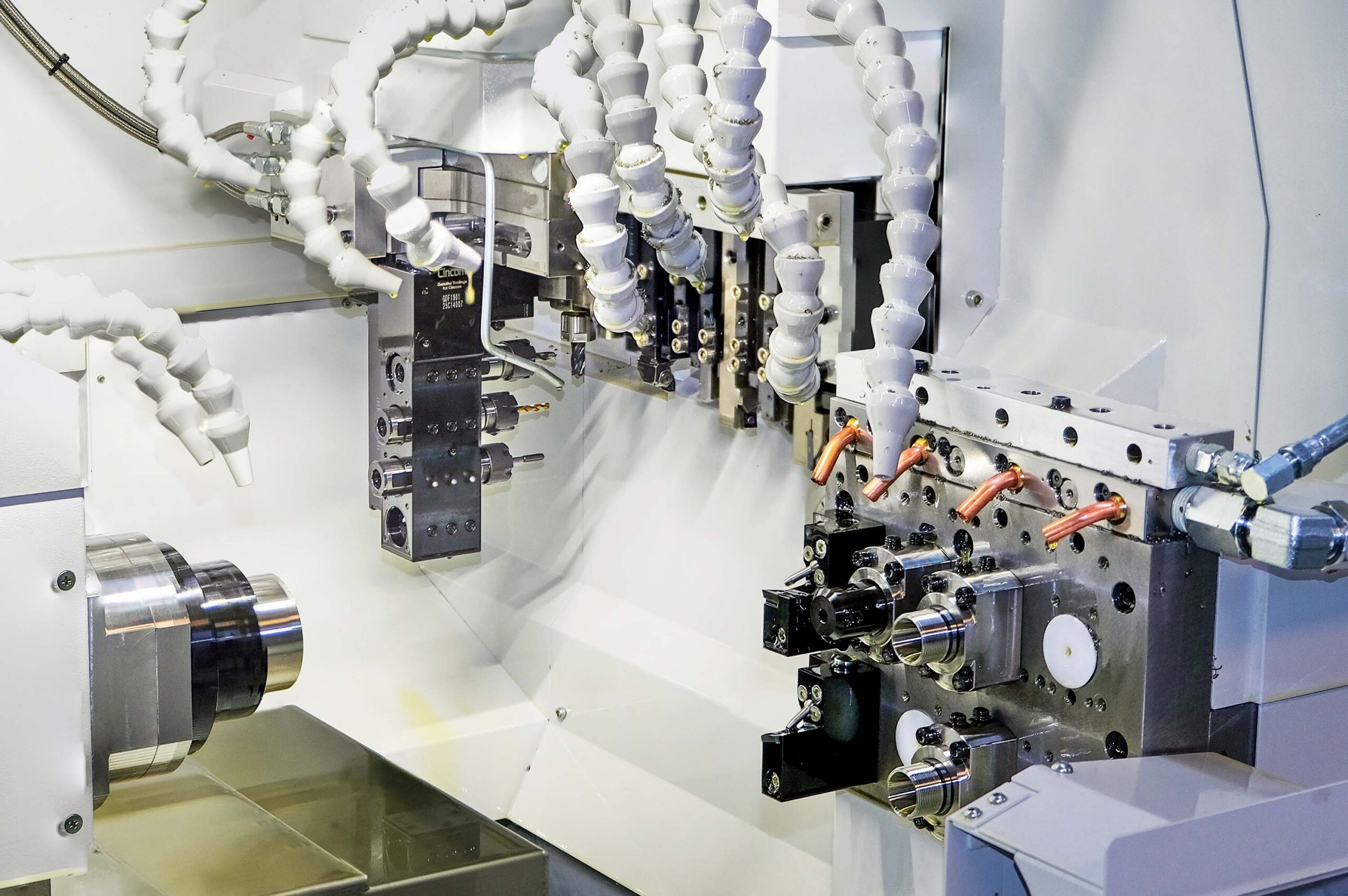
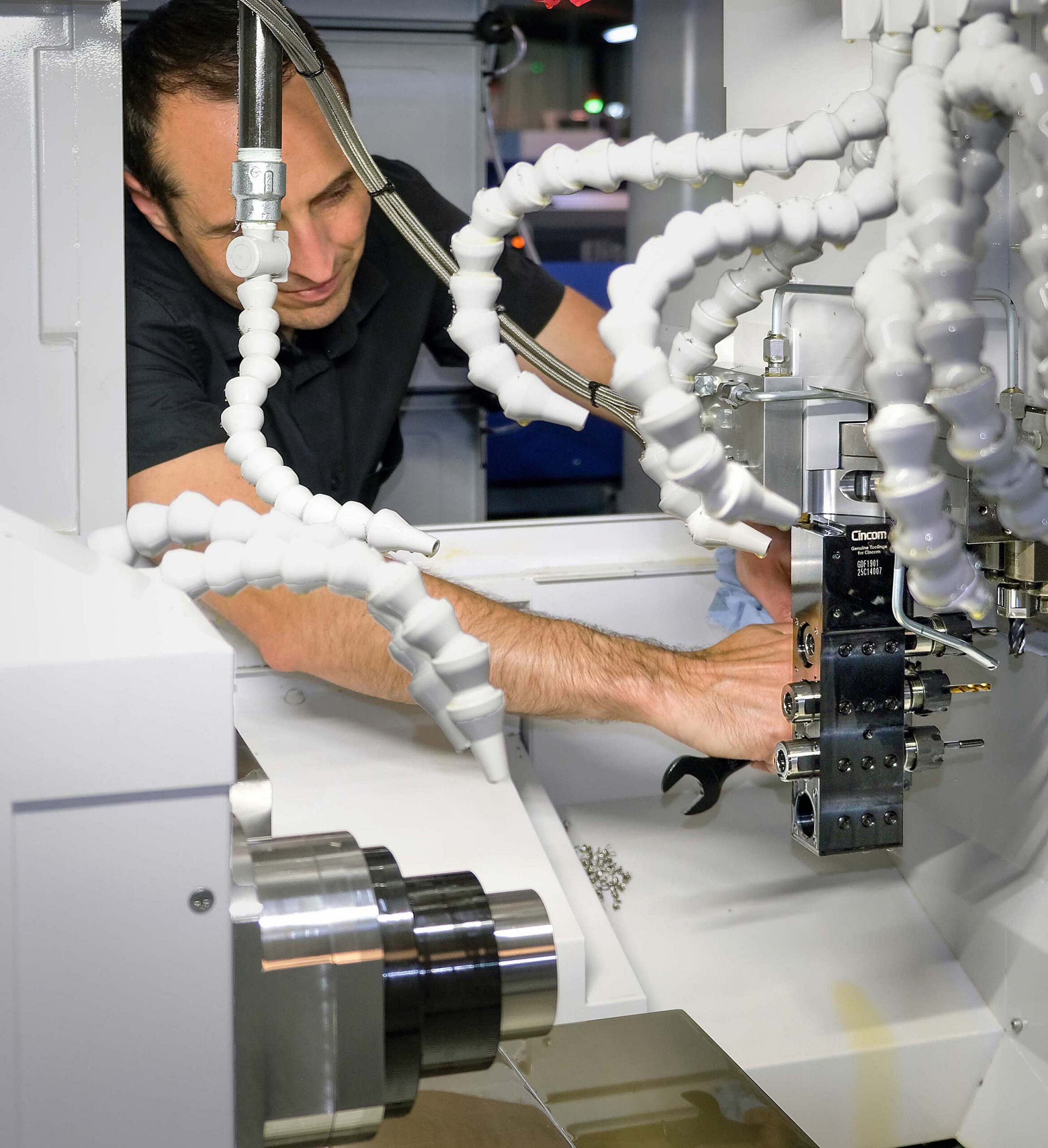
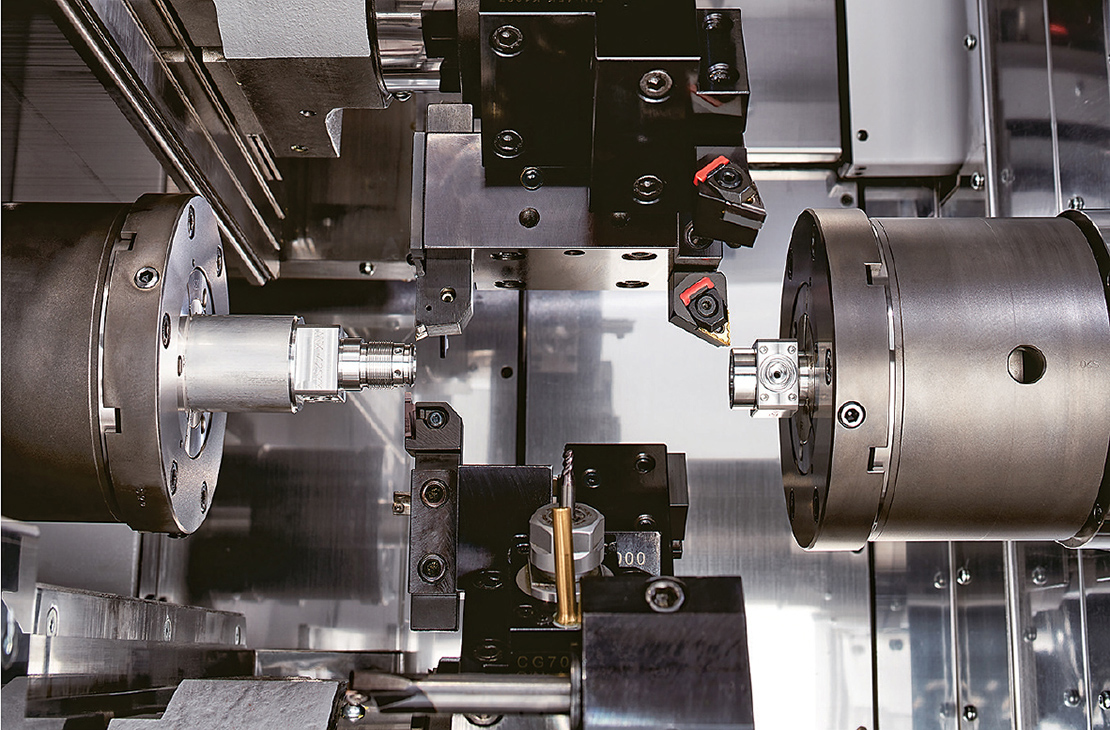
Overall view of the working area of the L32-XII B5 LFV.
A convenient sliding door at the rear of the L32-XII B5 LFV facilitates changing the tools in the B-axis carrier at the far end of the front gang tool post.

The latest Citizen Cincom sliding-head lathe to arrive on the shop floor in Wishaw was a Series 2 L32-XII B5 LFV with a B-axis swivelling tool carrier, the first of its type to be installed in the UK and one of only a few that currently sport the newly-upgraded 4-axis LFV capability. Operating in X and Z at both spindles simultaneously, it removes the need to compromise by switching the function in and out by G-code at one spindle only.

Replacing a less advanced, 32 mm diameter bar capacity sliding-head lathe, the 9-axis CNC machine features +90 / -45 degree B-axis rotation of a driven tool post positioned at the far end of the front gang tooling, enabling full 5-axis simultaneous machining. For maximum versatility, the rotary tools can work at either C-axis spindle to produce angled features. The lathe is also capable of superimposed machining, which uses a master-slave relationship between linear feeds of the sub spindle and the tool carriers to lower cycle times through the ability to have more than one tool in cut at the same time.
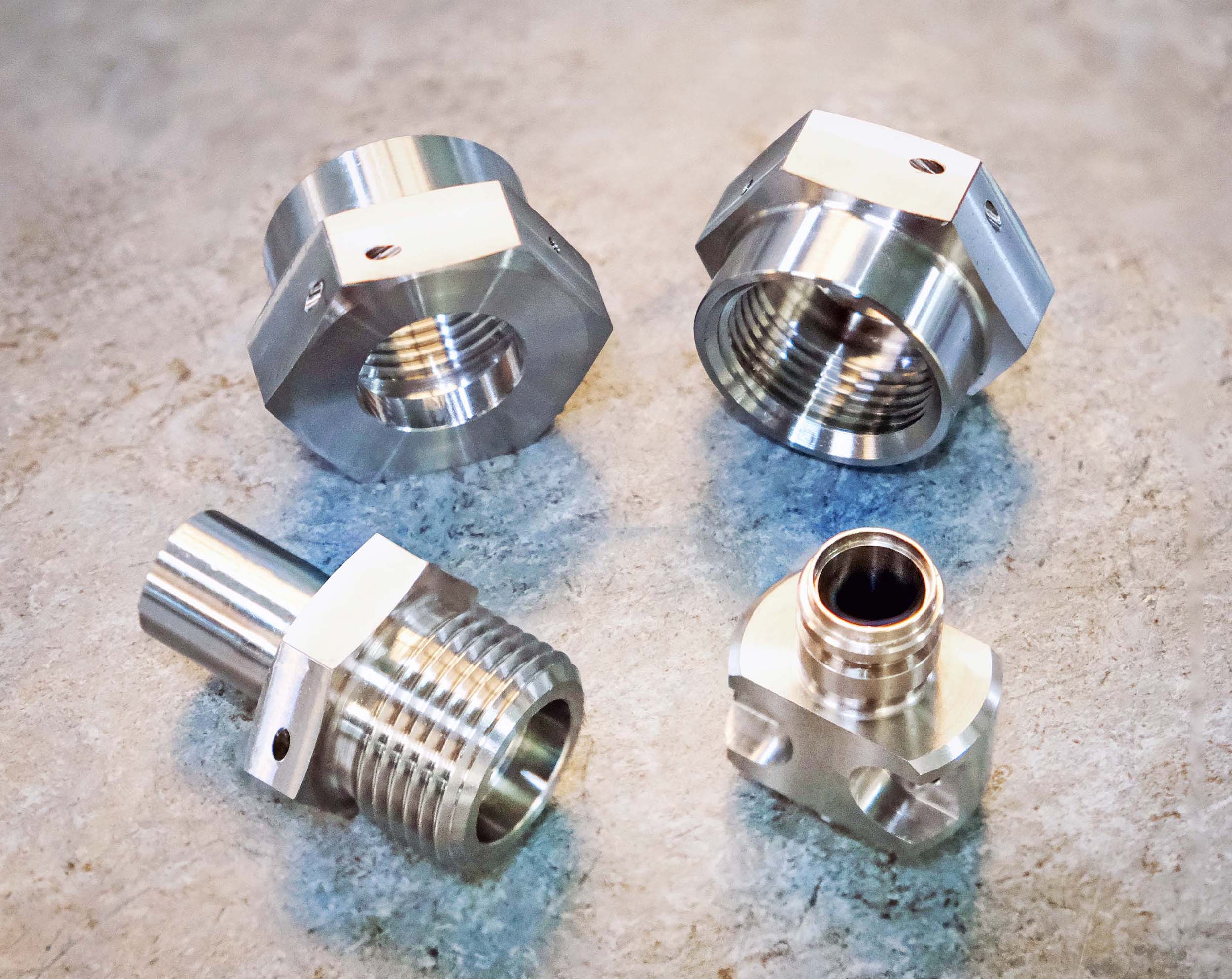
Stainless steel components produced on the L32-XII B5 LFV.

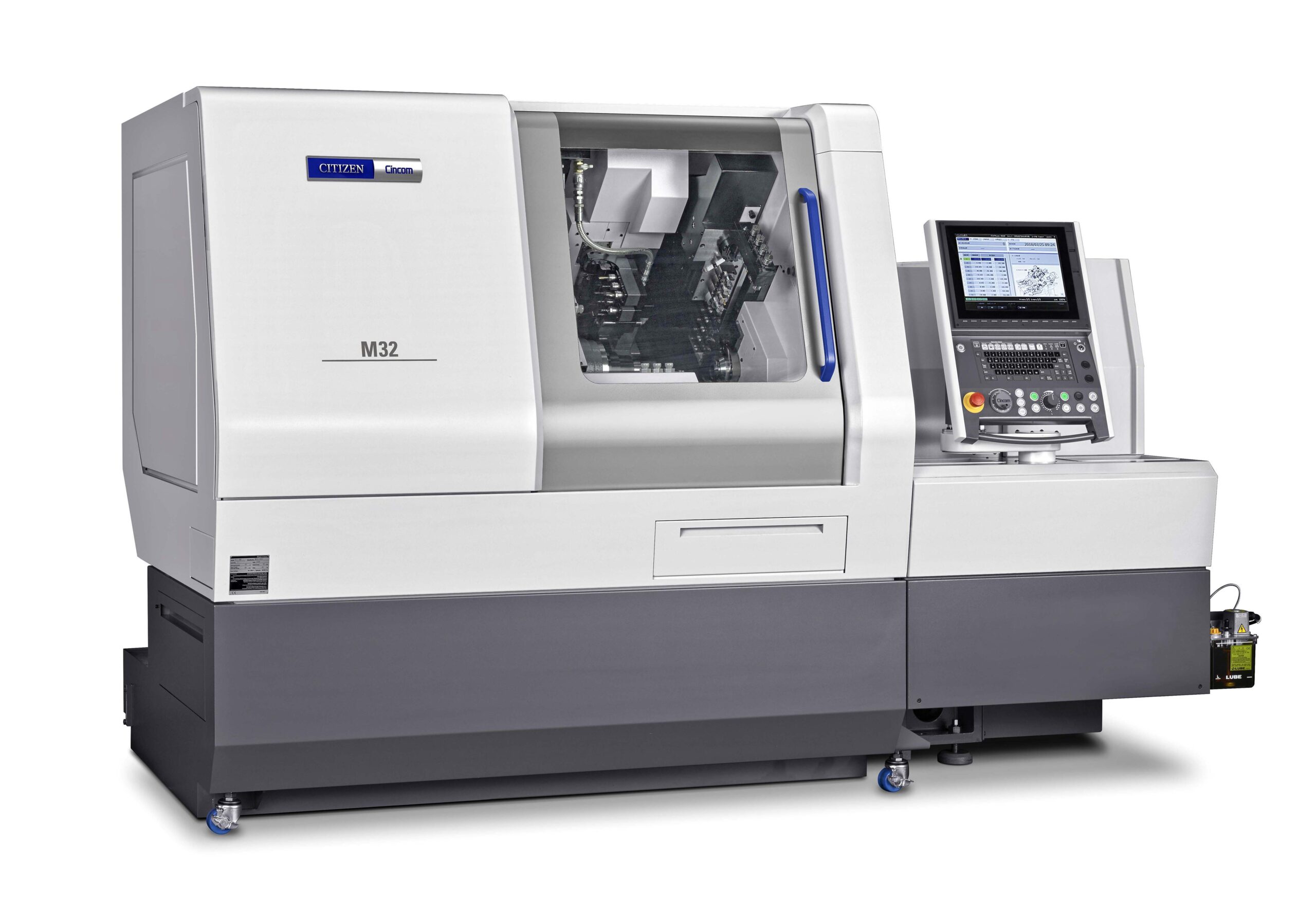
Before this machine was installed, the previous two Cincoms purchased by Swissmatic were M-series lathes having gang tool posts and a rotary turret with 10 driven tool positions. The latter is not a feature of any other make of sliding-head lathe in the Wishaw factory, which means that Citizen is the preferred supplier of such machines for more complex production applications. An M32-VIII LFV was delivered in mid-2022 and a smaller M16-VIII LFV arrived at the end of 2023.
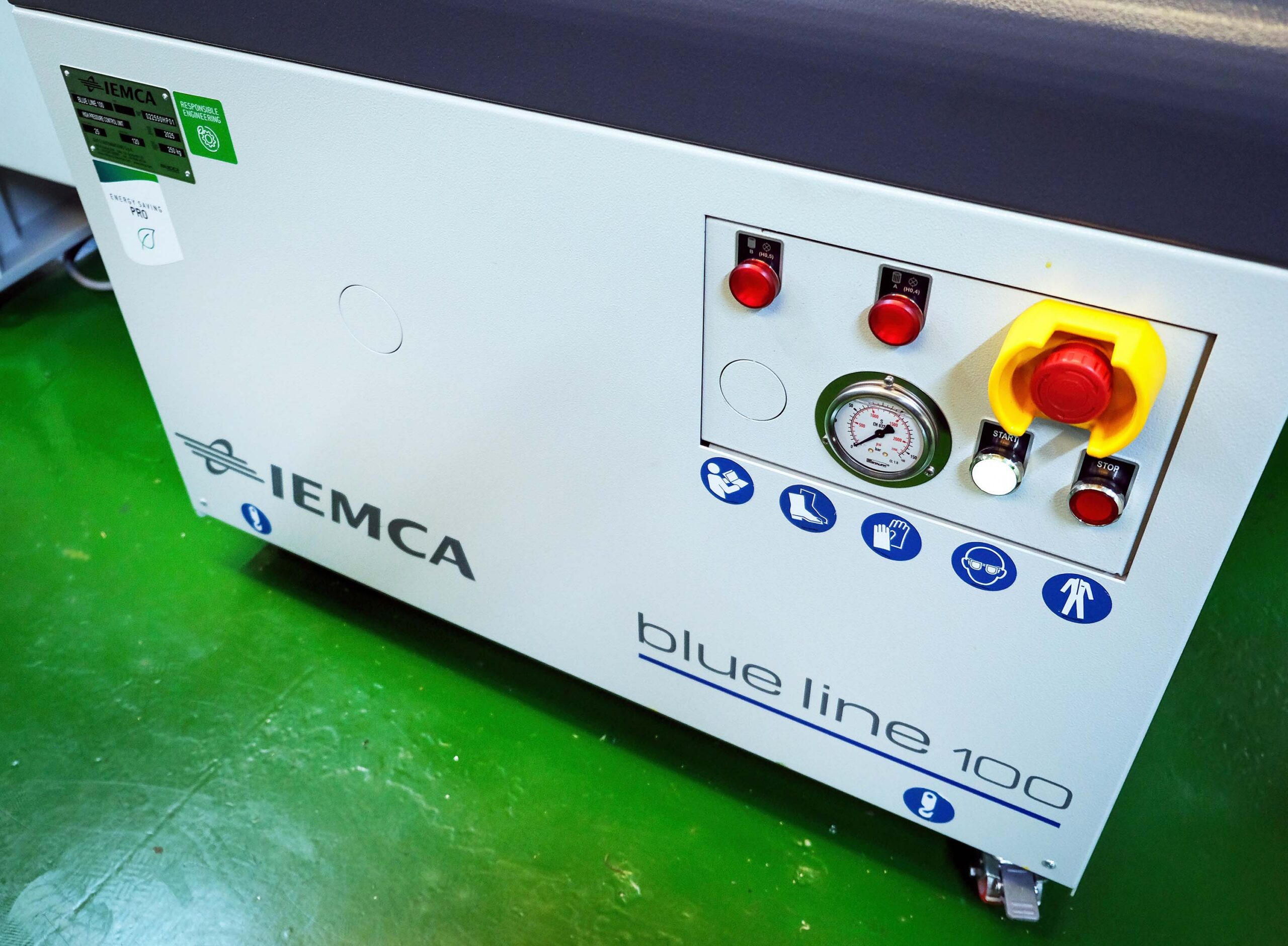
Energy efficiency extends to the Iemca Blue Line 100 variable-flow HPC (high pressure coolant) system fitted to the Boss 338-HD three-metre bar magazine feeding the Citizen Cincom L32-XII B5 LFV. Unlike traditional fixed-displacement pumps that constantly run at 100 percent capacity, the HPC unit utilises a variable frequency drive inverter and a digital pressure transducer to deliver coolant at the exact pressure it is needed.
A Cincom M16-VIII was delivered to Swissmatic at the end of 2023. It is the second such model on the shop floor and benefits from the addition of LFV.

Two years prior, a pair of 12 mm bar capacity Cincom L12-VII LFVs was acquired to fulfil a contract for the production of medical components from plastic bar, a material that accounts for about a quarter of Swissmatic’s annual throughput. The lathes were the first on-site with LFV and proved highly effective for producing parts 24/7 unattended, without the formation of birds-nests of plastic swarf risking having to stop production. Among the other materials processed in the Wishaw factory that routinely benefit from LFV chip-breaking are 304 stainless steel, aluminium and a small amount of copper.
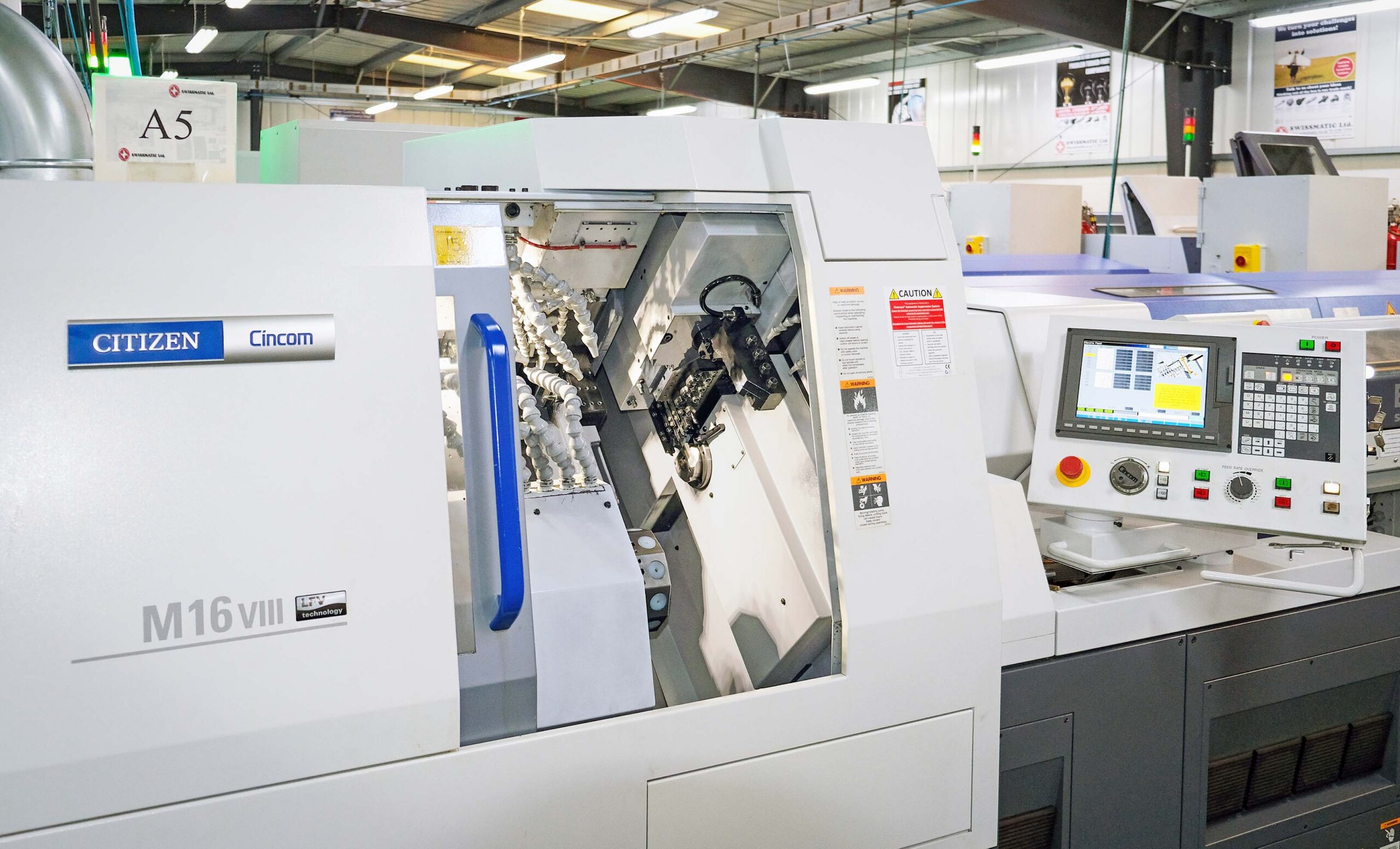
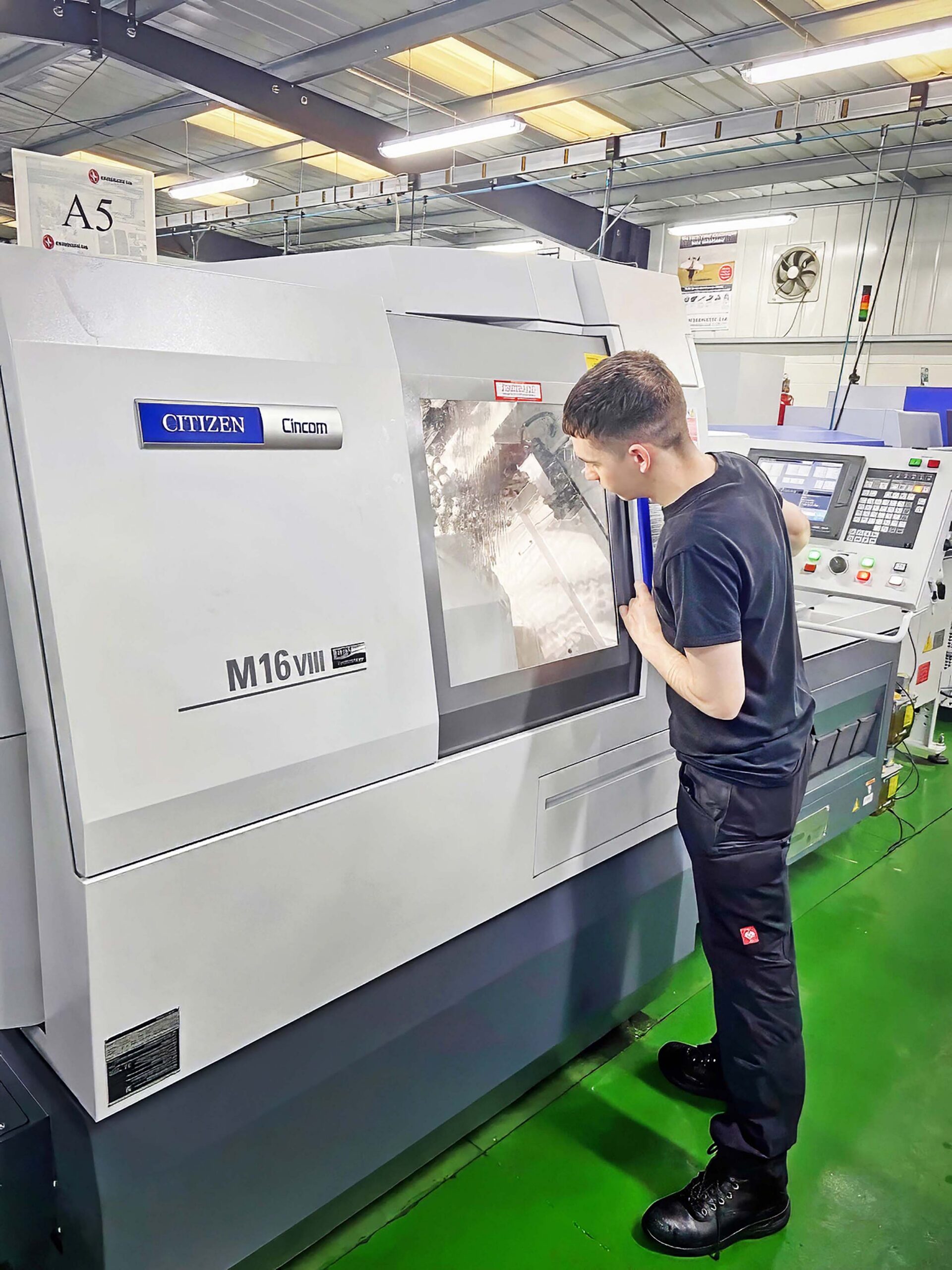
The M16-VIII LFV with the door open, showing the working area with the 10-station tool turret positioned below the spindle centreline.

Summing up the benefits of using Cincom lathes, Mr Corbally commented, “We have been using Citizen’s sliding-head turning machines since 1981, one year after my father started the business. They began replacing cam-type lathes and rotary transfer machines, which were finally phased out here 17 years ago.

“Jim had used this brand of lathe in a previous job and we have installed 22 of them over the years, although with our policy of continuous plant renewal, there are currently six on the shop floor, all but one with LFV.

“We manufacture components ranging from one-off prototypes to production runs of more than two million and the versatility of the Cincoms suits this activity perfectly.

“The lathes operate minimally attended or lights-out, 24 hours a day, seven days a week, yet scrap rate is vanishingly small at less than a quarter of one percent, despite having to hold tolerances down to four microns total.

“The low power consumption is also important for us to keep electricity bills down and Citizen has taken this to the next level with the latest eco features built into its lathes.”
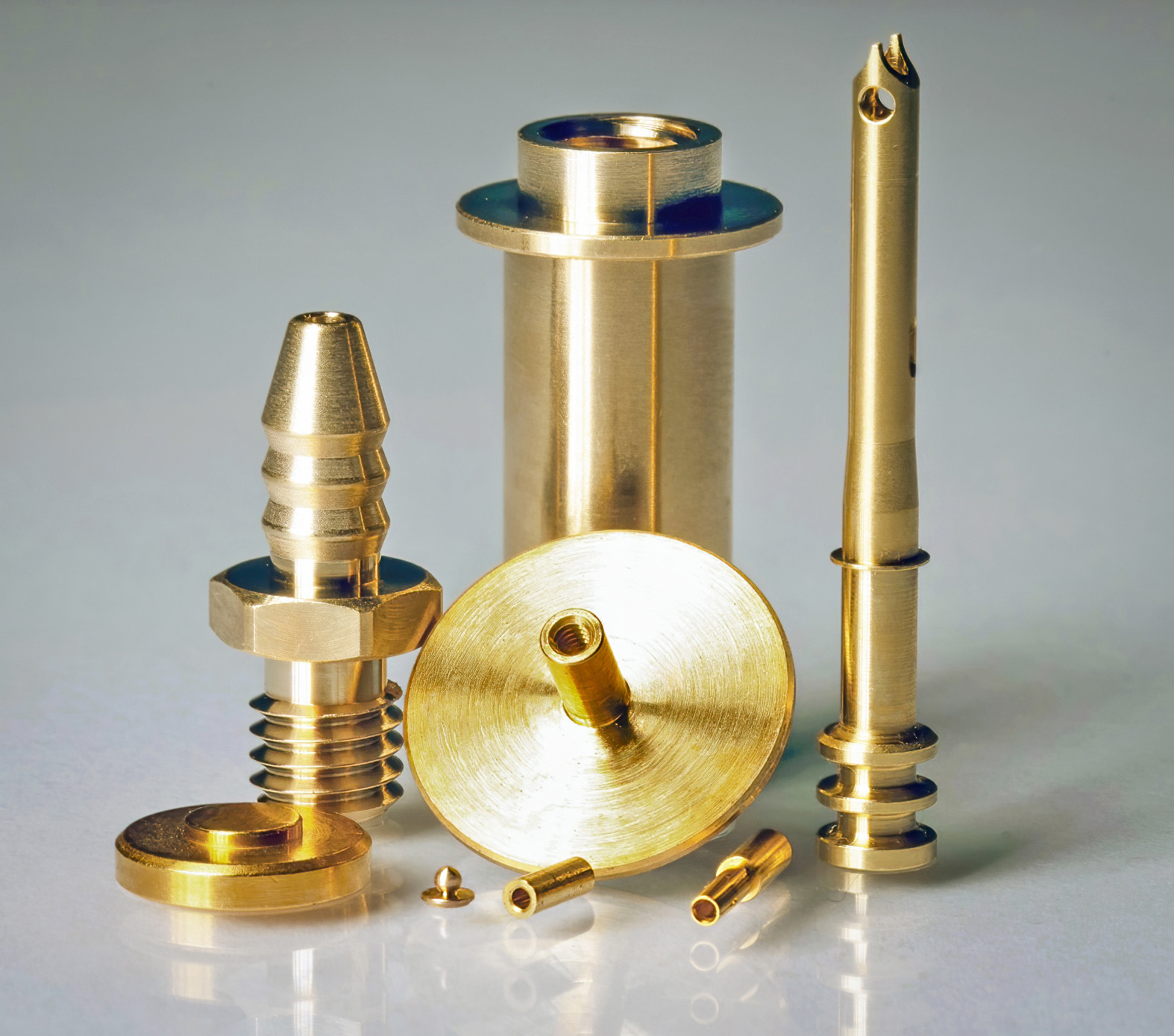
Components produced from brass on the sliding-head lathes at Swissmatic.

About the energy-saving characteristics of modern Citizen lathes

Eco II is Citizen Machinery’s proprietary suite of intelligent energy-saving technologies integrated into its Cincom lathes, as well as its Miyano fixed-head turning centres. Acting as an environmental management dashboard and utility regulator integrated into the Mitsubishi control, the embedded software automatically reduces the consumption of electrical power and compressed air when the machine is idling, rather than allowing the servo motors to remain continuously powered up.

The software monitors the lathe’s operating status in real time. If a standby state with no programmed movement is detected, power to the servos is cut automatically and auxiliary systems are put to sleep, with both waking up instantly when a cycle resumes. In respect of compressed air consumption, one of the most expensive utilities on a factory floor, Eco II tackles waste in two ways. 

First, as a continuous blast of full-pressure air is not always needed, the machine uses a smart pulsed air delivery system that works in targeted intervals, maintaining full effectiveness for part ejection, collet or tool taper cleaning, parts catching and other functions, while lowering compressed air consumption by up to 60 percent. 

Second, the machine’s internal air purge system is automatically shut down after a preset time whenever the lathe falls into standby mode. Additionally, the base level pneumatic demand has been reduced from 0.5 MPa to 0.4 MPa, yielding a reduction in general factory air consumption of up to 20 percent, without sacrificing actuation power.

An operator is able to access a live touchscreen graphical interface with real-time displays of active electrical power consumption versus peak maximum thresholds, cumulative carbon dioxide emission, historical utilisation graphs tracking the ratio of cutting time compared with setup times and alarm stops, and how much kinetic energy is captured and regenerated into electricity as the spindles decelerate and the axes undergo braking.

Eco Balance is the lathe manufacturer’s branding and certification standard for its green initiatives. It encompasses several pillars, not only the above-mentioned energy reduction measures, as well as the elimination of power-hungry hydraulics, but also further electricity-saving strategies like shutting down internal cabinet lighting, screen backlights and auxiliary fans alongside servo motor sleep cycles when the machine stops moving.

For a Citizen lathe to be designated an official Eco Balance Machine, it must prove it balances high productivity with a reduced environmental footprint, verified by measurement of reductions in electrical power and compressed air usage compared to previous machine generations. This overarching philosophy forms the basis for ESG (environmental, social and governance) auditing, an anti-greenwashing process that verifies a machine manufacturer’s claims of environmental protection. 
Citizen takes lathe orders worth over £4.5 million at MACH 2026

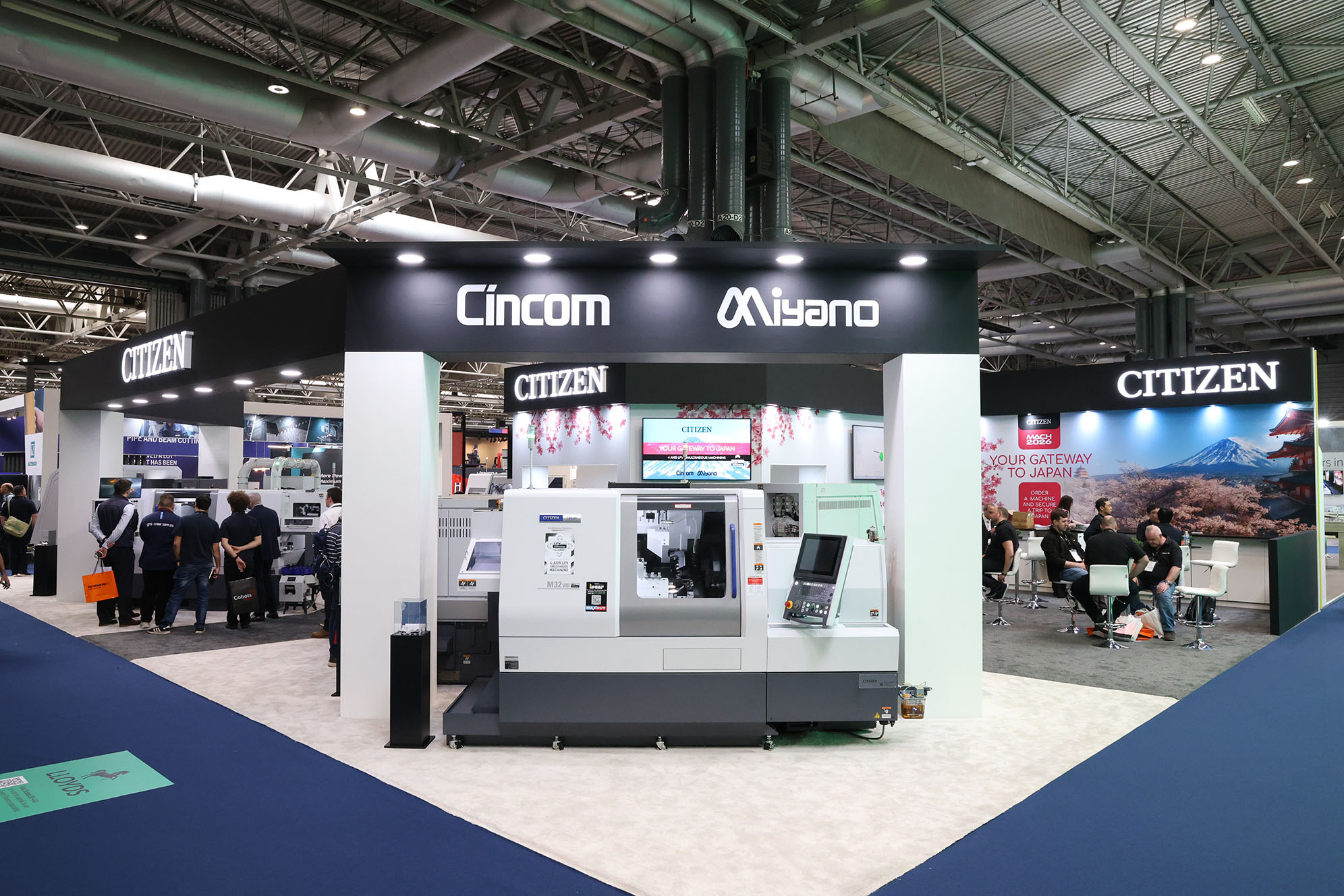
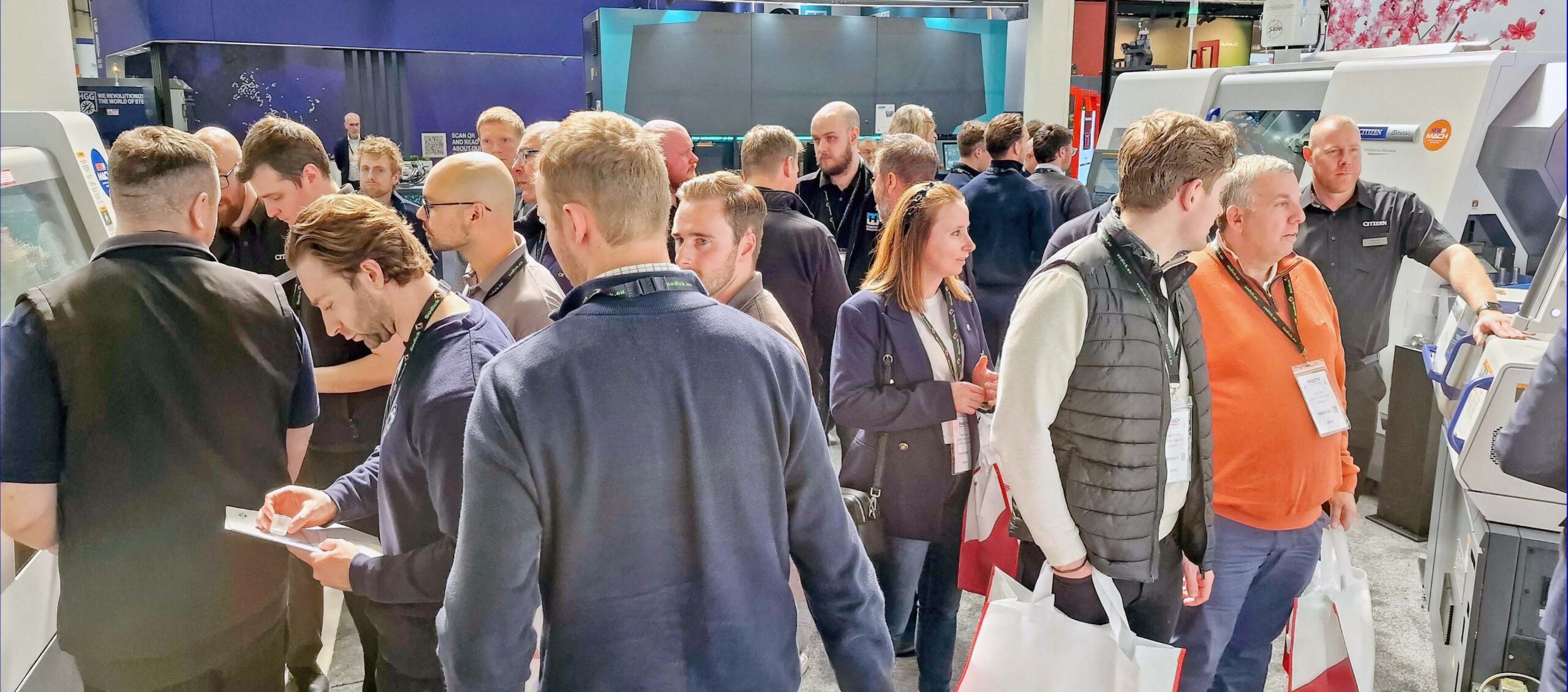
The Citizen Machinery UK stand at MACH 2026

At the MACH show in Birmingham this April, Citizen Machinery UK secured orders exceeding £4.5 million for 30 new Miyano fixed-head turning centres and Cincom sliding-head CNC lathes. The sales team was especially pleased that one-fifth of the sales were to new customers that had never purchased from the company before.

The success means that the supplier will be busy in the coming months, not only sourcing, configuring and supplying the bar-fed lathes, but also arranging a free trip to Japan for one individual from each company that placed an order at the exhibition. The Gateway to Japan initiative, which will include an exclusive factory tour for each attendee, was in celebration of the Japanese group’s 96th anniversary this year.

The UK subsidiary featured five new machines on its stand, with a similar number on show benefitting from 4-axis simultaneous LFV (low frequency vibration) chip-breaking functionality. Although the debut of the technology was at the supplier’s open house in Brierley Hill last October, the Birmingham show provided a first opportunity for a wider audience to see it in action.
Introduced more than a decade ago, LFV is integrated into the operating system of the control of Cincom and increasingly Miyano lathes. Distinct from programmed chip breaking macros offered by other suppliers, LFV synchronises high-frequency vibration in the direction of the cutting feed with spindle rotation to create intermittent air-cutting to break long swarf effectively. It has progressed from being a single-axis oscillation in the longitudinal feed direction at the main spindle exclusively to encompass operation in the X and Z axes at both the main and sub spindles simultaneously, vastly increasing its effectiveness.

4-axis LFV enhances flexibility, reduces cycle times and eliminates operational bottlenecks, since there is no need to stop the machine to remove tangled swarf, however complex the program. It is particularly advantageous during lights-out production when working with malleable materials like copper, some stainless steels, aluminium, titanium, nickel alloys, lead-free eco-brass and plastics.

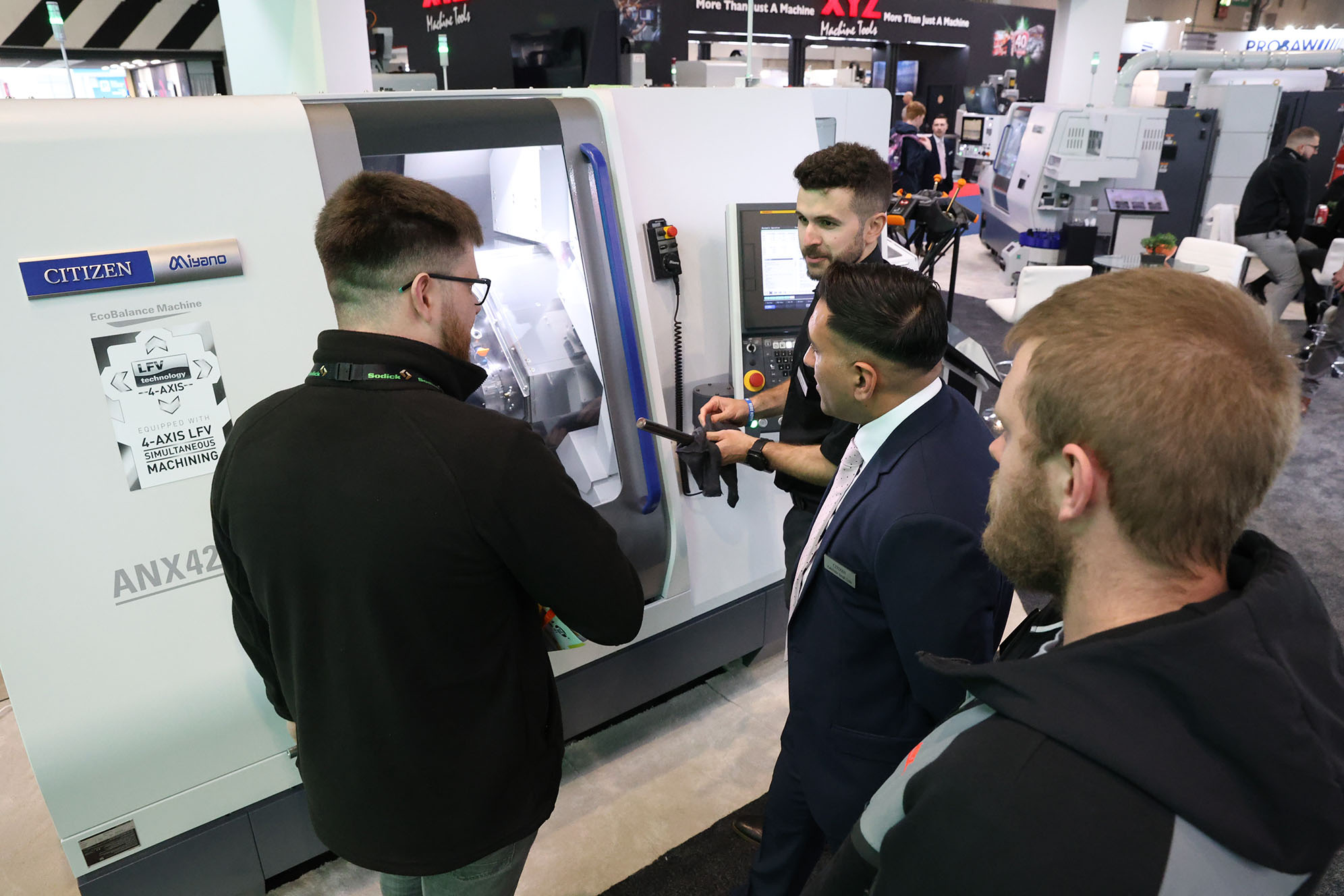
Demonstrated under power on the stand were a total of eight lathes, with some machines capable of superimposed machining to reduce cycle times, with three tools in cut simultaneously. Among the Miyano fixed-head lathes were three new models: the BNJ-51SY7, the BNX-65MSY with a workpiece unloader, and the ANX-42SYY, which also featured an unloader system. They were joined by two new Cincom sliding-head models, the L32-X series 2 and the M32-VIII. The latter is notable for its hybrid design, combining the rapid movement of a gang tool post with the versatility of a 10-station turret. 

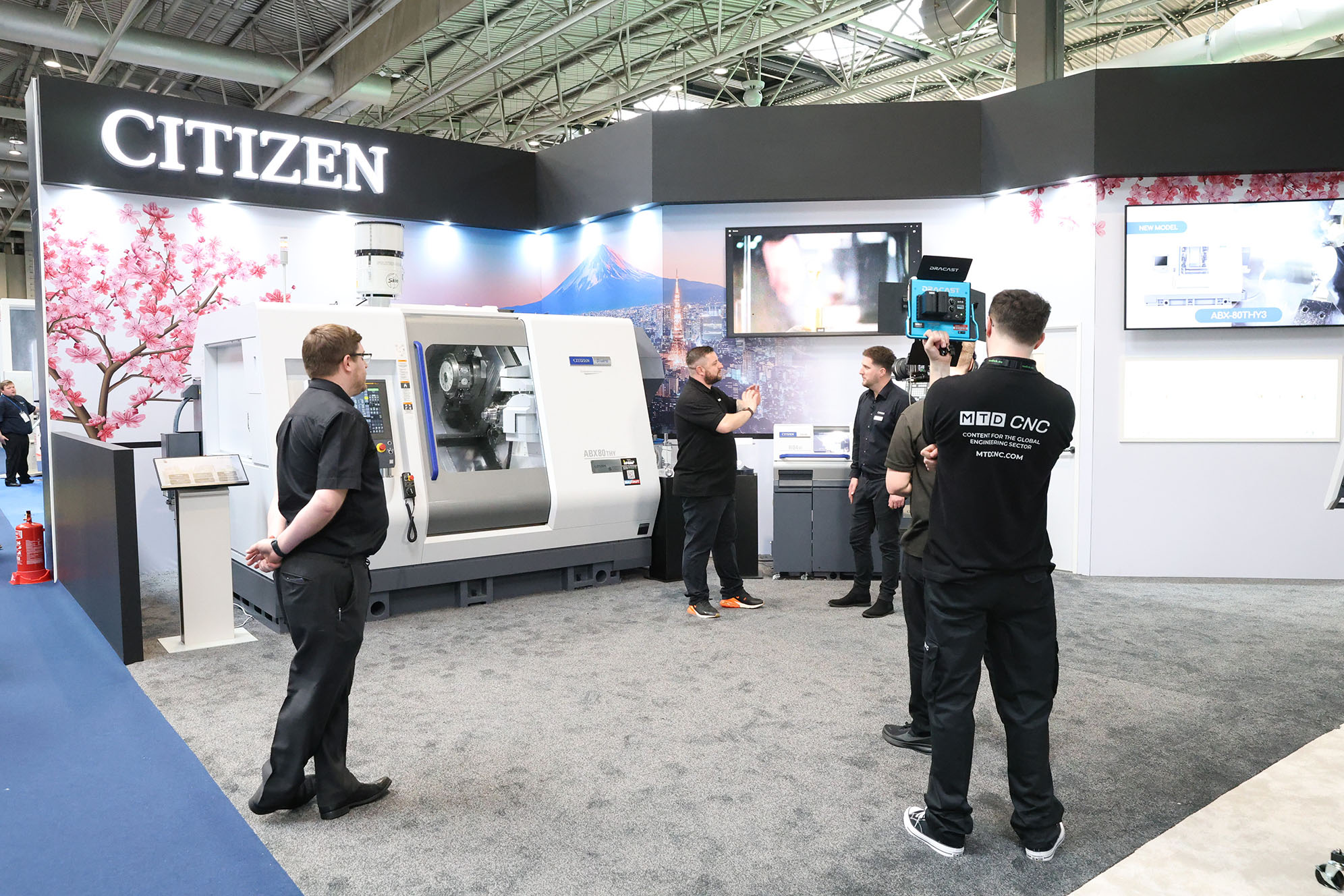
For those requiring heavy-duty and high-precision milling, the Miyano ABX-80THY was a focal point. It features three 12-station tool turrets and enhanced thermal compensation, allowing turn-milling of parts from up to 80mm diameter bar to very high accuracy. At the opposite end of the spectrum, Citizen demonstrated its micro-machining prowess with the compact Cincom R04 sliding-head lathe. Equipped with a 20,000 rpm spindle and a backlash-free linear motor in the X-axis, the R04 was turning a tiny 2 mm diameter component from 4 mm bar stock.

Latest Miyano is Subcontractor’s Go-to Lathe

Established as a sliding-head turned parts subcontractor in 2001 by Michael Laybourne, Yorkshire Precision Engineering Ltd (YPEL) diversified into fixed-head turning six years later with the purchase of a new, Japanese-built Miyano BNJ-42SY twin-spindle, twin-turret lathe. The 42 mm bar-fed machine was supplied by the sales agent at the time, Macro Machine Tools, which became part of Citizen Machinery UK in 2011.

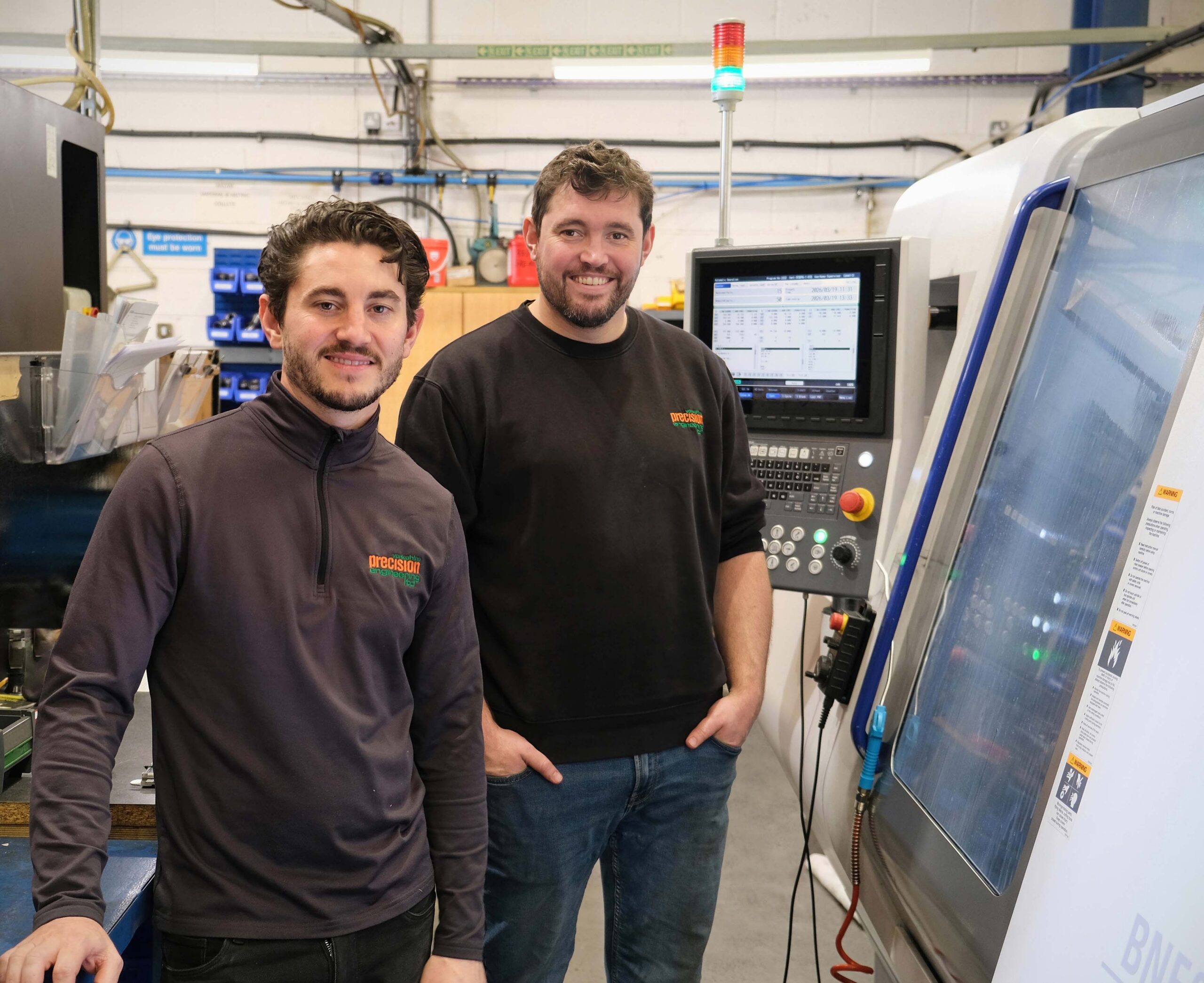
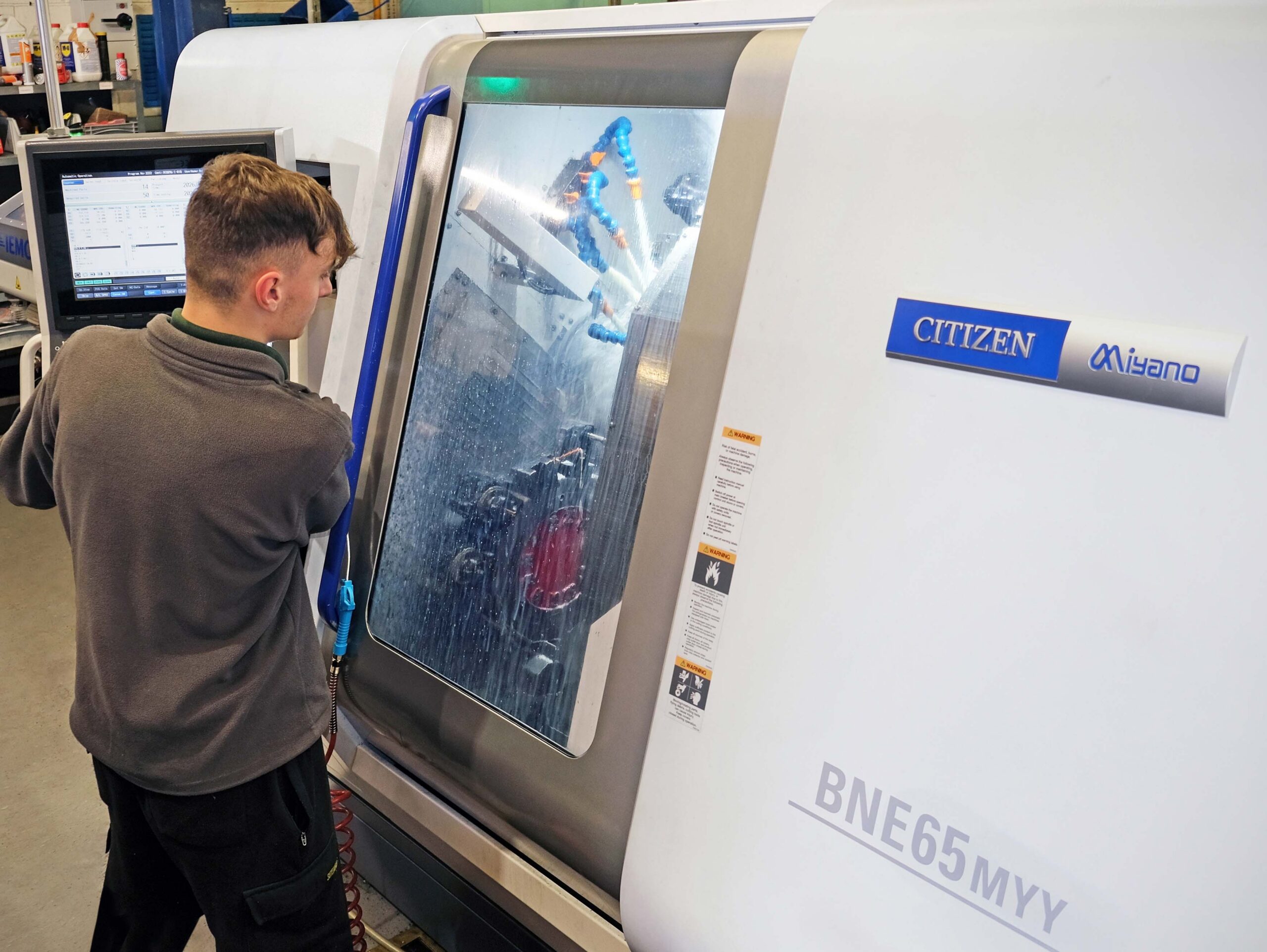
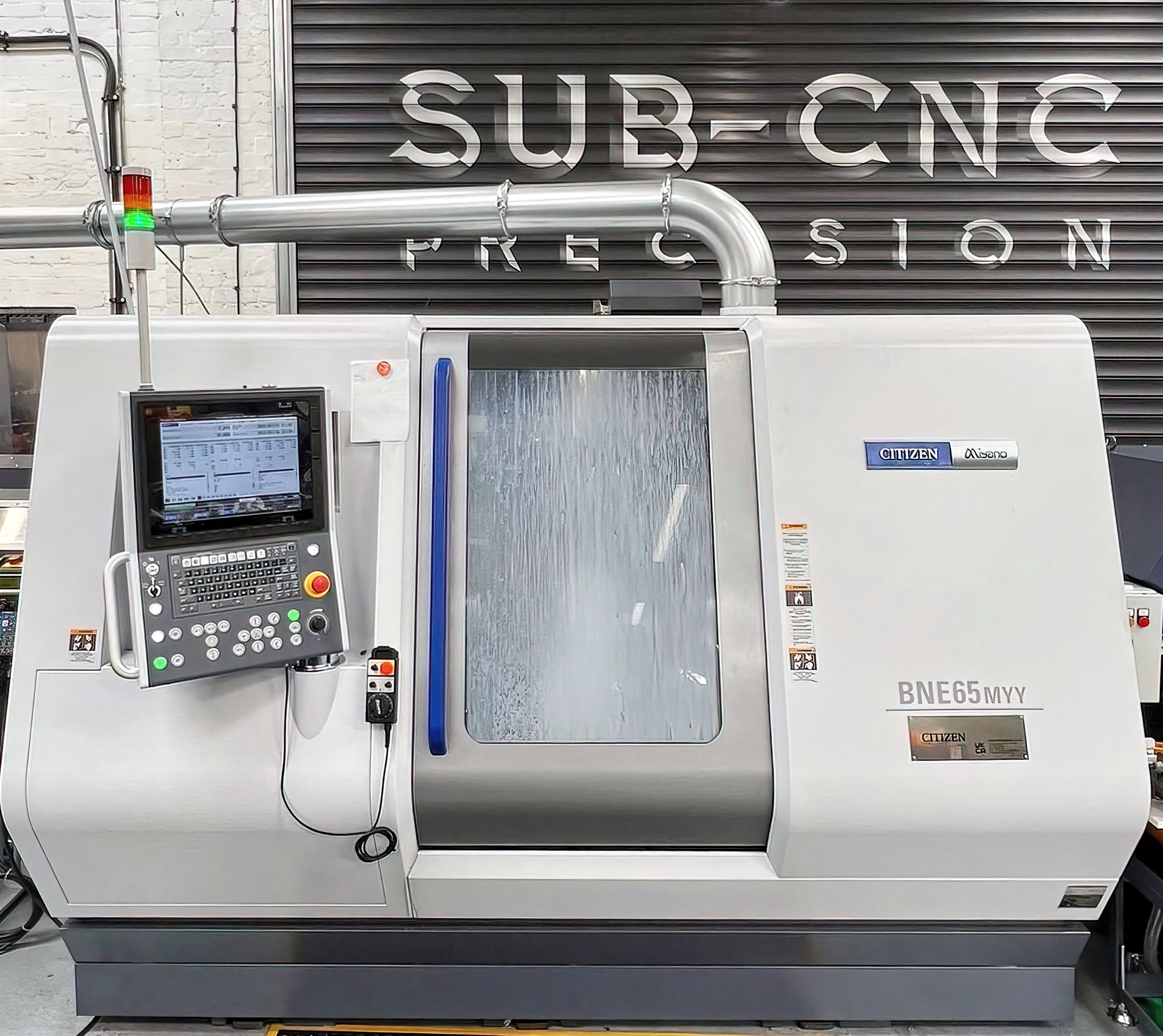
Jack Laybourne (left) and Sam Laybourne with the Miyano BNE-65MYY on the shop floor at YPEL, Keighley.

YPEL was so impressed with the lathe’s performance that when a similar, second-hand machine came onto the market a year later, Mr Laybourne and his wife Lynda, the financial director, snapped it up. Both machines have served as workhorses ever since, running virtually continuously on weekdays, including a considerable amount of lights-out production, and frequently at weekends as well.

In the intervening 20 years, a lot has changed at the Keighley, West Yorkshire factory, which is now run by Michael and Lynda’s sons Sam and Jack, both time-served engineers like their father. In November 2024, they bought a modern, larger Miyano of 65 mm bar capacity, a BNE-65MYY. Despite another six fixed-head lathes of various makes arriving on the shop floor over the years, the latest machine is the undoubted favourite of the second-generation directors.

Managing director Sam Laybourne commented, “Parts come off the BNE twice as quickly as one of our BNJs can produce them, greatly increasing productivity, and the two Y-axis turrets mean that components of higher complexity can be finished in one hit.

“The new Miyano is not only faster due to uprated feeds and speeds, but is also more rigidly and accurately built, and more thermally stable than other lathes on the shop floor. It translates into higher quality parts and less tool wear and breakages.”

He explained that a key feature of the BNE is its box sideways that are hand scraped to near-perfect smoothness and flatness. The process removes high spots on the hardened steel surface, lowering noise, virtually eliminating vibration and chatter, prolonging tool life and improving the surface finish on machined components.

Furthermore, box ways rather than linear guideways provide better rigidity for selecting higher cutting data when turning and especially when milling. It contributes substantially to the machine’s productivity, particularly as prismatic machining frequently accounts for between 20% and 50% of a cutting cycle in the Keighley factory.

Here the BNE-65MYY is producing a batch of 17-4 PH stainless steel components for an electronics industry customer. Hexagon milling to ± 0.05 mm and other prismatic machining accounts for one-tenth of the cycle, and a groove needs to be turned to within ± 0.01 mm. (Component not shown for confidentiality.)

Speaking of financial matters concerning the running of their subcontract machining business, technical director Jack Laybourne advised, “Since November 2020, when we purchased all the assets of a nearby subcontractor and secured significant contracts to take on many of the components it was producing, our headcount has risen to 28 and we have also doubled our annual turnover in that time.

“We are now actively replacing older plant with up-to-date, highly capable machines to speed production and reduce the number of operations needed to produce components, which are often completed in one hit, all to increase profitability.

“I calculated recently that the monthly amount we spend on repairing old machines on the shop floor would pay to finance a brand-new machine, so there is strong incentive for us to re-equip our workshop as fast as possible.”

YPEL has been in contact with Citizen Machinery UK since 2011, when the company took over responsibility for Miyano turning centres in the field. Jack Laybourne confirmed that the service they have received over the years has been consistently reliable. 

It prompted him and Sam to visit the supplier’s stand at MACH 2022, where a BNE-65MYY was being demonstrated. The seed was sown and the lathe arrived in Keighley a couple of years later. The original intention had been to replace one of the older Miyanos that was no longer working, but Citizen managed to repair it so it continues in daily use, even after two decades.

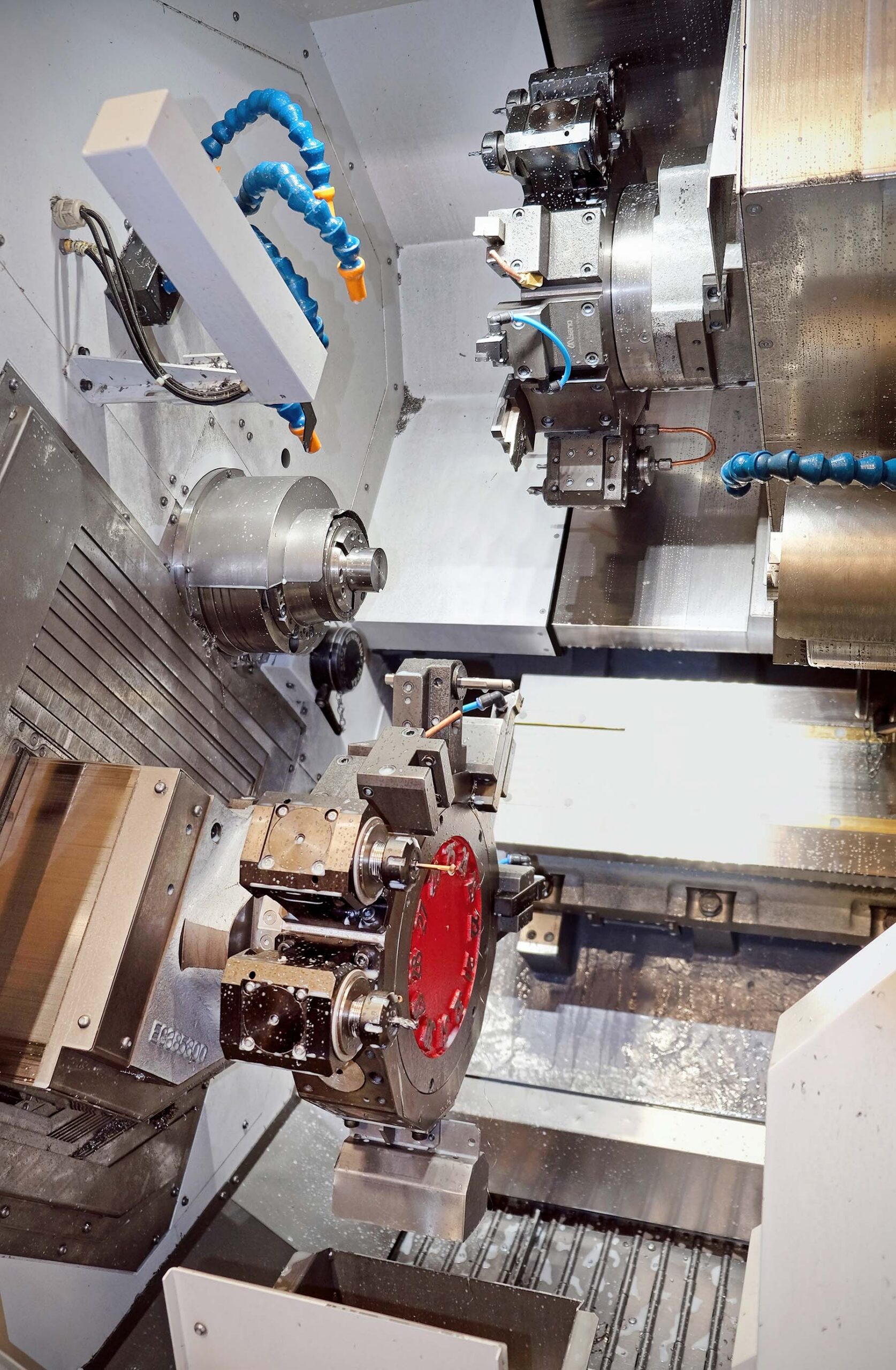
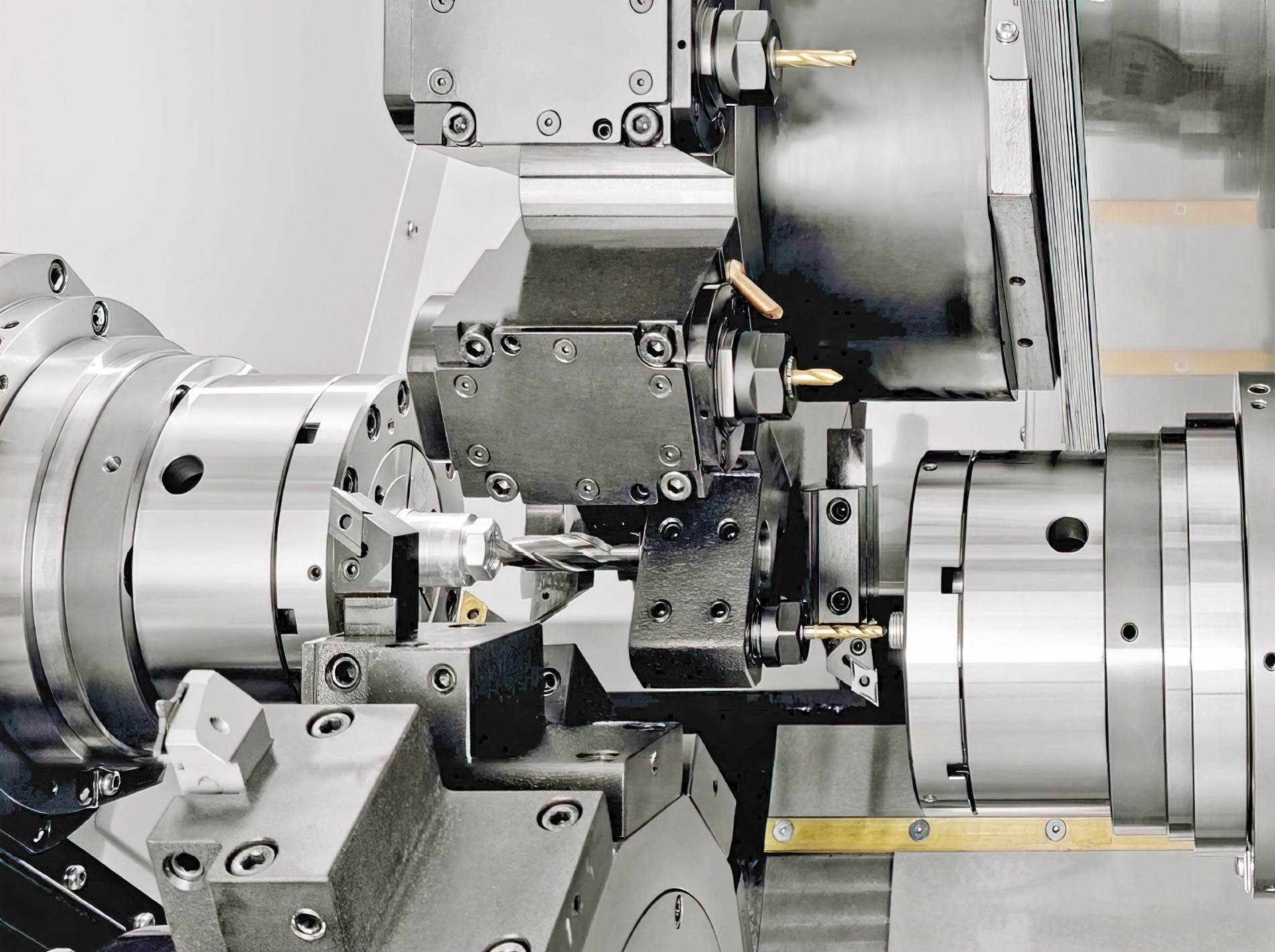
Working area of the BNE-65MYY turn-mill centre, showing the twin-spindle arrangement and the two 12-station turrets with Y-axis motion. Strong milling performance is provided by Heimatec live tool holders supplied by Citizen Machinery UK.
There are many attributes of the latest Miyano that both brothers appreciate. One is its stability, both mechanically and thermally, which results in effortlessly holding tolerances down to ± 10 microns, although ± 0.1 mm is more generally stipulated on customers’ drawings. A wide range of materials is processed, from Duplex and Inconel through to engineering plastics.

Not only is the machine typically twice as productive as the early Miyano models, but there is scope for even shorter cycles using the BNE’s superimposed machining capability, where three tools can be cutting a part simultaneously at both spindles, despite the lathe having two turrets. This facility has not yet been adopted in Keighley, but will be in the future for the right jobs, namely reasonably long runs of parts with complex features, where the somewhat longer setup times can be justified.

YPEL staff was comprehensively trained by Citizen to program, set and operate the latest Miyano. The subcontractor opted to buy the relevant edition of Citizen’s Alkart Wizard conversational programming software, which bridges the gap between manual G-code data entry and full-scale CAD/CAM. It is particularly effective for generating cycles for complex, multi-path machining, including all necessary synchronisation codes to prevent the spindles and turrets from colliding, while also managing the hand-off of parts between the main and sub spindle. As an added bonus, the software helps with programming the older BNJs.

The beneficiaries of these technology advances are YPEL’s many customers, about 40% of which are in the oil and gas sector, with a further 20% operating in the medical industry. That the subcontractor has held ISO 9001 accreditation since the company started has led to a lot of work in many other sectors as well, including agriculture, electronics, marine and pharmaceuticals. Music enthusiasts may be interested that parts for bagpipes and grand pianos are occasionally machined; and pub-goers may well be staring at YPEL parts as their pints are pulled.

Sam Laybourne concluded, “The bottom line is that, if we could, we would like to put every component over 32 mm diameter – the maximum capacity of our sliding head lathes – onto the latest Miyano.

Especially for longer runs of 1,000- to 10,000-off, its one-hit production capability and extreme accuracy make it the go-to lathe on our shop floor. 

“You set the machine and it doesn’t move. It just runs and runs, producing parts within tolerance all day long, and unattended overnight as well.”

The successful implementation of the Miyano BNE-65MYY on the shop floor in Keighley has prompted the subcontractor to further upgrade its capacity by placing an order for another new Miyano, a model BNJ-51SY7 LFV, for delivery in May 2026. 

The 51 mm capacity lathe benefits from Citizen’s simultaneous 4-axis LFV (low frequency vibration) chipbreaking, which is capable of operating on the X and Z axes of both the main and sub spindles at the same time. The machine is therefore ideally suited to reliable, lights-out manufacturing of parts from malleable materials that traditionally create long, stringy swarf and require operator attendance to remove it.

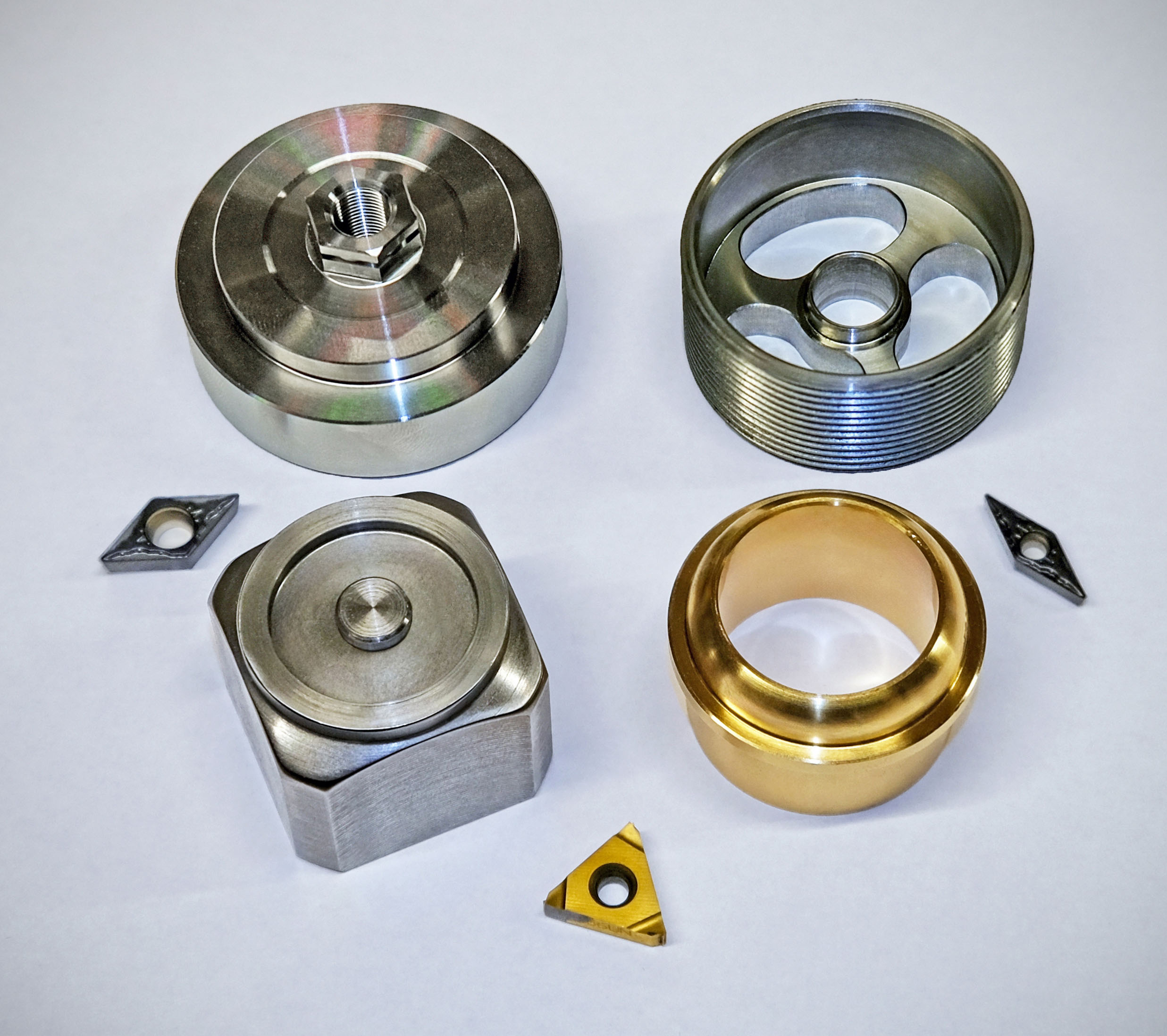
A selection of components produced on the BNE-65MYY lathe at YPEL.

Medical equipment factory’s meteoric expansion continues alongside Citizen lathe investments

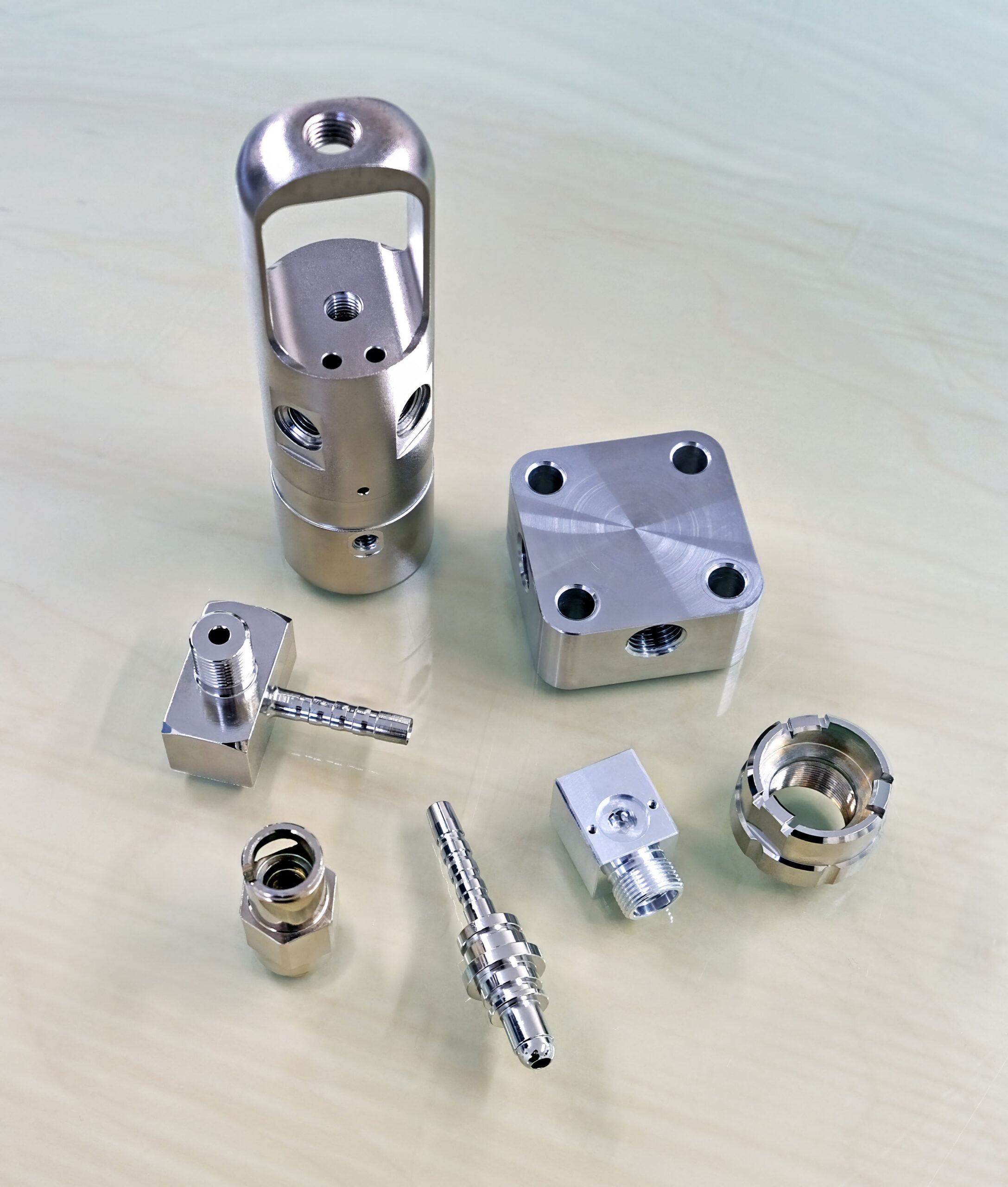
Seven components produced by Meditech in one hit on Citizen lathes. From back left, clockwise: regulator body, wall mount block, microVENT resuscitator part, CO2 hose connection, AFNOR standard connector, medical gas probe inner, adapter for ambulance stretcher.

Formerly with an almost exclusive focus on producing equipment such as resuscitators used by paramedics and first responders in pre-hospital care and the emergency services, Halstead-based Meditech has since the Covid pandemic moved strongly into the supply of medical equipment to National Health Service and private hospitals. This development has seen the company’s turnover increase more than five-fold since 2020, as has its factory space. Understandably, such rapid growth has necessitated careful control over many aspects of the business, especially manufacturing.

The company’s first Citizen lathe, a Cincom 20 mm bar capacity L20, was bought in 2008 following a decision by managing director Chris Buckenham to bring all production in-house. Until then, only a few brass and aluminium items like regulator bodies and valve components were machined on site in multiple setups on CNC fixed-head turning centres, manual lathes and milling machines. 

The Meditech microVENT handheld emergency resuscitation device is widely used by ambulance services, fire departments and industrial rescue teams. Two-thirds of the products the company manufactures are exported.

The remainder were being sourced from subcontract suppliers in the UK and overseas. However, some components supplied from Asia were proving problematic during assembly, so complete control over the manufacturing function to ensure top quality and timely delivery of Meditech products was the goal.

A further objective was the production of components in as few operations as possible, preferably in one visit to a machine. Mr Buckenham had become aware of the capabilities of sliding-head turn-milling technology and visited the MACH 2008 show to find out more. After a tour around the halls, it rapidly became apparent to him from the quality of Cincom lathes, their capability and the ease of access for setups, that Citizen Machinery would be the preferred supplier, so a deposit was paid there and then for the first L20.

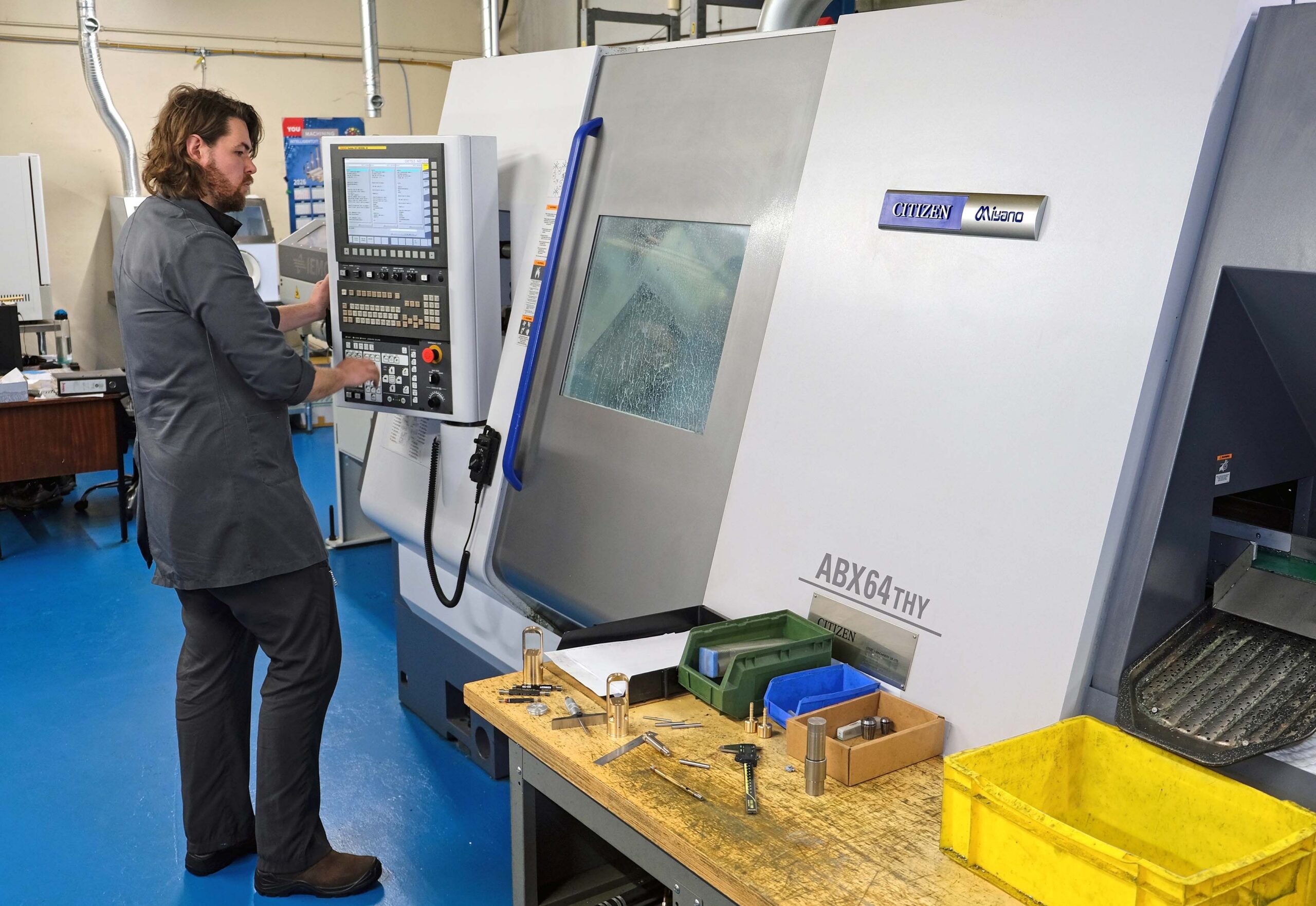
Ian Ronsky with the latest Citizen Miyano ABX-64THY to be installed at the Halstead factory. In July 2025 the premises was consolidated into a 4,000 square metre footprint, five times larger than before Covid, and headcount had increased to 35.

Its arrival on the shop floor in June that year, in the words of Mr Buckenham, “revolutionised production overnight”. It was the start of a programme of Citizen lathe acquisitions that has resulted in the delivery of a total of seven twin-spindle models over the years. A second L20 of higher specification was installed five years later. Then a third with even more capability, an L20-XIILFV with a programmable, 135-degree swivelling B-axis for complex angled machining at both the main and sub spindles, followed in August 2020 to help meet the higher workload during the pandemic.

This latest-generation lathe is characterised by the integration of LFV (low frequency vibration) technology, a proprietary Citizen innovation that uses servo-controlled oscillation to break chips into manageable fragments. It drastically improves the machining of stringy materials like stainless steels and plastics, much of which are cut on-site, preventing swarf from coiling around the tool and workpiece and potentially damaging both. Additionally, it boosts productivity by avoiding having to stop the lathe to clear ribbons of swarf from the working area.

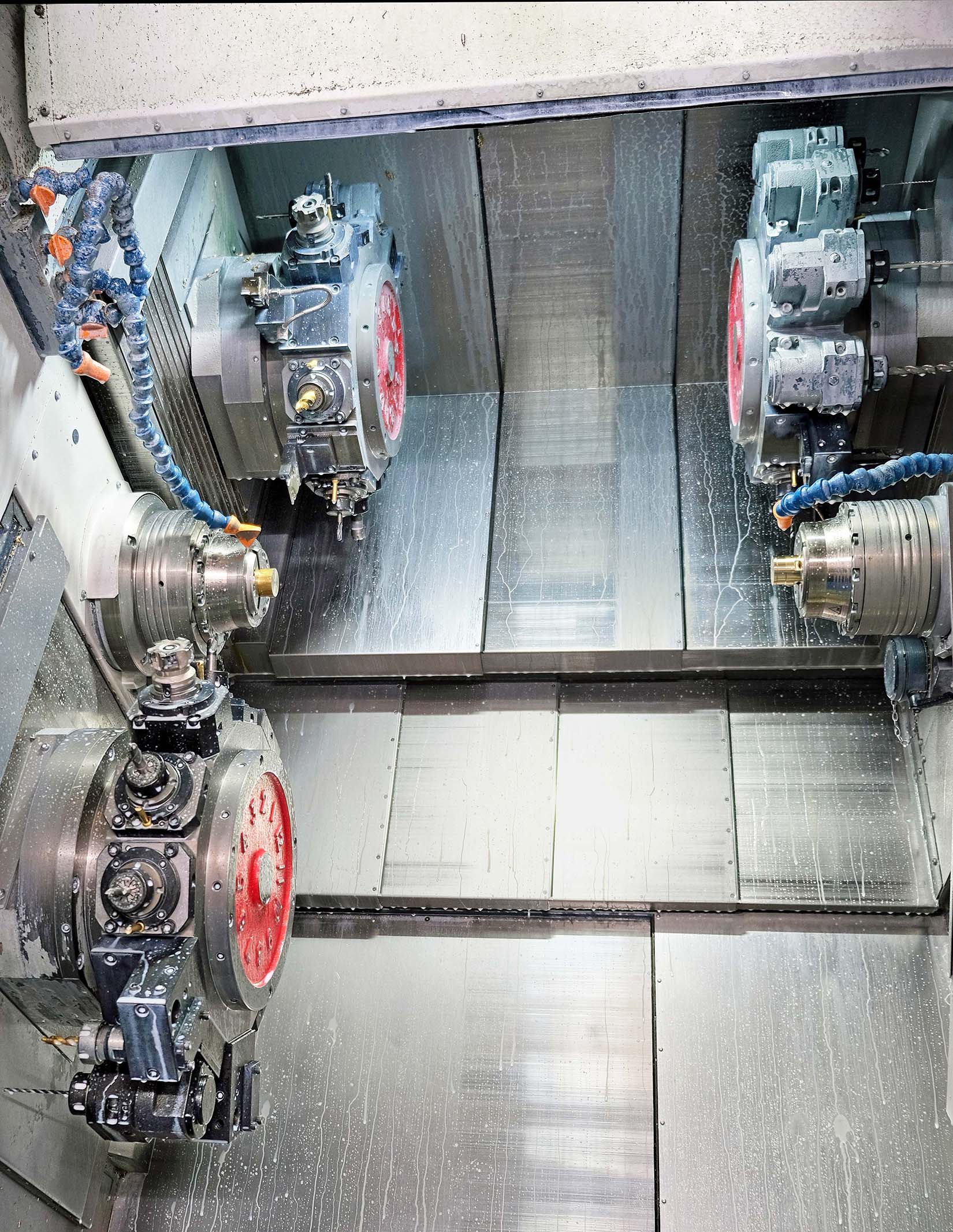
Working area of the Miyano ABX-64THY fixed-head lathe, showing the triple-turret, twin-spindle configuration.
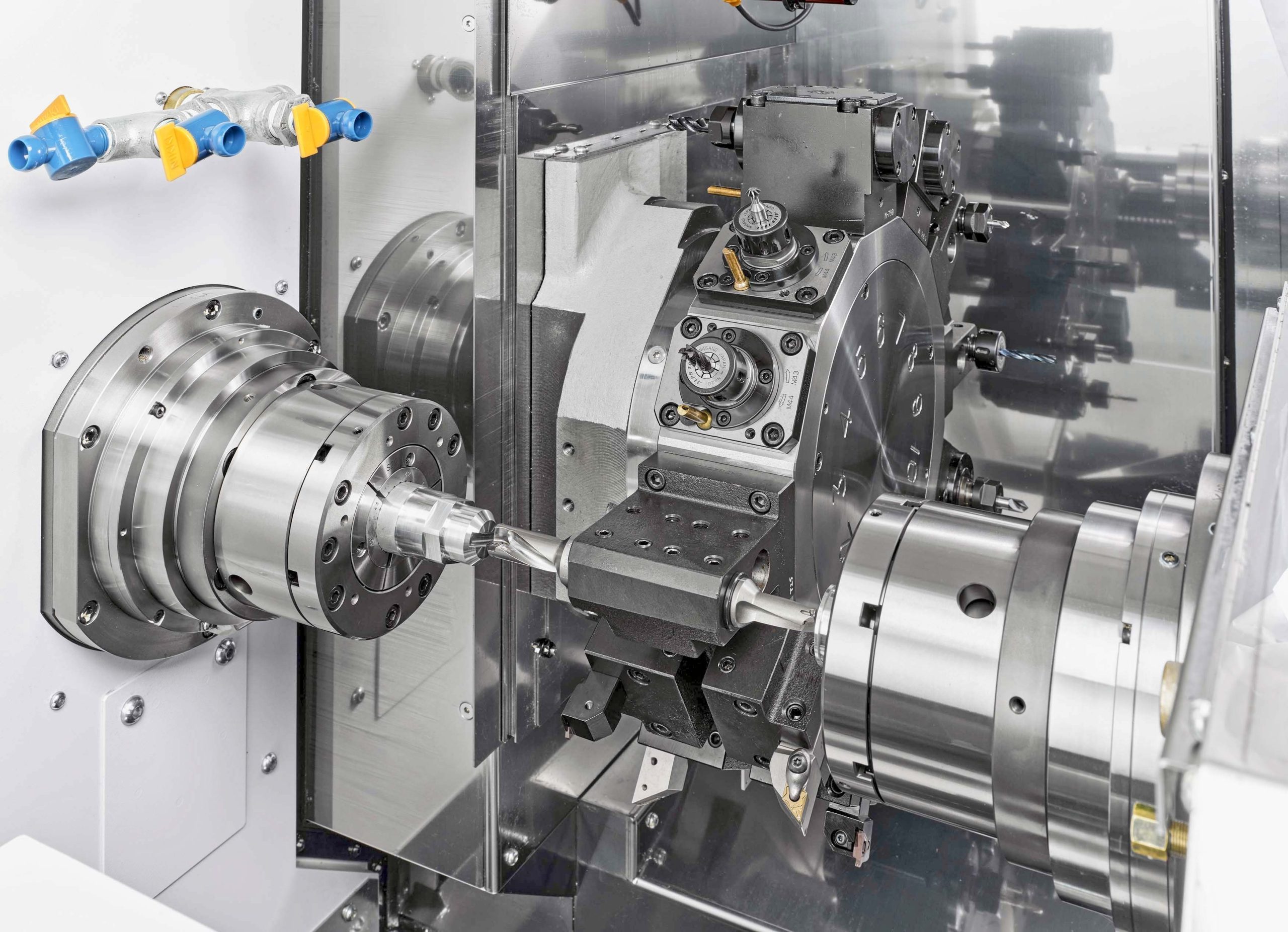
Prior to delivery of the third L20, to turn-mill larger components Meditech expanded its portfolio of Citizen lathes with a fixed-head machine from the supplier’s Miyano range. It was an ABX-64THY with three Y-axis tool turrets and a bar capacity of 64 mm. Delivered in 2015, it replaced a similar machine from a different supplier that was performing badly and set the medical equipment manufacturer on the road to becoming a Citizen-lathe-only company. 

A similar Miyano with enhanced speed, power and thermal stability to allow longer periods of unattended operation, including overnight, was added in 2023 to expand production capacity for larger components, some of which are prismatic in shape without any turned features. Both Miyanos also benefit from superimposed machining capability, which enables three different tools to be in cut simultaneously for elevated levels of productivity.

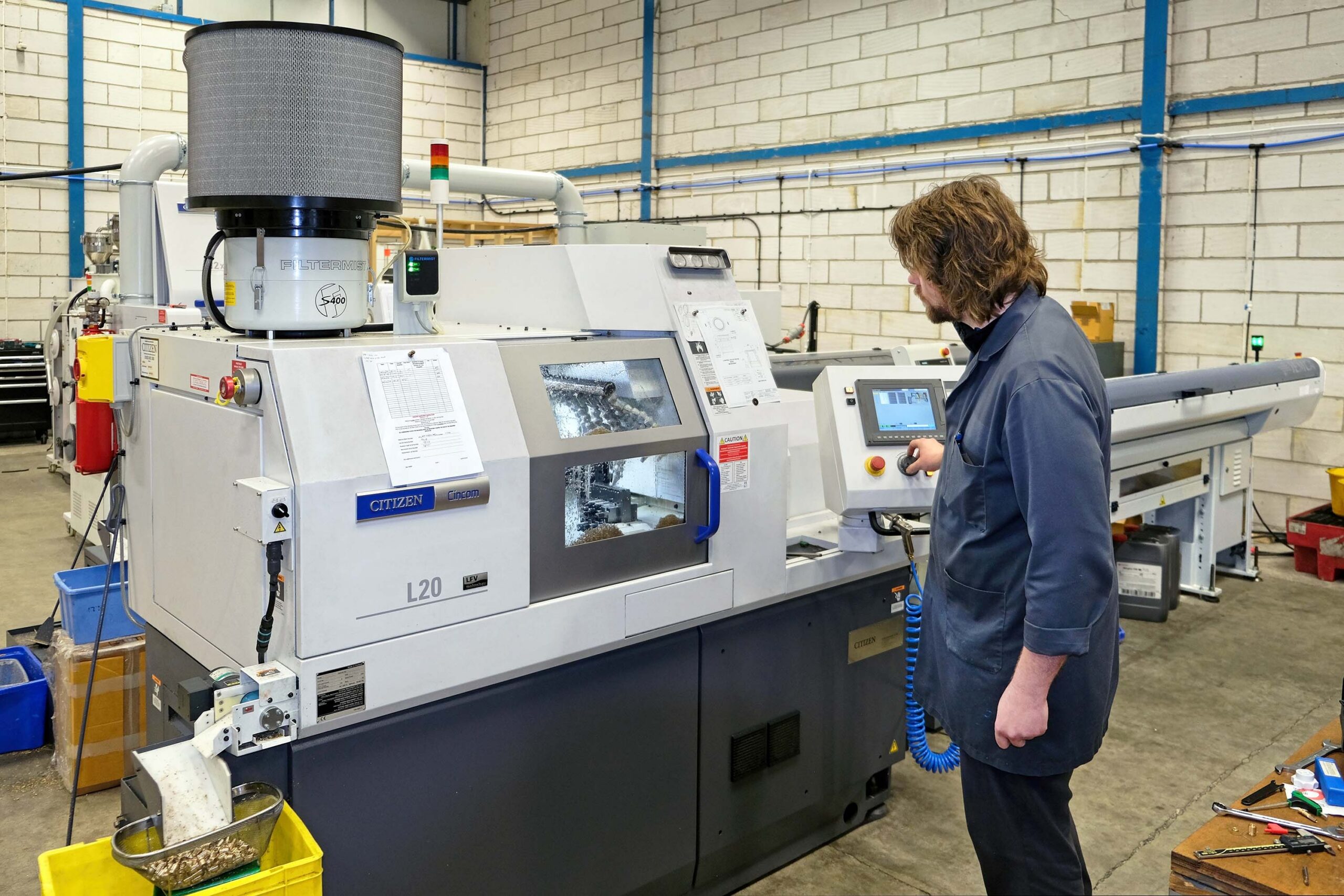
Mr Ronsky operating Meditech’s latest Citizen 20 mm capacity sliding-head lathe, a Cincom L20-XII with LFV (low frequency vibration) chip-breaking functionality.

After installation of the first Miyano, it was the turn of a larger-capacity Cincom to arrive in 2019, an L32-XIILFV to take advantage of its gang rather than turret tooling arrangement to deliver faster cycle times. This machine, which also has a programmable B-axis carrying live tools that can work on either spindle, was delivered with an expansion kit to allow bar up to 38 mm in diameter to be processed, if required. 

Notable is that, from the outset, the lathe has been operated exclusively without its guide bush in place, with the bar clamped in the spindle collet. Principal machine operator Ian Ronsky, who comes from an aerospace background, finds that the absence of the bush interface affords additional workpiece support, allowing more efficient roughing without risking vibration. 
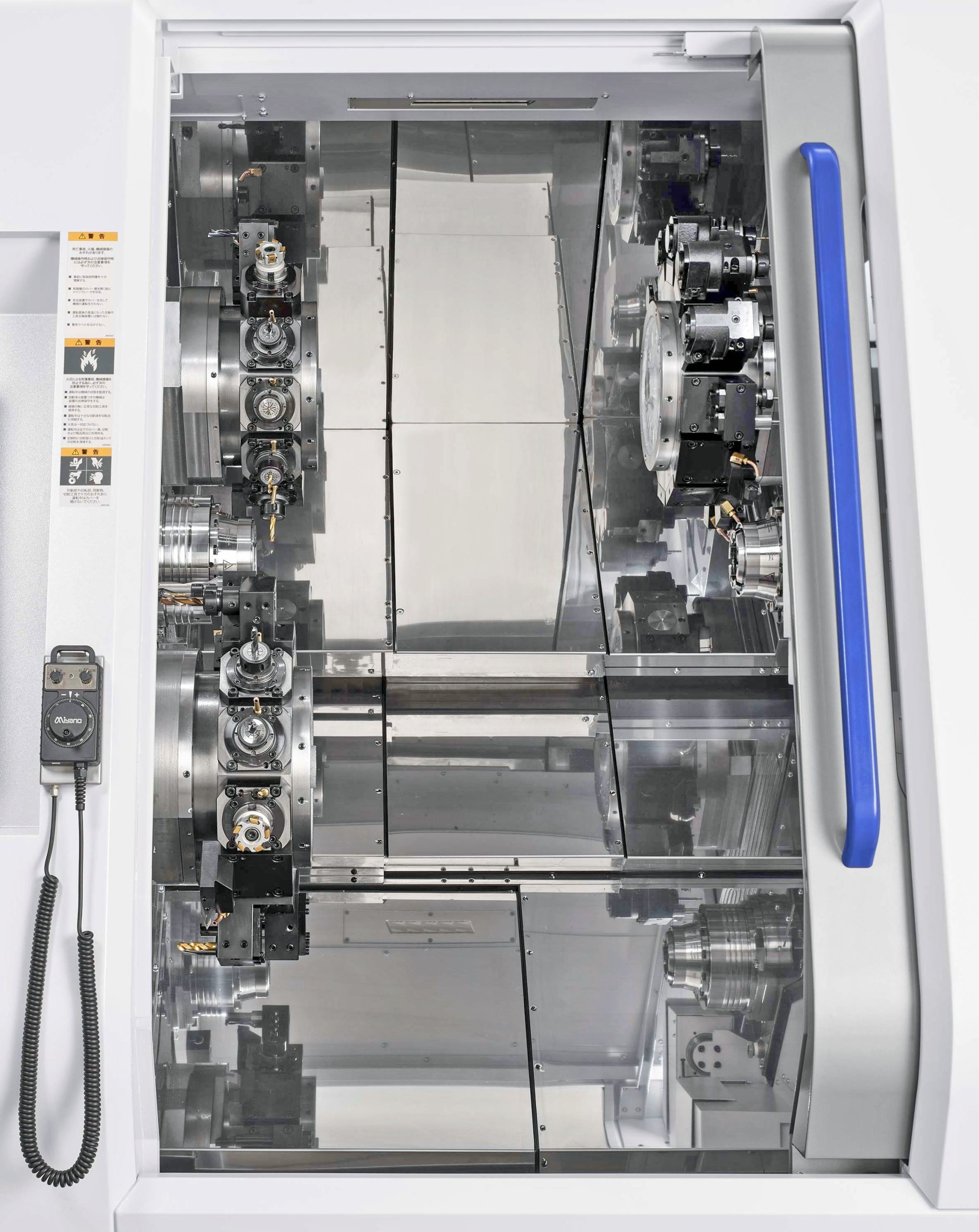
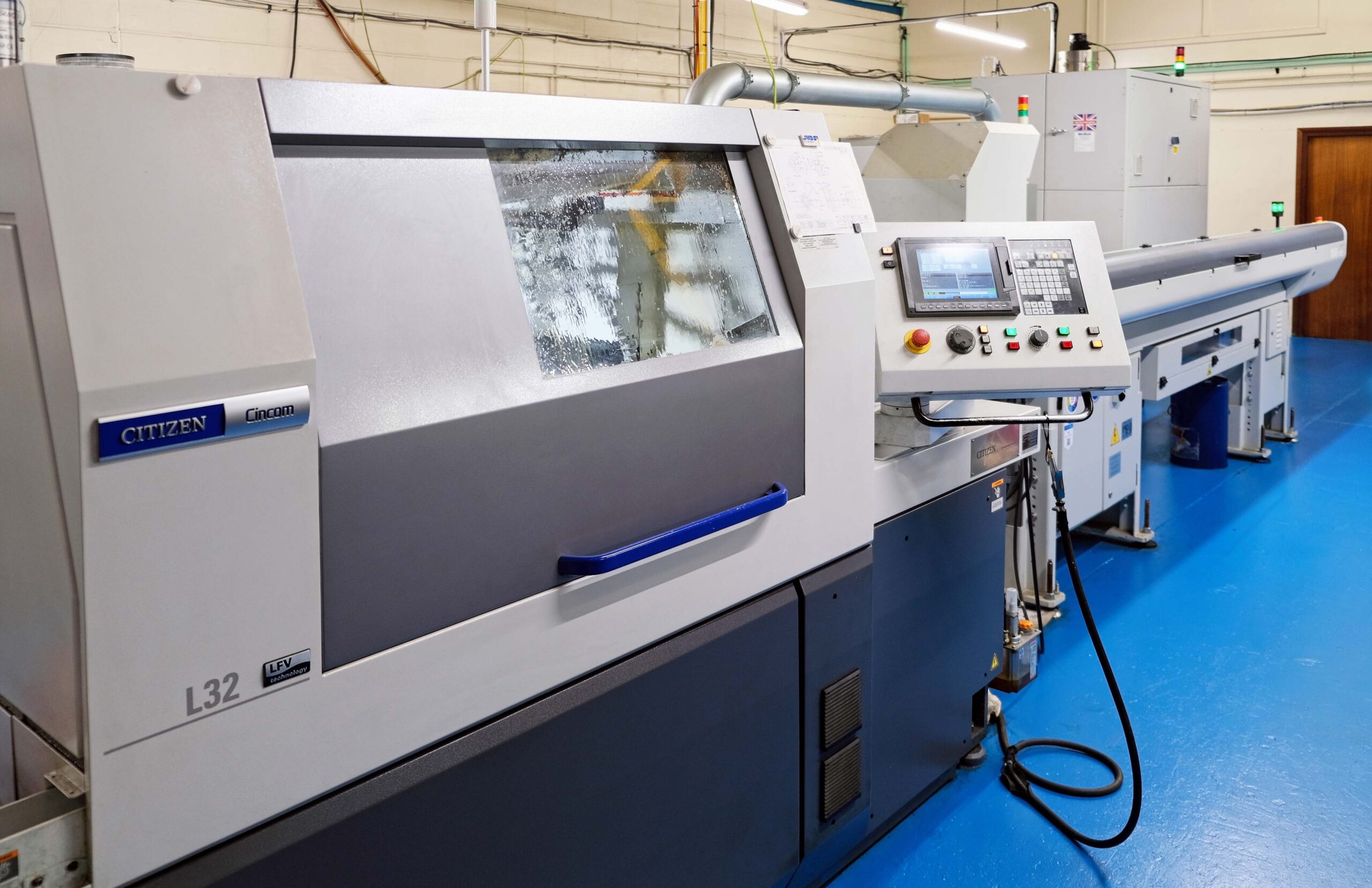
The 32 mm bar capacity Cincom L32-XIILFV on the shop floor.

He said, “Deflection of a part when machining larger-diameter, stiffer bars up to 32 mm is not a problem, even though the general tolerance we hold on workpieces is tight at ± 10 microns. 

“Any component whose length is more than the 80 mm headstock travel I simply rechuck. In non-guide-bush mode, we have the advantage of using less expensive bar and remnant lengths are much shorter, saving even more cost.”

Working area of the latest Citizen lathe to be installed in the Halstead factory – a 12 mm bar diameter capacity Cincom L12-XLFV.

The most recent Citizen lathe to be delivered, an L12-XLFV, is the smallest machine with a bar capacity of 12 mm. About one-fifth of the parts Meditech turns are below this diameter and the nimble machine allows their production significantly faster than on an L20, while also freeing the three larger lathes for other, more appropriate work. In common with the more recent Cincom deliveries, it also has the LFV chip breaking software, as will all future models destined for the Halstead factory, such is the advantage it provides when machining malleable materials.

4-AXIS CHIP-BREAKING TAKES PRODUCTIVITY TO THE NEXT LEVEL

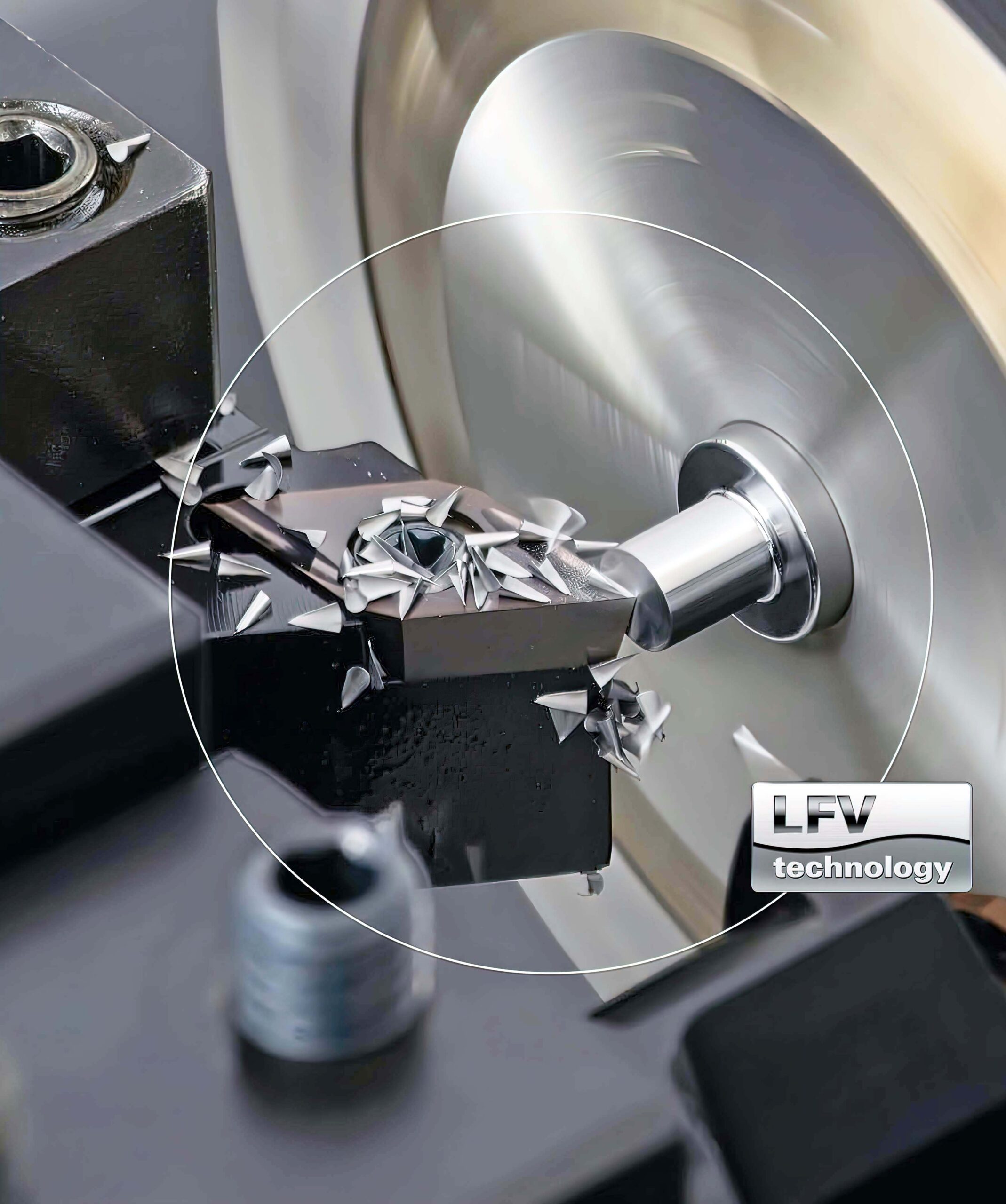
In addition to reliable chip-breaking, LFV lowers cutting resistance, prevents stringy swarf from damaging the component, inhibits the formation of built-up edge to prolong tool life, and extends the period between successive chip disposals, as the swarf volume is smaller.

MACH 2026 will be the first major UK exhibition at which Citizen Machinery’s patented LFV (low frequency vibration) chip breaking will be demonstrated with 4-axis simultaneous capability. While the functionality made its debut at the turn-milling machine supplier’s open house in Brierley Hill last October, the event in Birmingham this April will provide a first opportunity for a wider audience to see the new technology in action.
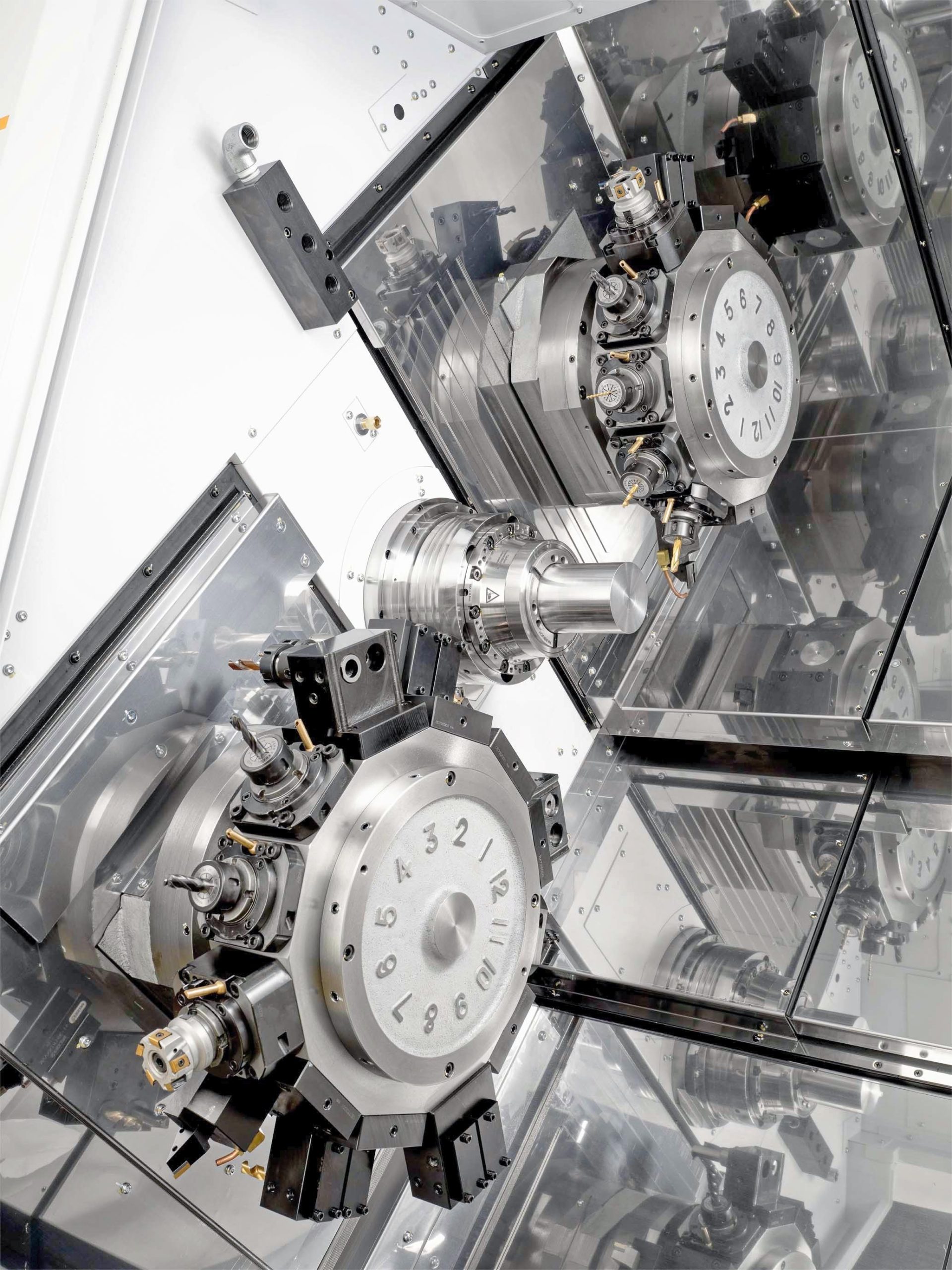
Citizen rolled out its original LFV chip-breaking functionality to international markets more than a decade ago. Integrated into the operating system of the control driving the axis motions of Citizen Cincom sliding-head lathes, and more recently selected Miyano fixed-head models, it is designed to break stringy swarf into manageable chips. Distinct from programmed chip-breaking macros offered by other suppliers, LFV synchronises high-frequency vibration in the direction of the cutting feed with spindle rotation to create intermittent air-cutting to break long swarf effectively.

Citizen Miyano BNJ-51SY with 4-axis LFV

Today, the technology has been developed to enable the function to be programmed to start and stop in four separate axes at the same time, the X and Z movements of both the main and sub spindles. 4-axis LFV is a major step forward, as it greatly enhances flexibility, reduces cycle times and eliminates operational bottlenecks, since there is no need to stop the machine to remove tangled swarf, however complex the program. It is particularly advantageous during lights-out production when working with malleable materials like copper, some stainless steels, aluminium, titanium, nickel alloys, lead-free eco-brass, and plastics.

Citizen Miyano BNX-65MSY with 4-axis LFV

Application engineers at Citizen Machinery are always on hand to assist in optimising machining strategies and several specialists will be present at MACH 2026 to provide advice. Notably, at the show there will be five turn-mill centres with 4-axis LFV. They will include three new Miyano fixed-head lathes, a BNJ-51SY7, a BNX-65MSY with workpiece unloader, and an ANX-42SYY also with an unloader.

Citizen Miyano ANX-42SYY with 4-axis LFV

The other 4-axis LFV models will be sliding-head Cincoms, a brand new L32-X series 2 and an M32-VIII that combines the speed of a gang tool post with the versatility of a 10-station turret. Both machines, along with the Miyano models on show including a BNE-65 with automatic tool change, are capable of superimposed machining with up to three tools in cut simultaneously, significantly reducing cycle times.

Citizen Cincom M32-VIII with 4-axis LFV

A further highlight on the stand will be a Miyano ABX-80THY with three 12-station tool turrets and enhanced thermal compensation, capable of turn-milling parts up to 80 mm in diameter to very high accuracy. It will be exhibited alongside a compact, micro-machining, sliding-head Cincom RO4 lathe having a 20,000 rpm spindle, a zero-backlash linear motor in the X-axis and a bar capacity of 4 mm, which will be demonstrated turning a 2 mm diameter component. This pair of machines at opposite ends of the range in terms of bar capacity will underline the enormous variety of production equipment available from Citizen Machinery UK.

Ten sliding-head lathes in five years transform production efficiency

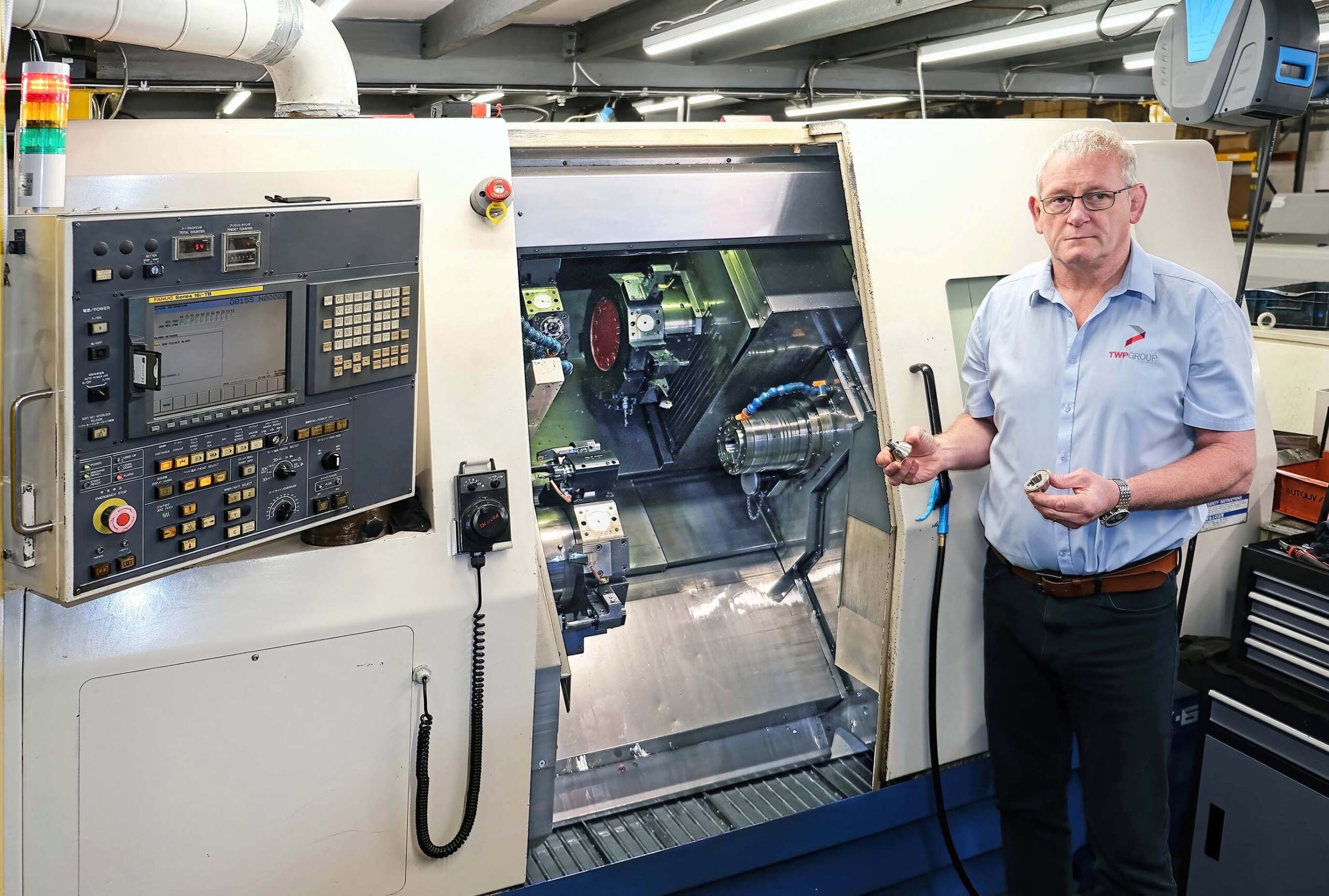
Established in 1995, toolmaking, metal pressings and plastic injection moulding services provider TWP Manufacturing Group, Tipton, started making a range of proprietary products after the financial crisis of 2008 to build business resilience. They include photographic studio and darkroom equipment, gardening items such as wheelbarrows, and spiral security anchors. Most of the items that go into them, including stamped metal platework, milled components and moulded plastic parts, are produced in-house and assembled into the various products, together with a large variety of turned parts that historically were mainly sourced from suppliers in the Far East.

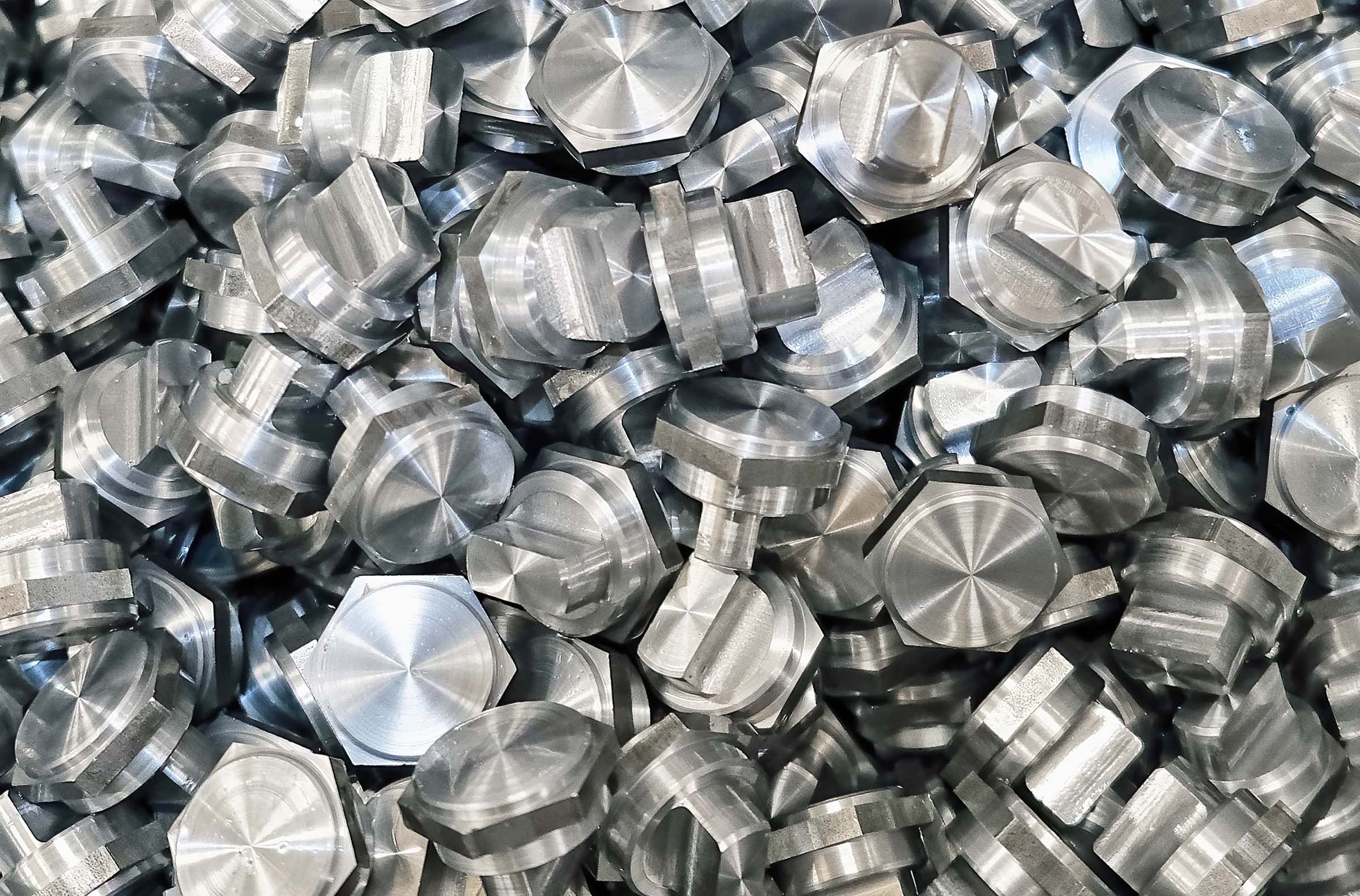
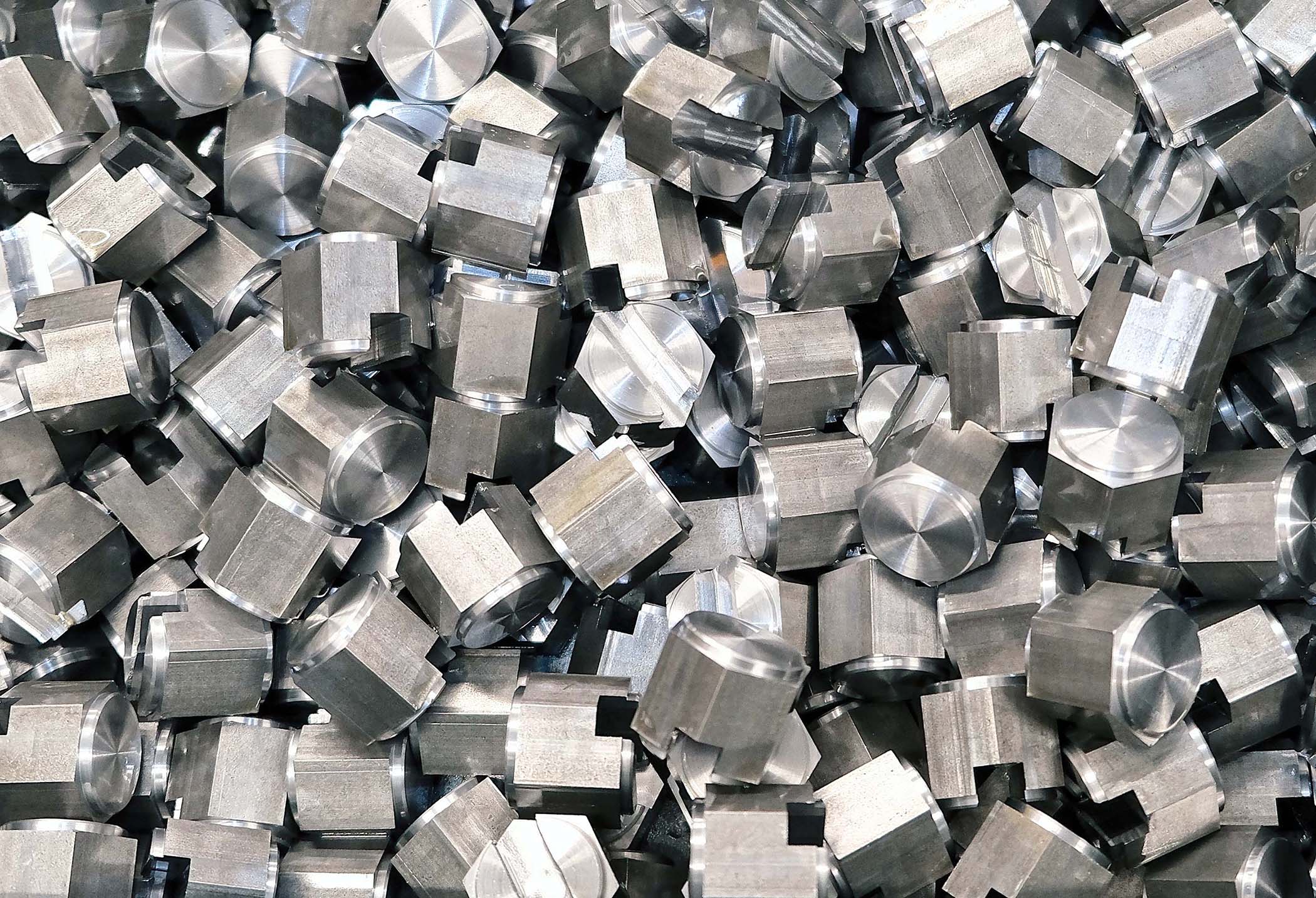
Components being produced from hexagonal bar on the M32. Typical batch runs are 5,000- to 6,000-off.

That changed in May 2020 with the purchase at auction of a Japanese-built, CNC sliding-head turning centre, a Citizen Cincom M32 that was 19 years old at the time. The twin-spindle, 32 mm capacity, bar-fed lathe, equipped with a tool turret, a gang-type tool post and a back tool post for reverse-end machining, brought in-house about half of the outsourced turned parts production.

Fast-forward five years to the spring of 2025 and the number of such machines on the shop floor had risen to 10, all pre-owned and mostly of similar age. Not only had all the previously subcontracted turn-milling work long since been repatriated, but a turned parts subcontracting business had also been established that now accounts for 30% of the firm’s £4.2 million current annual turnover.

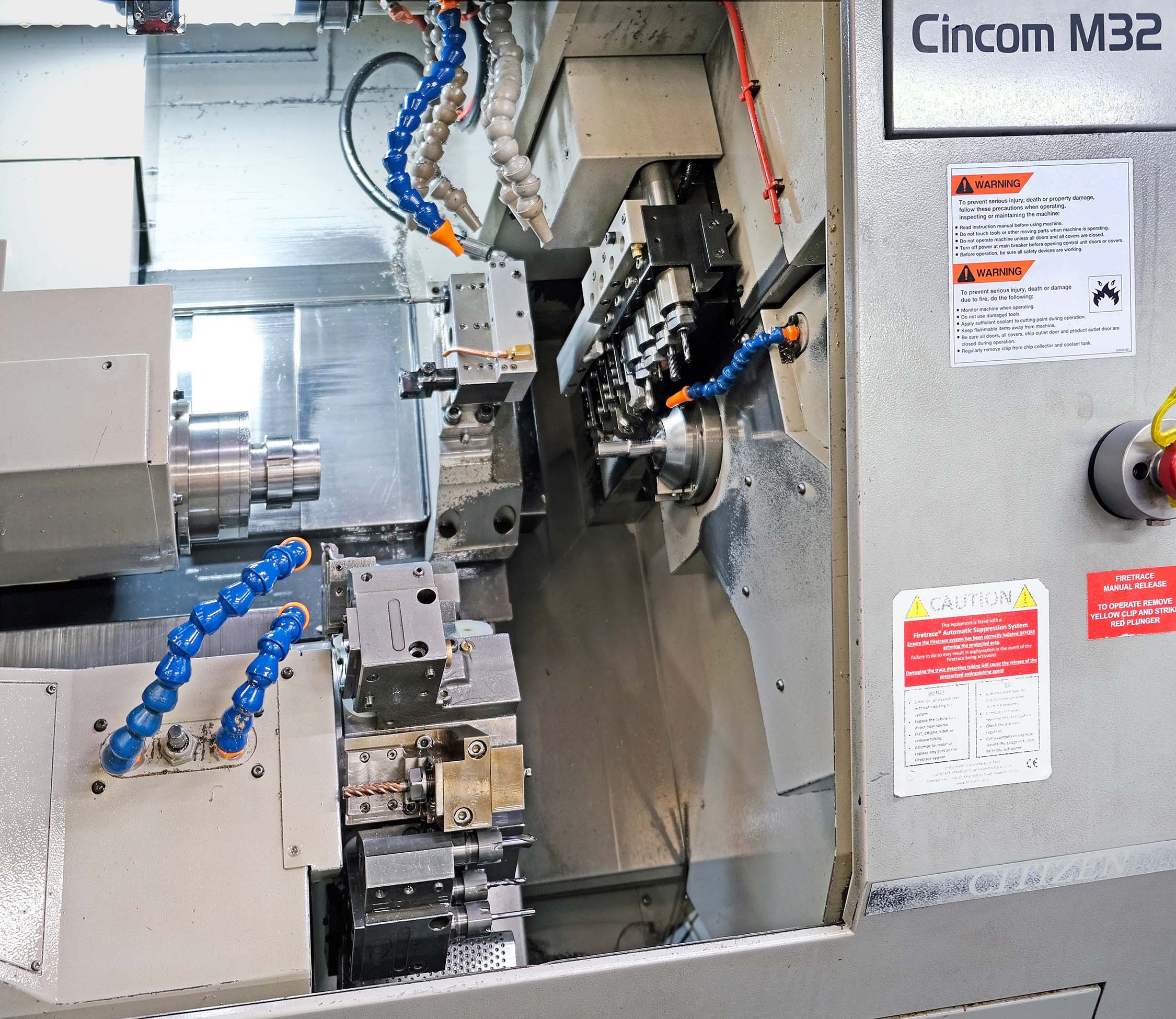
Working area of another of the Cincom M32s in Tipton.

Five years ago, income was £2.5 million per year, which means that business has increased by more than two-thirds in that time. Notably, during the same period the headcount has decreased by 20%, to 28 staff, so earnings per person employed has jumped by more than double.

Phil Stanley, joint owner of TWP together with partner Richard Perry, said, “Our relationship with Citizen Machinery UK has been brilliant since the start. Despite our repeated purchase of used machines, nothing has been too much trouble for them over the years.

“They were there for us when we installed the first M32, helping with advice and early programs. If the assistance from their engineers had not been forthcoming, we would not have been able to progress. 

“The support we have received all the way through each of the 10 lathe installations, including refurbishment and realignment of the machines, has been second to none and they are still behind us every step of the way.”

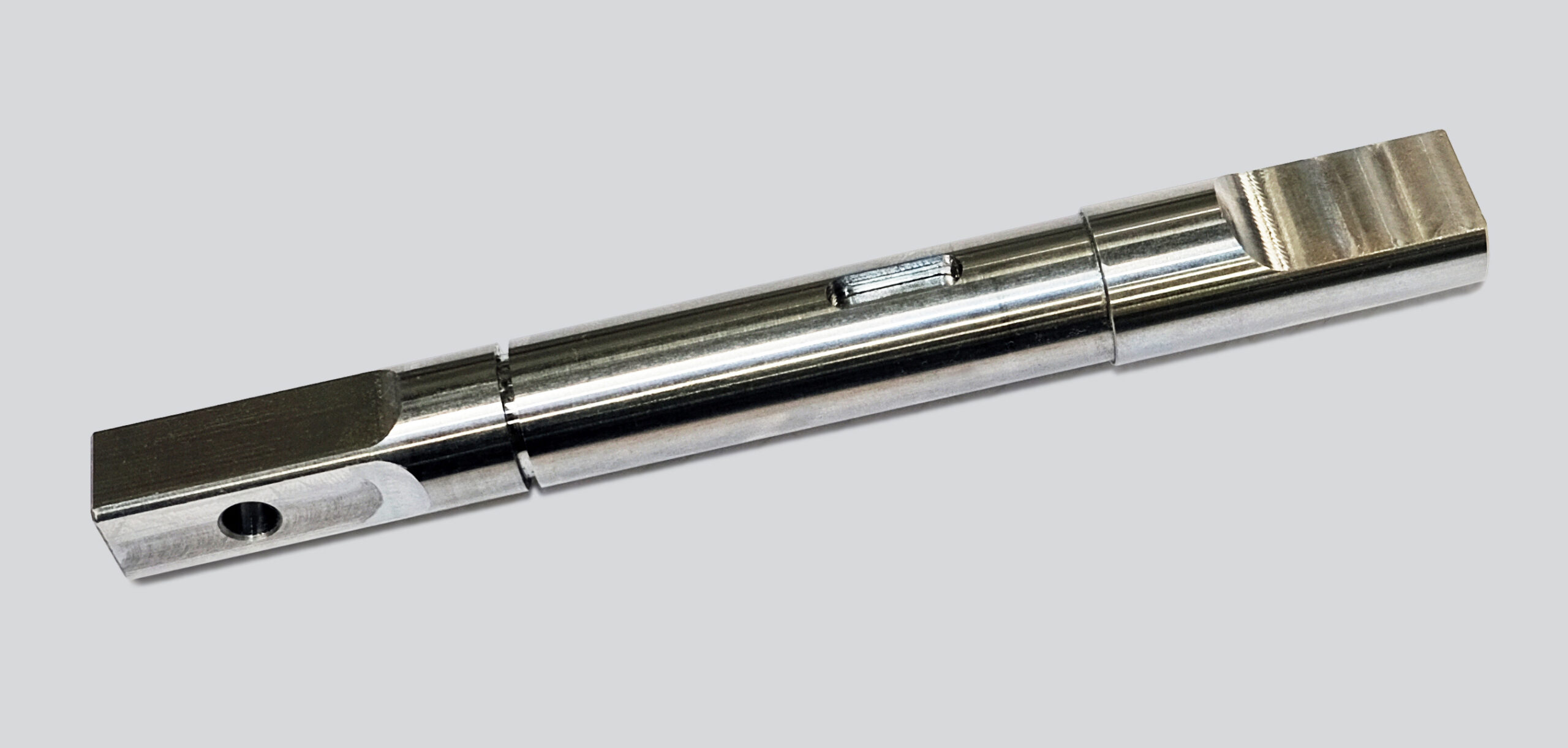
A hardened steel engagement shaft for a leisure market product produced in the M32.

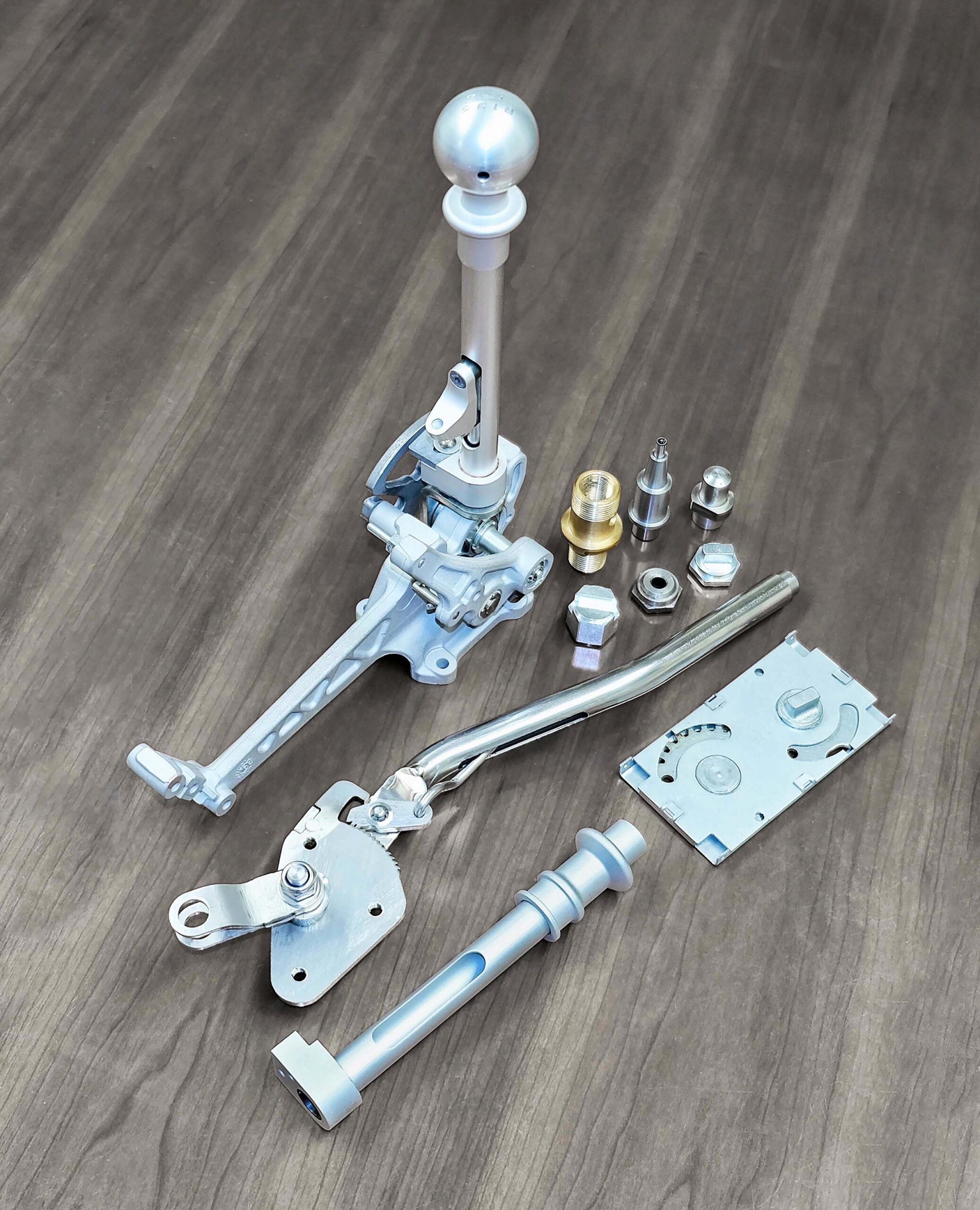
Four months after the first Cincom arrived, a second Citizen sliding-head lathe of the same bar capacity was acquired, an L32 equipped with exclusively gang tooling and the facility to eject shaft-type components through the sub spindle. It proved ideal for producing a main component in one hit for the gear shift lever of a Lotus car. Virtually every other component that comprises the assembly is also produced in-house.

To provide extra capacity, bring down lead-times and allow TWP to introduce just-in-time manufacturing procedures, a second M32 was purchased in May 2021. By this stage, all turn-milled parts production had been insourced. It also allowed the manufacturer to get ahead with forward orders and gain new business.

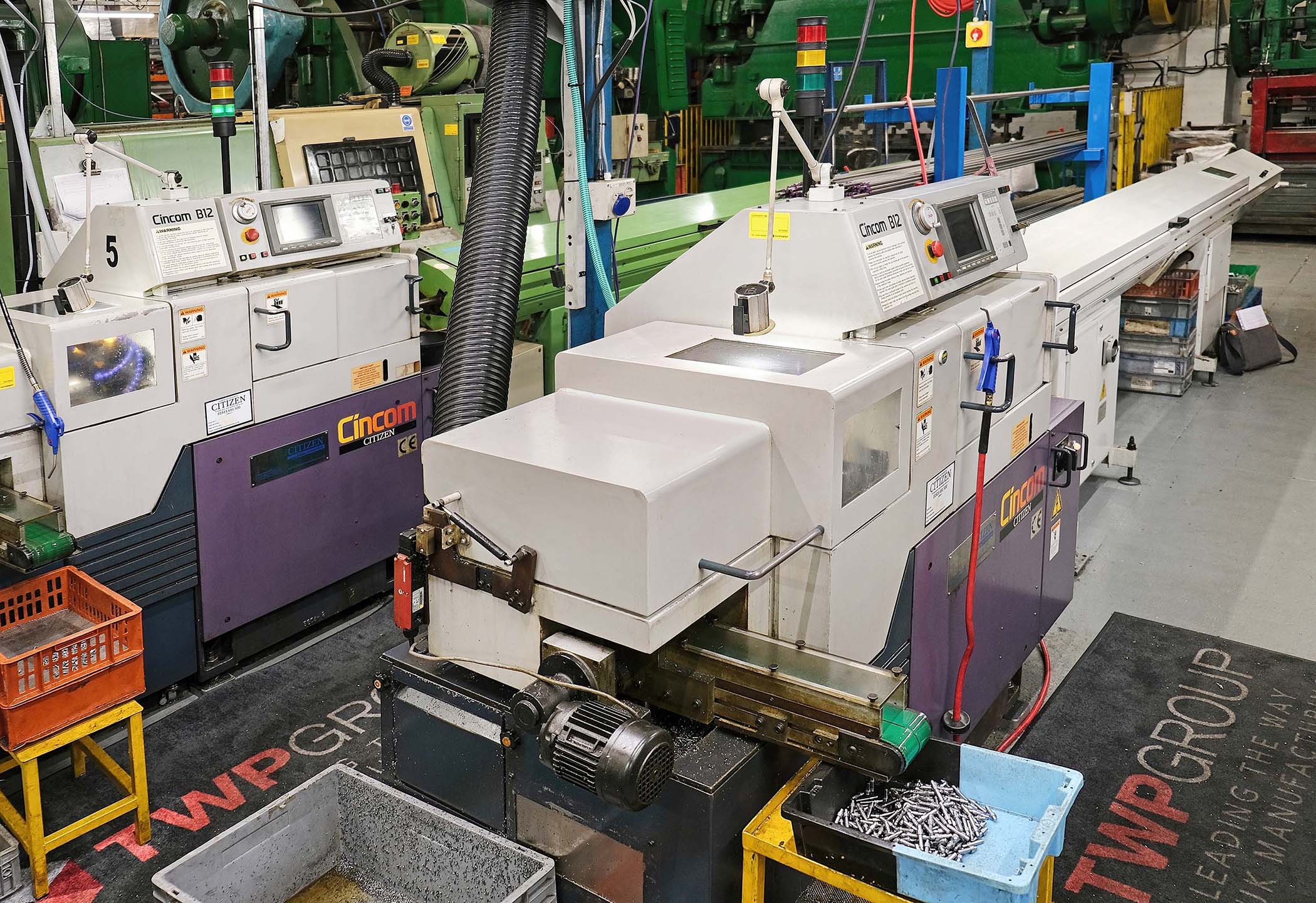
The pair of Cincom B16s on the shop floor in Tipton.

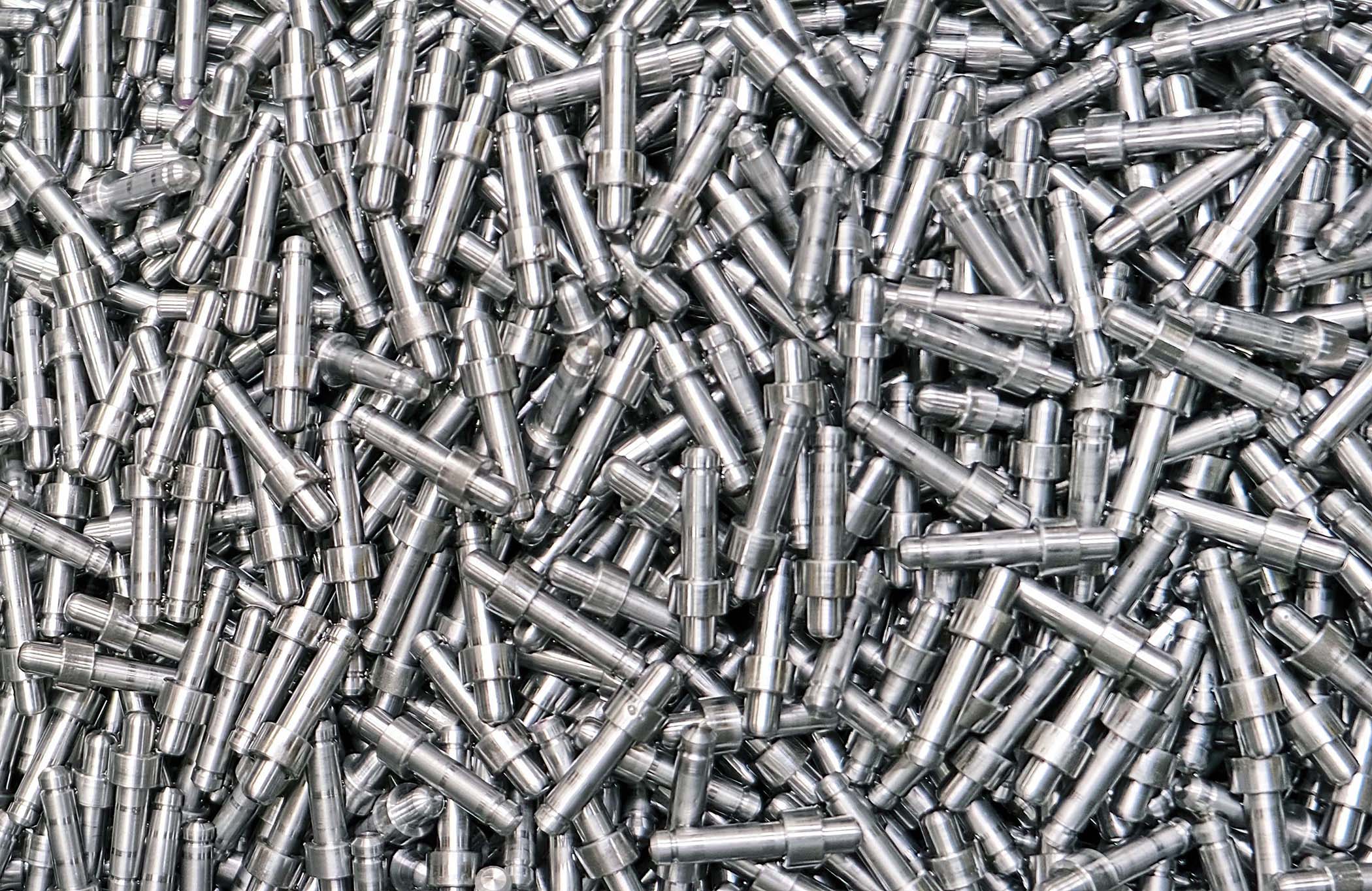
With the aim of transferring sub-12 mm diameter parts production from the 32 mm capacity sliding-head turning machines to more appropriately sized, nimble lathes, two B12 Cincoms arrived in August 2022. Among numerous other jobs, they are used around the clock every week for turning 10,000 mild steel pins that go into control boxes for heating and ventilating systems.

The following year, in June and August respectively, Citizen delivered two 20 mm capacity Cincom L20s, enabling work to be allocated more efficiently across the shop floor. It also avoided having to set up machines before a batch run had finished to accommodate a contract that needed to be fulfilled urgently. The extra lathes provided much-needed additional capacity to cope with more work that was being received from existing and new customers.

The B16s are used for the efficient production of smaller-diameter components from round bar. Pictured are mild steel pins that go into control boxes for heating and ventilating systems. 5,000 are produced per machine per week.

Wishing to produce components from larger bar up to 64 mm diameter, Mr Stanley opted for a triple-turret lathe from Citizen’s other product line, Miyano. An early job put onto the machine compressed into a single operation the manufacture of a high-strength 6082 aluminium T6 cable link for the Lotus gear shift. Before the machine’s installation, the maximum bar diameter that could be processed in the Tipton factory was 55 mm.

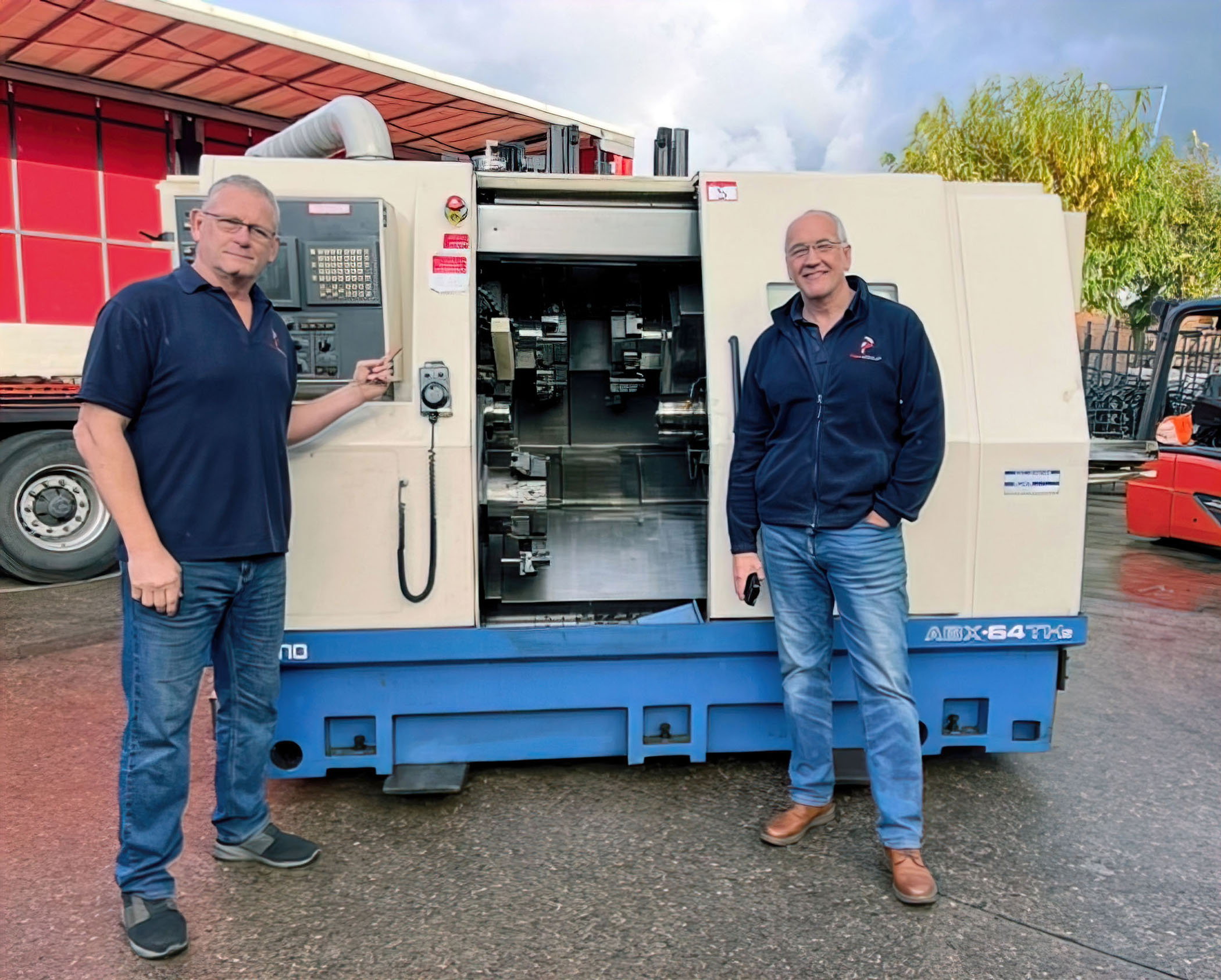
Phil Stanley (left) and Richard Perry, joint owners of TWP, taking delivery of the second-hand Miyano ABX-64TH2.

Most recently, following the clearance of a storage room to provide additional manufacturing floor area and the relocation of various machines, two additional Cincom models were added in February and April 2025, both M32s. This part of TWP’s facility was officially opened on 14th March 2023 by West Midlands Mayor Andy Street and Shaun Bailey, MP for West Bromwich West at the time, who both also toured the entire factory comprising three industrial units.

Qualified toolmaker Phil Stanley by the Miyano ABX lathe on the shop floor.

Despite the Citizen lathes all being second-hand, which allowed TWP to buy them without the need for finance, the Citizen lathes work like new machines, according to Mr Stanley. He said, “We hold a general tolerance here of ± 0.05 mm, but we have turned a carbon steel pin to +0 / -2 µm on the L32 – not bad for a lathe built a quarter of a century ago!”

Components being produced by the Miyano, again from hexagonal bar.

He puts this performance down to the extreme rigidity of Citizen lathes, coupled with the use of good quality coolant and judicious choice of feeds and speeds. This combination not only promotes high dimensional accuracy and good surface finish, but also long tool life. He noted recently that on one lathe, each edge of a carbide insert, when machining parts from mild steel bar, did not need to be indexed or replaced before 1,800 parts were produced.

A total of 800,000 turn-milled components per year are machined on the 10 Citizen lathes, two-thirds of them from mild steel, while stainless steel accounts for another 30% of throughput. As a large proportion of components include spanner flats, extensive use is made of hexagonal bar to avoid milling them and lengthening the cycle times. The robustness of the Citizen lathes, and their ability to withstand the inevitable vibration when turning such bar, is a major benefit in this respect as well.

Some of the components and assemblies produced by TWP. The Lotus gear shift lever is seen in the background.

Two more Citizen lathes bring the total at Luton subcontractor to 21

The decision to set up a turned parts subcontracting business at the start of the worst economic crisis in living memory has paid dividends for Yian Stavrou and George Dingley, joint owners of Luton-based Sub-CNC Precision (www.sub-cncprecision.co.uk). Supporting their successful evolution from earning a few thousand pounds a month in 2008 to turning over a predicted £3 million in the company’s current financial year has been, from the very beginning, continued investment in twin-spindle, multi-axis, bar-fed lathes supplied by Citizen Machinery UK (www.citizenmachinery.co.uk).

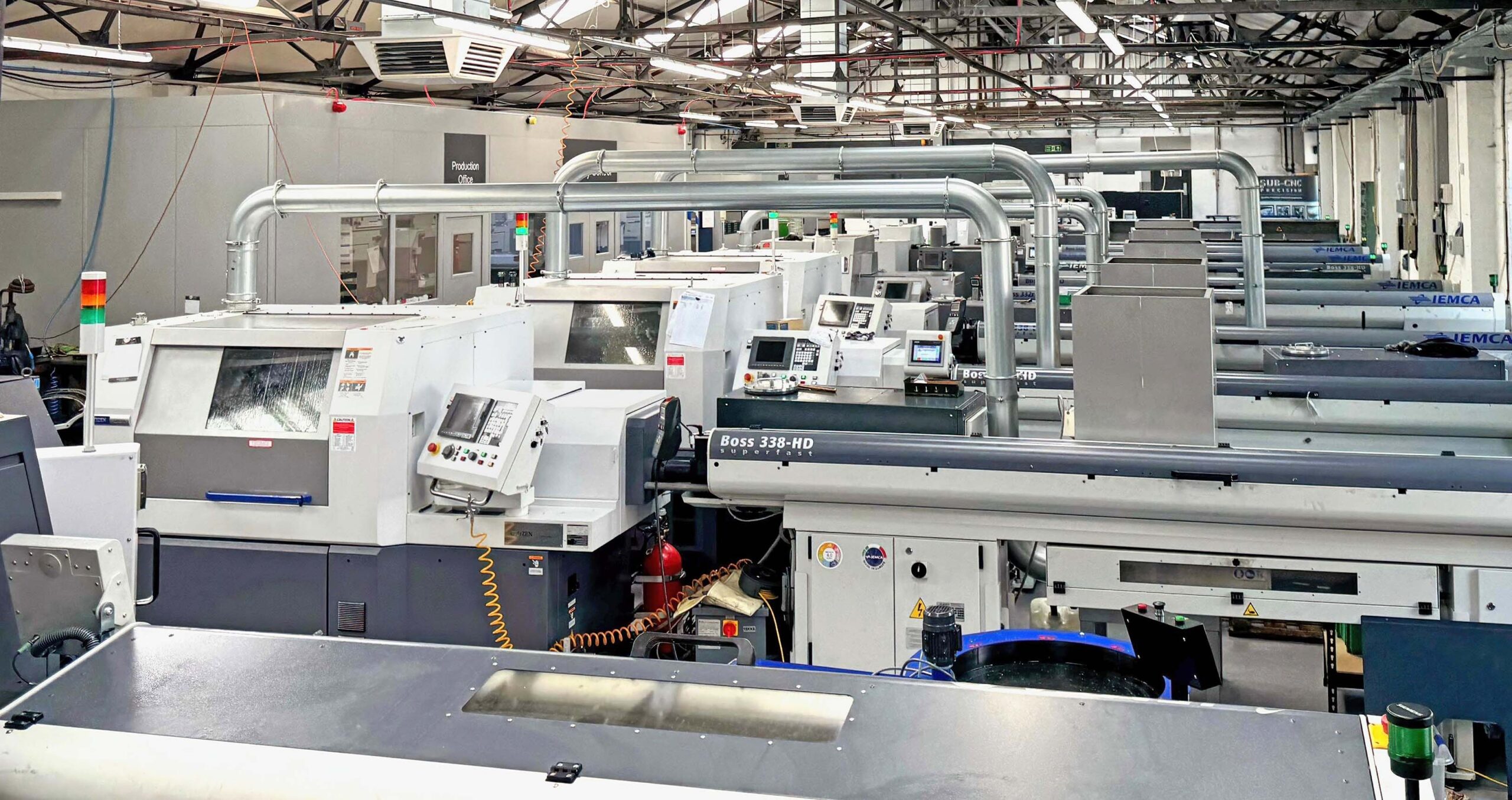
Another view of the Cincom sliding-head lathes on the shop floor

Over the years, the ISO 9001:2015-accredited and JOSCAR-registered subcontractor has bought 25 of them, part exchanging a few to leave 21 on the shop floor as of November 2025. Two-thirds are Cincom sliding-head models for producing parts from 0.5 mm to 38 mm in diameter and the remainder are Miyano fixed-head turning centres. Many of the lathes run around the clock, lights-out from 6.00 pm to 7.00 am.

In total, there are 27 CNC machine tools on the shop floor, including another fixed-head turning centre, three vertical machining centres with 4th axis, a CNC cylindrical grinding machine and a 3D printer. The list of industries served is long, including aerospace and defence, automotive and motorsport, telecommunications, sensors, energy and renewables, hydraulics, medical and instrumentation.

The introduction of Citizen’s proprietary LFV (low frequency vibration) chip-breaking software in the Cincom control massively assisted unattended machining, according to Yian. He said, “In 2017, we installed one of the first LFV machines in the country, a 20 mm bar capacity L20-VIII which arrived in the April, followed at the end of that year by a 12 mm capacity L12-VII.

“It was immediately clear that their ability to break what would normally be stringy swarf, which would necessitate stopping the machines to clear it away manually, into short chips meant we could leave them unattended to produce components, even from difficult-to-machine materials, knowing that we would arrive in the morning to a bin full of perfect parts. It is the only way to remain competitive in the face of competition from low-wage countries.”

Turn-milling in progress on Sub-CNC’s latest Miyano BNE-51MSY fixed-head lathe.

The two lathes were immediately deployed onto turn-milling parts from copper and phosphor bronze, during which LFV’s effectiveness at chip-breaking the long, continuous coils of swarf was especially apparent. Monel, Inconel, titanium alloys and other exotics including for submarine component manufacture were similarly machined reliably. Encouraged by this initial success, Yian and George have made sure that no new Cincom since then has entered their factory without LFV. Currently, more than half of the sliding-head lathes on the shop floor are equipped with the function.

When machining copper, for example, LFV is switched on for most of the time to prevent ribbons of swarf from being generated. However, it is also useful for promoting chip-breaking when turning other, less problematic malleable materials such as stainless steel and aluminium, as well as plastics including nylon, PEEK, acetal, POM, PTFE and ABS.

The big advantage of the function is that it can be programmed using G-codes to switch on and off during a cycle, added to which it also has different modes to adjust the size of the chips. To maximise output by avoiding unnecessary periods of slightly reduced productivity while the tool leaves the surface of the component to initiate chip breakage, the function is disabled for parts of the cycle where enhanced chip-breaking is not required.

George mentioned other facets of the Cincom offering that helps Sub-CNC’s business. One is 140-bar high-pressure coolant delivery to the cutting zone, which further assists chip breaking, especially during parting-off. Another is the removable guide bush, which takes about half an hour to swap in and out. When it is not in place, economical use may be made of lower quality, unground bar that would seize in the guide bush, while bar remnant length is reduced, resulting in further savings. The set-up is ideal for producing parts whose length is less than 2.5 times the diameter, as radial flexure due to the force of cutting tool infeed is not significant, even at the unsupported end of such relatively short components.

The largest-capacity Miyano at Sub-CNC and the only one with two Y-axis turrets.

As to the fixed-head Miyano lathes, which produce parts from bar ranging from 8 mm to 65 mm in diameter, or from billet up to 200 mm diameter, they started arriving at the subcontractor’s factory in 2012 in the guise of a pair of 42 mm bar capacity BNA-42MSY turning centres. At the time, they assisted in particular with the production of complex turn-milled components for the oil and gas sector.

Latest to be installed, in July 2025 alongside a new Cincom L20-XLFV, was a Miyano BNE-51MSY to provide more capacity for fixed-head turning. Three new lathes from Citizen including these and a third-generation A20-VII arrived on the shop floor in the first seven months of the year.

The BNE-51MSY was preceded in 2022 by a BNE-65MYY, extending the diameter of component that can be produced in the Luton factory to 65 mm. The lathe has Y-axis movement on both tool turrets, which at the time enabled efficient production of an aircraft component in one hit in a seven-minute cycle, using superimposed machining with three tools in cut simultaneously. The reliability of the process even allowed unattended running overnight. The essentially prismatically-shaped, L168 aerospace aluminium part was previously milled in three separate operations on machining centres by another subcontractor in a process that took much longer.

Employing 22 people, including engineers whose skills have been honed as a result of the firm’s internal apprenticeship scheme and association with the local Dunstable Technical College, Sub-CNC also offers sub-assembly as an added-value service for customers. With the aid of Fitfactory production control and materials requirement planning software, a variety of logistics options is offered to integrate with clients’ inventory and production schedules. They encompass consignment stocking of manufactured components and assemblies, just-in-time delivery including kanban, and spot order fulfilment.

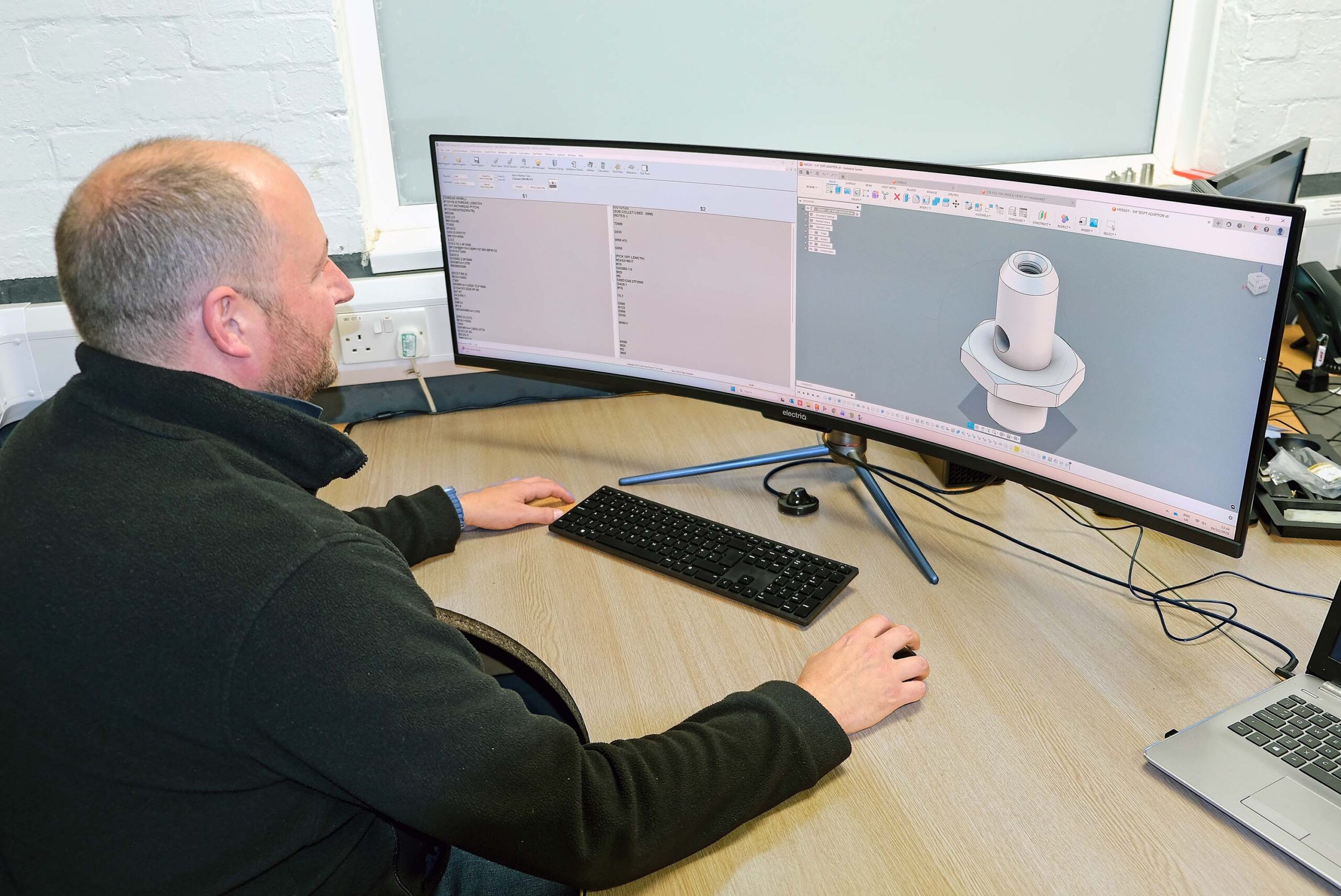
George Dingley demonstrating that Autodesk Fusion 360 (right hand screen) is now an optional add-on to Citizen’s Alkart Wizard programming software, allowing CAM workflows to be streamlined when generating complex toolpaths for sliding-head turn-milling.

Central to the subcontractor’s operation is a well-equipped inspection room, emphasising the company’s commitment to delivering high-quality components. Quality assurance begins before production with a thorough review of technical drawings and customer specifications and continues throughout the contract, with first-off and in-process inspections carried out by operators and the quality team using touch-probe and non-contact optical measuring equipment. Everything is traceable and documented, from raw material receipt through to final despatch.

What characterises Sub-CNC’s business above all else, however, is its specialisation in high-volume turned parts production. George highlighted that the subcontractor has recently won three additional, long-running contracts. One involves machining 20,000 stainless steel automotive components per week. Complex sensor parts, also in stainless steel for a customer in the utilities sector, are required in quantities of 3,000 per week. Five different brass components for an oil and gas industry customer are currently running at 10,000 per month.

At the other end of the scale, the subcontractor regularly undertakes design and prototyping for customers, followed by short production runs of, say, 10- to 20-off, even on a sliding-head lathe. Often, this type of project turns into a long-running contract later on.

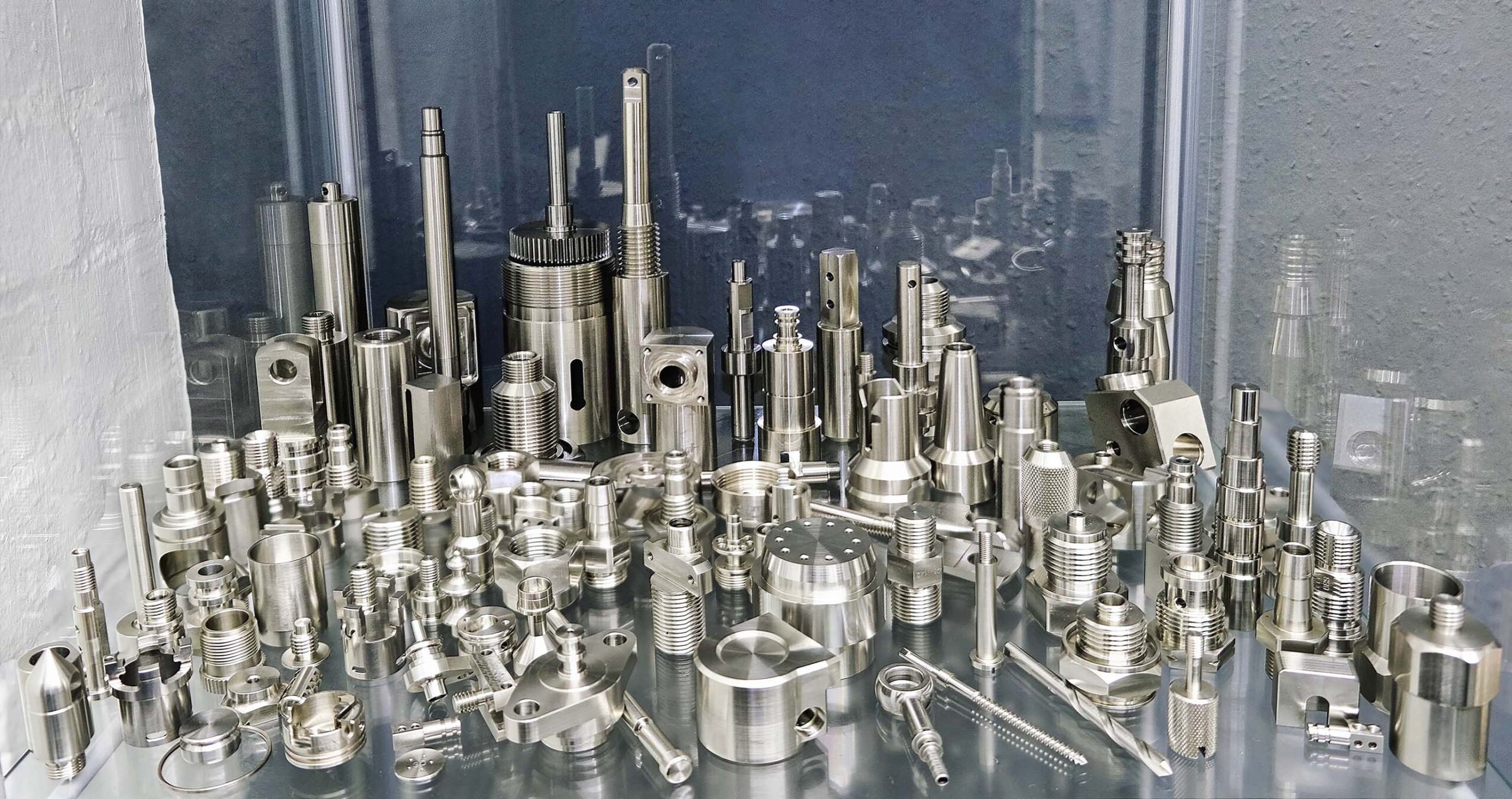
A selection of components that have been turned and milled by Sub-CNC on the 21 sliding- and fixed-head lathes supplied by Citizen Machinery UK.

In conclusion, Yian said, “George and I are both time-served mechanical engineers with early experience operating Cincom machines at various subcontract machining companies. We were always impressed by their performance, so when we set up our own business, choosing a Citizen lathe was the natural decision.”

“It proved to be exactly the right choice. The fact is, if you set up a Cincom or Miyano correctly, it is practically impossible to end up with a bad part. Without any adjustment, they just carry on producing components hour after hour, to single-figure micron tolerances if necessary, until the bar magazine runs out of stock.”

Citizen expands its single-turret lathe offerings to process larger bar diameters

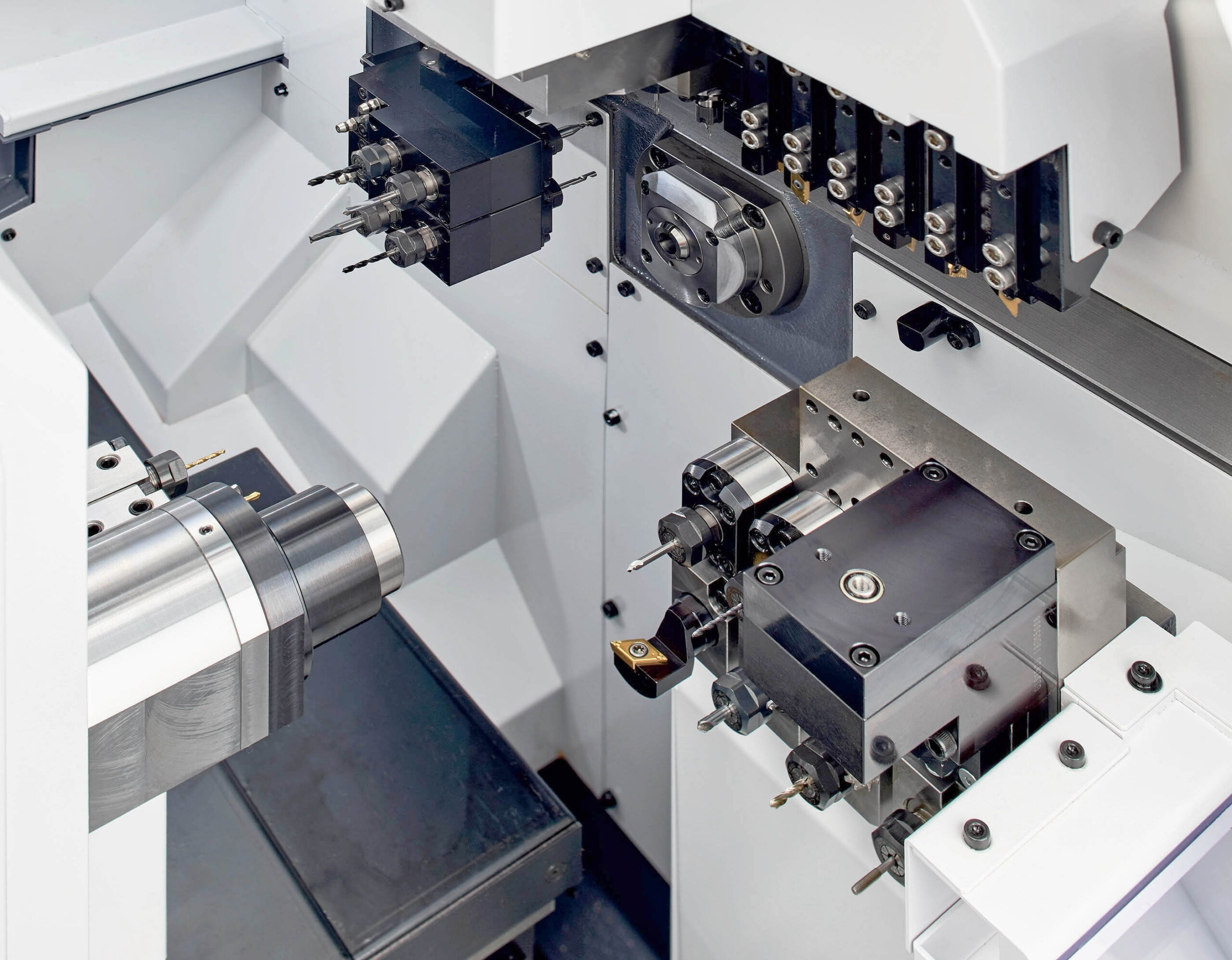
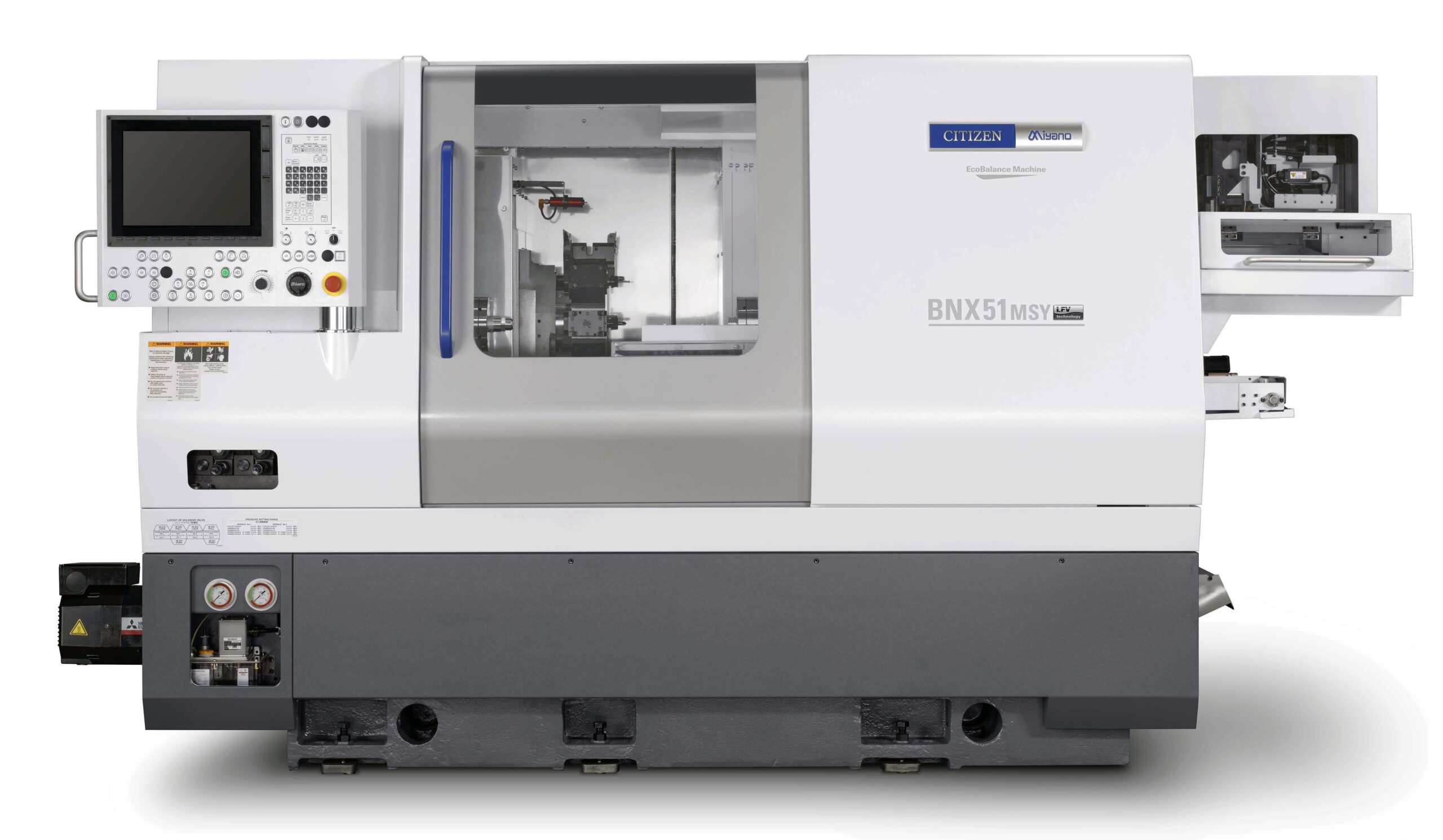
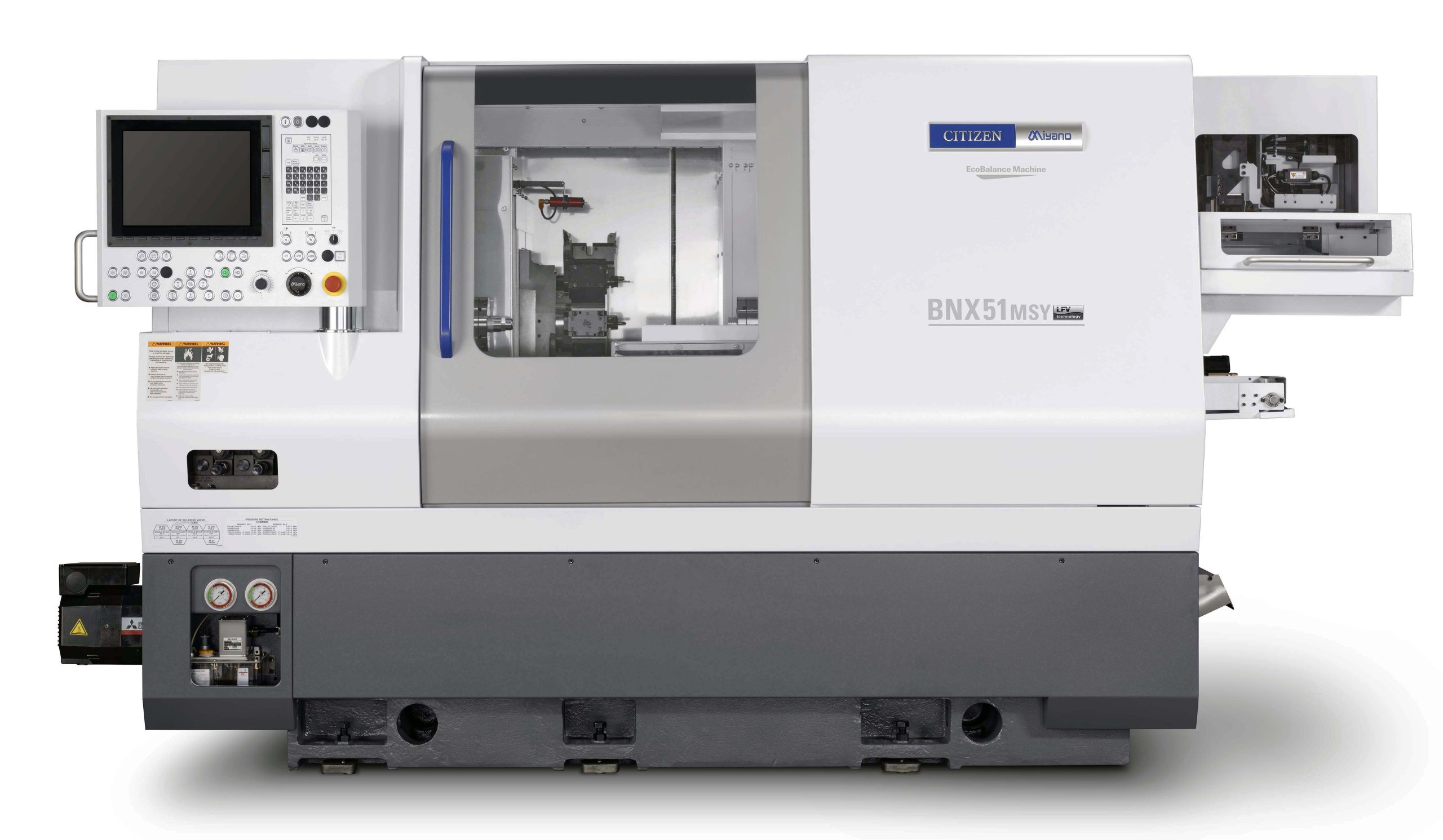
The new Miyano BNX-51MSYLFV twin-spindle, single-turret, fixed-head lathe from Citizen Machinery. There is also a new 65 mm capacity model.

The twin-spindle, single-turret, fixed-head lathe programme offered by Citizen Machinery UK has been expanded with the introduction of a second generation of the Miyano BNX range. The first iteration, launched a decade ago, raised the capacity of this style of Miyano turn-milling centre from 42 mm bar capacity (BNA series) to 51 mm, while the second introduces a 65 mm capacity model as well. Additionally, LFV chipbreaking software has been added and the machines have been prepared for automation.

The rationale for a two-spindle, one-turret lathe configuration is to offer OEMs and subcontractors a high-productivity platform having multi-tasking and simultaneous machining capabilities approaching those of a twin-turret machine, but in a smaller footprint and at a more economical price. Engineered as EcoBalance machines, the BNX-51MSY and BNX-65MSY deliver high levels of productivity, while supporting Citizen’s commitment to sustainable, socially responsible manufacturing.

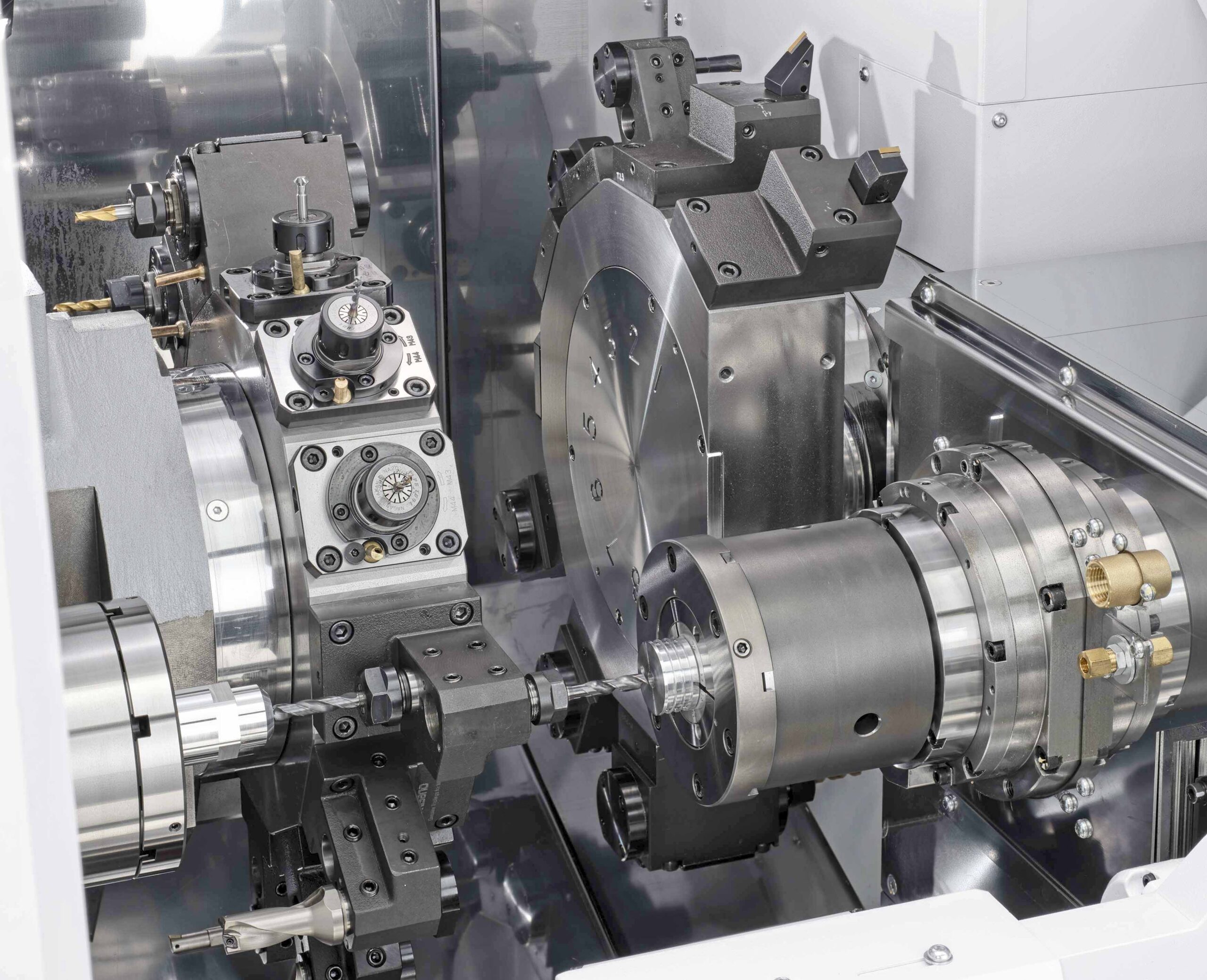
Despite having only one 12-station, Y-axis, live turret rated at 6,000 rpm / 25 Nm, the BNX-51/65MSY can perform complex rotational and prismatic machining operations thanks to the addition of independent X-axis movement of the sub-spindle. It means that the turret can be working on the main spindle and the sub-spindle simultaneously using Citizen’s proprietary superimposed machining. Machining at both 5,000 rpm work spindles at the same time is able to emulate the operation of a twin-turret lathe, greatly reducing cycle times.

A new function built into the operating system of the control is LFV (low-frequency vibration) chipbreaking software with different programmable modes. They cause oscillation of the slideway motions to break stringy swarf generated when machining malleable materials into short chips that are easy to clear from the working area. The problem of bird’s nesting and swarf entanglement around the tool or workpiece is eliminated, reducing scrap rates to virtually zero and promoting long periods of trouble-free running, including lights-out.

Working area of the Miyano BNX-51MSYLFV.

Automation and labour-saving features are integral to the BNX-51/65MSY’s design. Options include an in-machine unloader that transfers parts damage-free to the next process, a machine-mounted robot, automatic shutters, chip conveyors, and a choice of bespoke or standard automation systems such as collaborative pick-and-place robots. These features allow manufacturers to configure the machine for automated production, supporting both high-mix and high-volume applications.

Control is via Mitsubishi’s advanced M800LC-V CNC with a 15-inch touchscreen interface. This platform improves operability, provides expanded functions and promotes energy efficiency. Standard features include collision detection and a quick program check function, which enhance safety, reduce set-up times and simplify cutting cycle validation.

Triple-turret, 80 mm bar capacity lathe for complex turn-milling

The third-generation Citizen Miyano ABX-80THY fixed-headstock, bar-fed lathe is equipped with three turrets, each of which has ± 40 mm of Y-axis movement.

To provide manufacturers of complex turned and milled components up to 80 mm in diameter with an exceptional level of flexibility, accuracy and productivity, Citizen Machinery UK has introduced the third-generation Miyano ABX-80THY, a fixed-headstock, bar-fed lathe equipped with three turrets, each of which has 80 mm of movement in the Y-axis.

Positioned above the centreline of the workpiece spindles, two of the turrets are mounted on box guideways and are dedicated to the 80 mm capacity main spindle and the 65 mm capacity sub spindle respectively. Meanwhile, the lower turret is able to serve either spindle and all three tool carriers accommodate up to 12 static or live cutters. Maximum workpiece diameter for chuck work is 165 mm.

High power prismatic machining is a defining feature of the lathe, as all 36 turret positions are rated at 4.5 kW, deliver up to 40 Nm of torque and achieve a rotational speed of 6,000 rpm. It means components requiring multiple operations can be completed in a single set-up, eliminating secondary processes and improving both throughput and consistency.

Simultaneous cutting with all three turrets drastically reduces cycle times and the lathe maintains Miyano’s hallmark rigidity and precision for high accuracy machining. The capability to perform front and back working concurrently makes the machine ideally suited to industries such as aerospace, medical, automotive and precision engineering generally, where intricate geometries and tight tolerances are commonplace.

A view of the working area of the ABX-80THY, looking towards the main spindle.

Thermal stability was key in the development of the ABX-80THY. Temperature variation across the machine structure is constantly monitored by integrated sensors and intelligent software automatically adjusts the axes to compensate for any movement, reducing thermal displacement from around 30 microns to just 10 microns. It ensures around-the-clock accuracy, even during extended periods of unattended operation, safeguarding quality standards and at the same time maximising production efficiency.

Citizen also placed emphasis on ease of use and operator support. The control system provides intuitive access to tool setting, cycle time monitoring, spindle synchronisation and adjustment, and maintenance functions. The GUI (graphical user interface) makes it simple to manage tool offsets and zero-point adjustments, ensuring fast set-up and minimal downtime. Optional tool monitoring further enhances reliability by automatically stopping the machine if excessive tool load is detected, preventing damage and scrap.

In keeping with Citizen’s focus on lights-out production, the lathe is equipped with a programmable, servo-driven parts catcher capable of handling components from both spindles and transferring them via a parts conveyor. Chip conveyor options enable continuous running across different materials and cutting conditions. An optional touch probe tool setter in the machine ensures accurate cutter measurement and is simple to remove thanks to its magnetic coupling.

Latest videos of our machines in action