adfield, Author at Citizen Machinery - Page 7 of 18
Citizen Machinery Hires Five New Staff
To satisfy the needs of its widening customer base, Citizen Machinery UK has recently taken on five new employees. The ongoing recruitment campaign is essential to underpin the company’s position as the largest supplier of sliding-head (Cincom) and fixed-head (Miyano) bar-fed CNC lathes into the UK and Irish markets.
Citizen Machinery UK’s managing director Edward James commented, “We have expanded our business dramatically over the past few years. It is essential we keep our headcount commensurate with the increasing level of business to ensure our long-term success.
“This is especially important for our UK operation, as we are also the distribution hub for Citizen machines going into France, Spain, Portugal, Scandinavia, the Middle East and Africa.
“We are continually looking for candidates to strengthen our departmental teams and fervently believe that investment in staff is a top and ongoing priority, both to sustain growth and for succession planning and promotion.”
The level of success achieved by the UK operation enabled the management team to persuade the Japanese parent company to invest more than £3 million in a new turning centre of excellence in Brierley Hill, which opened in 2019 and concentrates on preparing deliveries to customers. It operates alongside the headquarters in Bushey, which has been made the centre for configuring and supplying bespoke manufacturing solutions.
The first new recruit, who joined as a service engineer towards the end of last year, is Gloucestershire-based Timothy Baldwin. He has a strong background in CNC turn-milling machine programming, setting and operation in the aerospace, motorsport and toolmaking sectors.
The newest member of Citizen Machinery UK’s applications engineering team arrived shortly afterwards. Martin Gregory lives in Birmingham and is well located to serve customers in the Midlands and to support the Brierley Hill operation. He has several years’ directly relevant experience working in the machine tool industry and is a valuable addition to the team.
Mark Harris, whose first day with the company was during early November, has considerable experience as a field service technician as well as having extensive knowledge of machine tool technology. Living in Solihull, he has been recruited into the servicing and installation team.
Rebecca Hancock joined as another service technician. She completed her apprenticeship during a five-year term at a superabrasives company in Gloucestershire and has experience working in the aerospace, F1, nuclear, defence and petrochemical industries. During that time she learnt to program, set and operate various machine tools including twin-spindle CNC lathes. She recently relocated to Walthamstow in north London.
That three of the first four new arrivals were recruited to the CMSure service and maintenance side of the business is no surprise. Citizen Machinery UK is finding that, due to uncertainty caused by Covid-19, there is a nervousness in some manufacturing companies to invest in new plant. It has resulted in a corresponding increase in the popularity of keeping existing machines in the field in peak operational condition and demand for service and maintenance support has never been higher.
The fifth recruit was north London-based Aaron Lewis, who joined from a leading workholding equipment supplier where he was a design/project engineer. Prior to that he studied design engineering at university. He is now supporting the customised production solutions team in a systems role at Citizen Machinery UK’s Bushey headquarters, working on integration projects and machine modifications.
First Citizen Sliding-head Lathe with Automatic Tool Change
A fourth variant has been added to the versatile Cincom L20 sliding-head CNC turning centre range from Citizen Machinery UK. The top model, L20-XII, which has a 135-degree swivelling B-axis mounted on the gang tool post for working at either of the opposed spindles, is now available with an automatic tool changer (ATC) for swapping up to 30 mm diameter cutters in a chip-to-chip time of four seconds. Both the tool carrier and magazine move in the Y1-axis to effect tool change.
Believed to be a first in a Swiss-type turning machine, the ability to exchange 12 different cutters in the lower position of the B-axis carrier greatly extends the machine’s versatility when executing angled crossworking or end facing operations. A 13th tool is fixed in the upper position on the carrier. While the cutters are normally live for performing drilling, slitting, hobbing or multi-axis milling, positions may be filled by turning tools if expedient.
The total number of tools that may be mounted in the working area of the Cincom L20-XIIATC is 34, providing considerable flexibility to ensure that components are machined in as few set-ups as possible, normally one. Cutters are driven by a 2.2 kW motor at up to 12,000 rpm, so even small diameter mills are capable of productive metal removal rates.
As its designation implies, the lathe is designed to turn components from 20 mm diameter bar, although oversized options allow up to 25 mm diameter material to be accepted. Another feature contributing to the lathe’s versatility is the ability to switch over quickly between Swiss-type operation and non-guide bush turning for more economical production of shorter components up to 2.5D. This mode results in less bar wastage due to the shorter remnants and is well suited to coping with tight drawing tolerances and close bore-to-OD geometry. The removal of the guide bush also means that the diameter of the stock material does not have to be tightly controlled.
To underscore the flexibility of use that is possible with this machine, it is noteworthy that it can be supplied in an LFV version with Citizen’s patented, programmable, low frequency vibration chipbreaking software. Furthermore, laser processing can be integrated to provide almost limitless possibilities for creating burr-free geometric shapes or precision holes as small as 0.2 mm diameter in tube or predrilled solid bar.
Double Y-Axis Mill-turn Centre with FANUC Control and Citizen’s Chipbreaking Software
The first fixed-head lathe in Citizen Machinery UK’s Miyano range to have the company’s patented LFV (low frequency vibration) chipbreaking software in a Fanuc control system is the new, 42 mm bar capacity ANX-42SYY. It features 10 CNC axes including a ±35 mm Y-axis on both the upper and lower turrets in addition to X- and Z-axis movements, enabling the production of complex components to tight geometrical tolerances.
The new, compact mill-turn centre is ideal for OEMs and subcontractors in Britain and Ireland keen to leverage the quality and productivity of a Miyano lathe and at the same time standardise on Fanuc controls on their shop floor for the sake of operator familiarity and compatibility with other machines.
LFV involves synchronising the rotation of the spindles with high-frequency oscillating motions of the tools in the X and Z axes to break what would normally be stringy swarf into manageable chips that can be disposed of easily. During turning and drilling, swarf is prevented from entangling around the component and tool, which would otherwise risk damage to both and is time-consuming to remove. Machine stoppage for swarf clearance is not needed, even when machining such materials as stainless steel and plastics, so productivity levels can be raised.
In addition to LFV software, which is programmable via G-codes in the part program, the 15-inch XGA (extended graphics array) touch panel Fanuc 31i control features a new Citizen HMI and incorporates the company’s multi-axis technology. It allows 3-axis simultaneous cycles, double Y-axis cutting and superimposed machining whereby three tools can be in cut at the same time thanks to X-axis movement of the sub spindle. Metal removal rate is therefore maximised and the technology also helps to share operations between the two spindles more evenly, all designed to increase production efficiency and throughput.
The 6.2-tonne machine occupies only 2,650 mm x 1,630 mm of space on a shop floor. Both main and sub spindle have a bar capacity of 42 mm diameter and are powered by 11 kW / 6,000 rpm built-in motors. The turrets have 12 live tool stations each rated at 6,000 rpm / 2.2 kW / 20 Nm. Rapid traverse rates are fast at up to 30 m/min, again with high productivity in mind. This has been achieved by adopting linear guides in all axes. Commonality of tool holders with Citizen’s popular BNA range of Miyano lathes leads to cost savings for existing users of the supplier’s equipment.
The only other LFV model in this fixed-head lathe range is a single Y-axis model of the same bar capacity with a Mitsubishi control, although the chipbreaking software has been extensively rolled out across six of the Japanese manufacturer’s Cincom sliding-head mill-turn centres.
New Mill-turn Centre Prepared for Automation
Building on the strengths of previous generations of Miyano fixed-head mill-turn centres, the BNA-42SY is Citizen Machinery’s latest addition to the range. The CNC lathe is the first BNA model to have a 12-station turret giving ± 35 mm of Y-axis movement, all tool positions now being live, and a new design that lends itself to easy automation.
Compared with current BNA models, machining efficiency has been upgraded by more powerful spindle motors, which are rated at 7.5/5.5 kW (15min/cont) for the 6,000 rpm main spindle and 5.5/3.7 kW for the 5,000 rpm sub spindle. Acceleration and deceleration are quicker on both spindles, improving productivity further by minimising idle times.
The machine’s rigid bed, the weight of which has been greatly increased to 1,823 kg, brings thermal control advantages and more capacity to house a larger coolant tank. The base casting has been prepared with space at the right hand side for robotic load / unload equipment. If a user intends to take advantage of automation, the machine can be supplied with a swarf conveyor that exits to the rear as an option.
The automation may be employed solely for unloading components that have been mill-turned from bar stock up to 42 mm diameter, either directly from a spindle or via a parts catcher and conveyor. Alternatively, or in addition, it may load and unload billets or near net shape workpieces like castings or forgings up to 135 mm in diameter. A workpiece stocker is positioned at the right hand side of the machine to accommodate the finished components.
Mounting points have been included to provide an option to add an overhead gantry if only chucking is to be carried out, in which case a raw material stocker can be positioned to the left of the machine in place of the bar magazine. For complete flexibility in layout, top shutter and auto door options are offered.
At 285 mm, the turret’s Z-axis travel has been increased by more than 20 percent, expanding the machining range of this compact, space-saving lathe. The turret and spindles are mounted on hand-scraped box slideways for improved rigidity and damping characteristics, leading to high metal removal rates, prolonging tool life and maintaining high accuracy.
The diameters of the X- and Z-axis ballscrews have been upsized from 25 mm to 32 mm, increasing rigidity further. Forced lubrication is provided to the ballscrews in all axes, the BNA-42SY being the second Miyano lathe to benefit from this feature.
The latest FANUC 0i-TF Plus CNC system with 10.4″ colour LCD screen controls the machine. Cutting times can be shortened by simultaneously completing complex reverse-end turning and milling at the sub spindle while front-end machining is ongoing at the main spindle, despite there being only one turret. It is achieved by superimposed machining, where the sub spindle tracks the turret and compensates for its movements while it is cutting at the main spindle, enabling a machining cycle on a parted-off component to be executed using tools mounted on the reverse face of the turret. This can be accomplished due to the ability of the sub spindle to move in the X-axis.
As with all modern lathes from Citizen Machinery, both Miyano fixed-head and Cincom sliding-head models, the BNA-42SY is an environmentally friendly machine. Use of an inverter controlled hydraulic unit results in a large reduction in power drawn. Standby power consumption is just 0.661 kW, as servomotor readiness is automatically turned off when it is not needed, for example during program editing. Overall energy consumption can be visualised via a power monitor window on the control screen.
Subcontractor Started with One Sliding-head Lathe: Now There Are Ten
When physics graduate Paul Cobb asked his father Reg in 1997 to help him invest in a subcontract machining business specialising in CNC sliding-head turning, Mr Cobb senior groaned; he knew it would mean a sizeable investment. At the time, both father and son were partners in the family’s subcontracting firm in Stapleford, Hemlock Engineering, which specialised in producing mainly prismatic parts and continues to do so.
However, Paul was keen to embark on a project of his own. He chose not to become a computer programmer or geological analyst but instead started HPC Services. A small factory unit was rented in nearby Ilkeston and a Japanese-built Citizen Cincom L25 sliding-head, bar-fed, turn-mill centre was installed. At the time it was the first of a new, updated design to arrive in the UK.
From that moment onwards, HPC’s approach has been to acquire the very latest, most highly productive CNC equipment available on the market, designed to slash production times, reduce costs and improve component quality. Under Paul’s influence, it has become Hemlock’s maxim as well.
Over the intervening 24 years, he has bought for HPC around 20 CNC sliding-head, twin-spindle lathes of nominally 12, 20 or 32 mm bar capacity, all exclusively from the same supplier. Ten Cincoms are in operation, the others having been systematically replaced with newer models. There are also seven fixed-head, twin-spindle CNC lathes on the shop floor of the current premises, where around 30 staff are employed.
When Paul launched HPC, he took with him from Hemlock one production job to get him started, a shaft for a sell-by date label printing machine. The food industry still accounts for around one-third of HPC’s turnover. The job previously involved turning the component in two operations, after which it was ground and then milled on a machining centre, all in a total time of seven minutes. On the Citizen L25, the same job was completed in one hit in a one-minute cycle. The parts are machined today on a different slider at a rate of 1,000 per month.
Due to complete machining in one set-up, the components produced by HPC were of better quality, 5 microns concentricity and 10 microns dimensional tolerance being held reliably. Moreover, the price charged to the customer has consistently fallen in real terms due to the progressively higher level of automation on the newer lathes, which allows longer periods of unattended running, 24/7.
Paul commented, “Over the years, turned parts subcontractors from around the world have quoted for this work. However, by harnessing the efficiency and accuracy of machines like the Cincom sliders we are globally competitive on price as well as quality, even for large production volumes.
“In the past that was not the case, but it is possible now with modern, ultra-high speed plant. And of course, our delivery times are much better than Far Eastern competition can offer, added to which control over projects is easier. As a result, we are seeing a strong trend towards reshoring of work.”
Today, HPC has some 5,000 different part numbers on its books. Components are produced from 38 mm diameter bar or smaller on the Cincoms. Quantities range from 100- to 40,000-off in a vast range of materials, from exotic alloys through stainless steels, brass and aluminium to plastics. The two million parts machined annually account for two-thirds of the company’s £3 million annual turnover, the remainder being fixed-head turning. 10 percent of revenue is reinvested every year in new plant and equipment, a proportion that also applies to Hemlock’s £7 million turnover.
Fifth generation Cincom M32 lathe increases productivity by typically 30 percent and quadruples tool life.
One of the latest components produced at HPC in one hit on a sliding-head lathe requires only milling, there being no turning content at all. The parts are being machined on one of a pair of recently delivered Cincom M32-VIIIs of a radically different design compared with the earlier M32s on site. The first of the new machines was delivered in November 2020 and Paul was so impressed with its performance that a second arrived a month later.
The prismatic component looks as though it has being machined from flat bar but is in fact milled from 303 stainless steel round bar, as it is difficult to source flat bar in that material in the UK. Part of a date-coding machine, it is produced in one operation in a cycle time of 4 minutes 53 seconds on the lathe, whereas it would require four operations totalling 7 minutes on a vertical machining centre.
A year or so before the arrival of the two new M32s, which have been supplied with kits to allow bar up to 38 mm diameter to be accommodated, the chief designer from Citizen’s Japanese factory visited HPC to ask Paul what he would like to see in the fifth generation of this sliding-head lathe. His response was, “more rigidity”. The Japanese manufacturer obliged, endowing the latest model with box guideways rather than linear slides, a tang instead of a worm drive on the turret and higher power motors throughout.
Paul explained, “The difference is amazing. It is possible to machine exotic alloys at double the speed compared with on a fourth generation M32 and you get four times the tool life, especially as coolant is now delivered through the tool platen as well as the turret.
“It is a massive step up in performance. A 10 mm cutter purrs into the bar, even using a mill with carbide inserts rather than a solid carbide tool, which we need to use on the earlier M32s. Any production engineer would know that the new model is a very rigid machine.”
Other aspects of the latest design that he appreciates are the increased number of driven tools and a platen tool post with a programmable B-axis. It is useful for producing angled features on components and additionally is able to carry out front working so that the turret can be freed up earlier to perform operations on the reverse end.
Cycles for many jobs are significantly quicker. For example, when producing a particular 303 stainless steel flange from 38 mm bar, it was previously necessary to wait for the turret to become available to deburr the component. At 57 seconds the cycle time is now 25 seconds quicker, representing a saving of 30 percent.
Just as important for reducing production costs is the ability to swap the machine over in half an hour to guide bush-less mode to save remnant wastage when producing relatively short components like the flanges. In this case, 262 parts can be produced from a 3-metre bar compared with 225 if the guide bush is in place, delivering 37 extra parts, an increase of 16.4 percent. With 5,000 of the flanges produced annually, the saving is significant.
Programmable chip breaking software is ideal for turning plastic
Citizen’s advanced technology came to the rescue a few years earlier, when HPC received a contract to produce plastic internal components for a manufacturer of high quality taps. Moulding these top-end parts is not feasible, as flash on the sealing surfaces could cause leakage and removing it would be too time-consuming. Turn-milling the components from acetyl bar was the preferred method of manufacture, but plastics are notoriously difficult to machine, as copious quantities of long, stringy swarf is produced, especially when grooving.
Citizen had recently invented its patented, low frequency vibration (LFV) software that breaks such swarf into short, manageable lengths. Running in the Cincom’s Mitsubishi control, where it is integrated into the operating system rather than being a macro, the facility can be switched in and out of a programmed cycle by G-code command.
Paul concluded, “LFV on the Cincom L20 we bought in 2017 is absolutely brilliant for turning plastic. Normally on a lathe we regularly have to remove swarf by hand that has tangled around the component and tooling, which takes ages and risks damaging the part, but that is eliminated by the software.
“It not only saves a lot of production time but also allows us to run the lathe unattended for long periods, which normally would be impossible when machining this type of material. The software will also be a big advantage if we receive contracts for producing components from ductile, long-chipping metals such as copper.”
Citizen Sets Up Dedicated Solution Centre
Citizen Machinery UK, which supplies Cincom sliding-head and Miyano fixed-head turn-mill centres into the British and Irish markets, has been providing manufacturing solutions to OEMs and subcontractors in their supply chains for virtually the entire time the company has been in business. However, the degree of customisation that it is being asked to engineer into the equipment it supplies has now reached such a high level that it has decided to centralise this side of the business by setting up a dedicated centre, CMSolutions, at its Bushey headquarters.
Managing Director Edward James said, “As the largest supplier of bar fed lathes into the markets we serve and being a specialist exclusively in turn-milling, we felt it was fitting for us to raise the bar in terms of the level of support customers can expect.
“In our industry it is no longer enough to deliver a so-called turnkey package, which is subject to a lot of interpretation and often misunderstood. It can mean simply the supply of a machine, a few cutters and a couple of programs.
“Customers demand more than that these days. They want a fully worked out, end-to-end solution that has been proven off-site before delivery, complete with attachments, peripherals, in-house-written software and perhaps additional robotic functions such as cleaning and packaging. Projects are often demanding in terms of their scope, level of innovation, the process capability to be achieved and return on investment required.”
CMSolutions operates from the Bushey premises independently from the applications department there to project-manage such complex, high-level installations, from initial consultation through design, configuration, assembly and prove-out to delivery, acceptance and training.
The solution could be stand-alone or integrated into a larger manufacturing plant; and it may be a pre-existing package or designed specifically at either the customer’s request or at the instigation of Citizen. In all cases there will be a sound business case for what is delivered. It will be pragmatic, process-optimised and cost-effective, not necessarily the top solution possible, which may be overly expensive and take too long to amortise.
The Bushey venue will also house a permanent exhibition of turn-mill solutions and software, which will often involve automation such as robotic or gantry loading of billets, forgings, and near net shape parts and unloading of components. Additionally, it will show technology that is less frequently encountered, such as in-cycle laser cutting of apertures in the thin wall of a stainless steel stent.
Other specific solution examples to be presented will include the mounting of a digital microscope and a 21-inch screen to assist setting of micro tooling on a 12 mm capacity sliding-head lathe used for watch component manufacture; and the provision on a 32mm capacity sliding-head lathe of a pair of high frequency, 60,000 rpm spindles in the gang toolpost, together with mounting adapters, pneumatic and electrical supplies, custom software and displays for spindle speed feedback.
Mr James added, “We could see the direction of travel towards the need for a greater degree of machine adaptation to meet customers’ production requirements, so we have had this development in mind for several years. It was part of the justification for establishing our Turning Centre of Excellence in Brierley Hill last year.
“The showroom and technical centre there is now the main location for machine arrivals, configuration and despatch, leaving Bushey free to concentrate on technology advancements and their permanent display and demonstration.
“Customers are looking for stable running of their lathes over long periods. We already have our LFV non-macro chipbreaking software to assist in that goal, which is programmable and especially beneficial when cutting materials that tend to produce stringy swarf. It is another example of the importance and focus Citizen places on technological progress.”
As a postscript, he mentioned that Citizen as a group reinvests one-quarter of its annual profit into research and development and is continually launching new machines and technology, such as LFV, which has been extended recently from the main spindle to the sub spindle on many Cincom lathes and is increasingly available on the Miyano range of fixed head lathes also. Another recent innovation is an automatic tool changer on the L20 Cincom sliding-head model.
There will be a significant and ground-breaking new launch in the first half of 2021 of a lathe designed by Citizen Machinery UK that the Japanese parent company has agreed to manufacture. All of this activity dovetails neatly with the formation of CMSolutions, which Mr James predicts will gain in importance as manufacturing industry moves forward after the pandemic and looks for ever more efficient methods of production and return on investment.
He also thinks that opportunities will be enhanced by increased reshoring of manufacturing from China and elsewhere, coupled with the emergence of electromobility, which will be beneficial for Citizen and other lathe suppliers in particular, as plug-in hybrid electric cars contain a higher proportion of rotational parts than conventional vehicles.
Large-capacity Y-Axis Lathe
Components are becoming more and more complex and drawing tolerances ever tighter. The ability of live turret tooling in a CNC mill-turn centre to move in the Y axis as well as in X and Z has therefore become increasingly important to facilitate high accuracy, one-hit machining. If travel in only the latter two axes is provided, milling of flats, deburring, and the possibility of machining pockets and off-centre features in-cycle are either difficult or impossible.
The latest Miyano fixed-head lathe from Citizen Machinery UK to be equipped with a Y axis turret, in this case with all 12 tool stations driven, is the new BND-64SY for turning parts from bar up to 64 mm diameter. Joining a similar model that accepts bar up to 51 mm diameter through the main spindle, the 4.75-tonne machine is a mid-range, multi-purpose, twin-spindle turning centre. A ribbed, monobloc bed slanted at 30 degrees carrying precision-scraped, square guideways provides high rigidity, optimal thermal and mechanical stability and excellent vibration damping.
These characteristics result in high accuracy of mill-turned components and longer service life of the tools, which may be mounted flexibly in the turret using multi-tool holders at any turret position. The robustness of machine construction allows turning as well as milling of tough alloys and metals in their hardened condition, even when taking intermittent cuts. Polygon turning and thread milling are both options in the FANUC 0i-TD control, which is capable of simultaneous 4-axis interpolation.
The specification of the Japanese-built machine includes turret travels in X / Y / Z of 175 / 75 / 435 mm, 530 mm sub spindle axis travel, up to 20 m/min rapid feed rate, 2.2 kW / 20 Nm / 6,000 rpm driven tools, a 15/11 kW main spindle and a sub spindle rated at 5.5/3.7 kW, both offering rotational speeds up to 5,000 rpm. A parts catcher and conveyor are supplied as standard, while the chip conveyor is optional.
Citizen Machinery Upgrades Three CNC Sliding Head Turning Centres
Japanese CNC mill-turn centre manufacturer, Citizen Machinery, has announced improvements to three of its Cincom sliding-head models, all designed to shorten cycle times and raise productivity when producing components from 32 mm diameter bar and larger. The machines are available in the UK and Ireland through subsidiary company Citizen Machinery UK.
LFV added to the M32
The company’s flagship M32 model, which can produce parts from bar up to 38 mm in diameter with cutters in a gang toolpost with B-axis, a 10-station turret and a back tool post with Y-axis, has gained the manufacturer’s low frequency vibration (LFV) chipbreaking capability on the main spindle.
It makes the machine ideal for efficient turning, threadcutting and drilling of malleable materials, as the normally stringy swarf is broken automatically into shorter chips that do not wrap around the tool or workpiece, without any need for high pressure coolant. Productivity is maximised by avoiding having to stop the machine repeatedly to remove clogged swarf, facilitating minimally attended operation and enabling lights-out running.
Embedded in the operating system of the Mitsubishi M800-series control, LFV synchronises the motion of the axis servo drive with the speed of rotation of the main spindle. The function is highly controllable, as it can be programmed using G-codes to switch on and off during a cycle and either increase or decrease the size of the resulting chips. It is distinct from traditional pecking macros in a CNC program which tend to cause built-up edge, compromising machining accuracy and shortening tool life.
Other notable features of the lathe are simultaneous 5-axis machining, up to three tools in cut simultaneously and the possibility to change over in half an hour to use the machine in guide bush-less mode to reduce remnant length when turning shorter components.
Cincom L32 with LFV on both spindles
In line with Citizen Machinery’s systematic rollout of LFV on all its Cincom sliding-head turn-mill centres as well as currently on one fixed-head Miyano lathe, the 32 mm bar capacity L32 slider has also benefitted from the chipbreaking technology. It already had LFV on the 3.7 / 7.5 kW main spindle but now it boasts the same capability on the 2.2 / 3.7 kW sub spindle.
LFV oscillation of the tool by tens of microns not only breaks swarf but also allows coolant to penetrate the cut more efficiently for the brief periods when the tip lifts clear of the component surface, reducing heat and prolonging tool life. Depth of cut may be increased substantially even when processing tough materials, often eliminating the need for a roughing pass and significantly shortening cycle times.
In addition to the 7-axis L32-VIII, there are two other L32 models in the range. The 8-axis L32-X adds a Y2 axis to the Z2 axis on the back tool post. So also does the 9-axis L32-XII, which additionally has a +90 / -45 degrees B-axis on the front gang tool post, whose rotary tools can work at either spindle to produce angled features. All machines are available in 35 mm and 38 mm bar diameter versions and may be used with or without the guide bush to suit the application.
D25-VIII expandable to accept 32 mm bar
Turn-milling of components up to 32 mm diameter bar with the extra productivity benefits of LFV is now also possible on the nominally 25 mm capacity Cincom D25-VIII, as an expansion kit is being offered to enable the lathe to machine the larger size of bar in both guide bush and non-guide bush modes.
Manufacturers of larger components may therefore take advantage of the lathe’s Industry 4.0-ready Mitsubishi 800 CNC system with touch screen and QWERTY keyboard. It provides the ability to have up to three tools in cut simultaneously for increased productivity and enables simultaneous 5-axis machining to maintain precise cutter orientation with respect to the surface of a complex workpiece.
The machine is equipped with twelve CNC axes including independent Z2-axis movement in addition to X2 and Y2 on the rear gang toolpost. Twin platens enable balanced turning, threading, milling or drilling, or simultaneous rough and finish turning. A 135-degree swivelling B1-axis has been added to the X1 and Y1 motions of the front tool post, which carries up to four driven tools on either side to service the main and counter spindles, a configuration Citizen Machinery believes is a world first.
A manually-set angular spindle can be mounted on the rear gang carrier and the back toolpost. In addition to the major advantage of programmable control of chip size, LFV has the ability to help eliminate deflection when turning small, precise diameters. An optional, two-axis, opposed tool carrier next to the counter spindle provides a facility for deep hole drilling at the main spindle.
Fixed-head Turning up to 40% Faster and Tool Life Doubled on Sliding-head Lathe
In August 2020, Merseyside subcontractor Bryken took delivery of its sixth Miyano BNE-51MSY turn-mill centre, having bought its first as recently as June 2018. Operations director Phillip Taylor says that regular investment in new plant is key to thriving in a competitive global marketplace and he makes sure that no machine tool stays on the shop floor for more than 10 years. The company, which has 95 employees and a £10 million annual turnover, derives 40 percent of its business from the oil and gas industry and is also a major supplier to the high-voltage power sector, amongst others.
Citizen Machinery UK, which supplied the fixed-head Miyanos, is also the source of four Cincom CNC sliding-head lathes currently on site, which have been in use at the Prescot factory since the mid-90s. A dozen older models, which took over from six times as many cam autos, have all now been replaced. It leaves three 32 mm capacity Cincom sliders installed since 2014 and a more recent 20 mm capacity model that uses Citizen’s proprietary LFV chipbreaking technology.
Mr Taylor, son of one of the company founders, runs the subcontracting business together with his brother Stewart and sister Natalie Lund. He explained, “Ninety percent of our turnover comes from producing precision turned parts, many of which require a lot of prismatic machining as well, so choice of turn-mill centre is crucial to our success.
“We started to upgrade our fixed-head lathes by replacing them with Miyanos in 2018 in response to an upturn in demand, which gathered pace at the beginning of this year when we bought three more BNE-51MSYs in the space of two months. The 51 mm bar capacity, twin-spindle turning centre with its two 12-station live turrets, the upper one with a Y-axis, is ideal for our needs.
“It is highly efficient at balanced machining of complex routines at both spindles, so we can take chunks out of cycle times, which are between 20 and 40 percent faster than on previous lathes. It meets the increasing demand for the supply of high added value parts at competitive prices.”
He added that other makes of lathe were looked at during the plant renewal process. In comparative trials, the BNE-51MSY offered the quickest TAKT times and was also much better value for money than others he considered. The lathes were also shown to hold 20 microns total tolerance easily on machined dimensions.
One reason for the lathe’s impressive speed is Citizen’s superimposition control technology, which allows the sub spindle to track the upper turret for cutting reverse-end features while the same turret is performing front-end operations on bar at the main spindle. If the lower turret is operational at the same time, three tools are in cut simultaneously, delivering the performance of a triple-turret lathe for a significantly lower capital outlay.
Another benefit that Bryken operators appreciate is their ability with the Mitsubishi control to use the handwheel to run through an entire machining cycle to verify the program and detect any potential clashes.
Over the years, market forces have dictated a move at Bryken towards more fixed-head turning for the production of larger diameter, complex components, the simpler work having largely disappeared overseas. Nevertheless, nearly one-third of the lathes on-site are still of the sliding-head variety. The four Citizen Cincom models are the most recently installed, three M32-VIII lathes and an L20-XIILFV, the cardinal numbers representing maximum bar diameter.
The latter machine, installed in May 2018, was bought to produce sub-sea oil and gas components from tough materials such as Monel, Inconel, titanium alloy and 440C stainless steel. These metals produce stringy swarf that benefit greatly from the low frequency vibration (LFV) functionality built into the operating system of the Mitsubishi control.
Mr Taylor continued, “We saw a demonstration of LFV in Citizen’s Bushey showroom and were impressed with the way chips break up and do not clog the machine, or wrap around the component or tool. It means we can leave the machine running unattended for long periods.
“LFV can be simply switched on and off by G-code in a program. We use it for turning at the main spindle and axial drilling at the sub spindle of the L20 and switch it off to maximise metal removal rate when milling with the live tools.
“We tried making parts from these exotic materials on other sliders but the swarf was not chipping, even with high pressure coolant. Tool life was so poor it was taking away a lot of the profit. Now cutters last at least twice as long, plus there is less machine downtime and scrap is more or less eliminated.”
Low frequency vibration technology has started to be rolled out across the Miyano fixed-head lathe range with the introduction of the BNA-42GTYLFV and Mr Taylor is keeping a close eye on this development. He pointed out that subcontractors rarely know the orders that will be coming in next and which materials they will be asked to machine. As LFV is not a pecking macro that tends to prematurely wear out tools, but is integral within the control system, having this built-in chipbreaking capability is of great benefit when machining stainless steels, copper and plastics as well as the nickel and titanium alloys.
Mr Taylor concluded, “We source a lot of lathes from Citizen because they have a wide range of machines that use advanced technology. We also receive good support from them, especially the applications engineering and training they provide. They and their equipment have made a big improvement to our operational efficiency.”




 In addition to
 The automation may be employed solely for unloading components that have been mill-turned from bar stock up to 42 mm diameter, either directly from a spindle or via a parts catcher and conveyor. Alternatively, or in addition, it may load and unload billets or near net shape workpieces like castings or forgings up to 135 mm in diameter. A workpiece stocker is positioned at the right hand side of the machine to accommodate the finished components.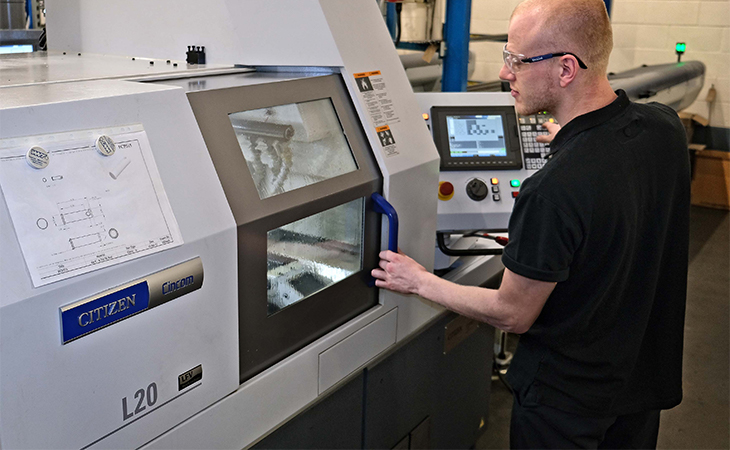
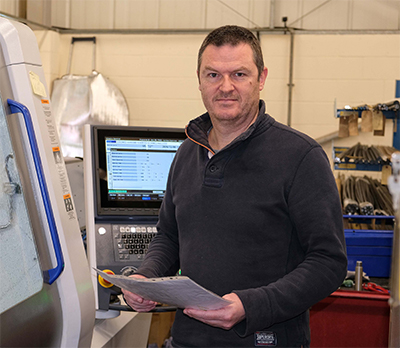 When Paul launched HPC, he took with him from Hemlock one production job to get him started, a shaft for a sell-by date label printing machine. The food industry still accounts for around one-third of HPC’s turnover. The job previously involved turning the component in two operations, after which it was ground and then milled on a machining centre, all in a total time of seven minutes. On the Citizen L25, the same job was completed in one hit in a one-minute cycle. The parts are machined today on a different slider at a rate of 1,000 per month.
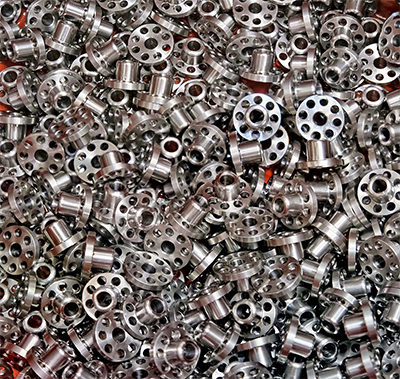 Paul explained, “The difference is amazing. It is possible to machine exotic alloys at double the speed compared with on a fourth generation M32 and you get four times the tool life, especially as coolant is now delivered through the tool platen as well as the turret.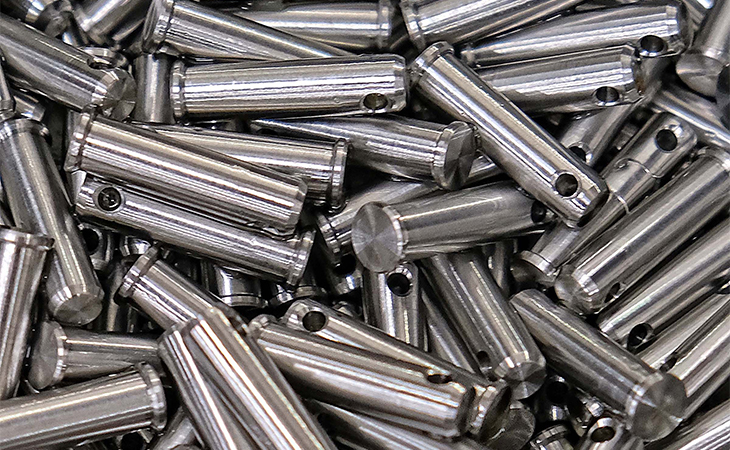

 The solution could be stand-alone or integrated into a larger manufacturing plant; and it may be a pre-existing package or designed specifically at either the customer’s request or at the instigation of Citizen. In all cases there will be a sound business case for what is delivered. It will be pragmatic, process-optimised and cost-effective, not necessarily the top solution possible, which may be overly expensive and take too long to amortise.
 “Customers are looking for stable running of their lathes over long periods. We already have our


 In line with Citizen Machinery’s systematic rollout of LFV on all its Cincom sliding-head turn-mill centres as well as currently on one fixed-head Miyano lathe, the 32 mm bar capacity

 “We started to upgrade our fixed-head lathes by replacing them with Miyanos in 2018 in response to an upturn in demand, which gathered pace at the beginning of this year when we bought three more
  Mr Taylor continued, “We saw a demonstration of LFV in Citizen’s Bushey showroom and were impressed with the way chips break up and do not clog the machine, or wrap around the component or tool. It means we can leave the machine running unattended for long periods.