Citizen Group Global Slavery and Human Trafficking Statement - Citizen Machinery
CITIZEN Group Modern Slavery and Human Trafficking Statement for the Fiscal Year Ending March 31, 2026
This statement is made pursuant to the United Kingdom Modern Slavery Act of 2015.
The CITIZEN Group (CITIZEN WATCH CO., LTD. and its group companies) endeavors to ensure that there are no violations of human rights nor complicity in the violation of human rights in any way in our own business operations or our supply chains. We hereby provide this disclosure statement regarding our activities to prevent and tackle modern slavery and human trafficking.
This statement applies to the entire CITIZEN Group, including group companies operating in the United Kingdom.
1. Organizational structure, businesses and supply chains The CITIZEN Group has been engaged in the manufacturing and sales of products in various business fields, such as Watches, Machine Tools, Devices & Components and Electronic Products, based on the compact precision technology which CITIZEN has developed since its establishment in 1918. Details of our corporate and business information can be found on the “About Us” page of the CITIZEN WATCHʼs website.
Our business activities in the UK consist of sales of products and provision of services by our group companies: Citizen Watch United Kingdom Limited. and Citizen Machinery UK Ltd.
Materials, parts and some finished products used for production by the CITIZEN Group are purchased from external suppliers in and outside of Japan. The majority of our overseas suppliers are located in China, the Philippines, Thailand, Vietnam and Malaysia.
2. Policies related to modern slavery and human trafficking in operations and supply chains
The CITIZEN Group Code of Conduct, which sets forth the basic stance of the CITIZEN Group’s social responsibility and serves as a standard for the behavior and judgment required of each and every employee of the Group, has been established and translated into 10 languages for global deployment.
Based on the “respect for human rights” and “responsible and sustainable procurement” as stipulated in the CITIZEN Group Code of Conduct, we have formulated the CITIZEN Group Human Rights Policy to further respect “universal and fundamental human rights” and apply the policy to all officers and employees within the CITIZEN Group.
Through the CITIZEN Group Sustainability Procurement Guideline, we strongly demand that suppliers in our supply chain prohibit “forced labor, inhumane treatment, and child labor”. At the same time, we require their cooperation in ensuring that the CITIZEN Group addresses social issues related to human rights, labor, the environment, and anti-corruption throughout its supply chain, to promote responsible procurement that supports the development of a sustainable society. These efforts are in line with the Ten Principles of the UN Global Compact.
The CITIZEN Group recognizes that the use of minerals (tantalum, tin, tungsten, gold, and cobalt) originating from conflict and high-risk areas (CAHRAs), such as the Democratic Republic of the Congo and its neighboring countries, as a source of funding for armed groups, contributing to conflict, human rights abuses and environmental destruction, is an important international issue. The CITIZEN Group Responsible Mineral Procurement Policy states that the Group will not use any mineral that may contribute to human rights abuses, such as child labor and forced labor, environmental destruction, conflicts, terrorist financing, money laundering, corruption, or illicit financing through mining, trading, handling, or export. Under our policy of not using these minerals, we are conducting surveys in line with the Due Diligence Guidance for Responsible Supply Chains of Minerals from Conflict and High-Risk Areas, issued by the Organization for Economic Cooperation and Development (OECD).
The CITIZEN Group has also supported the Ten Principles of the UN Global Compact since we joined in it in April 2005.
3. Due diligence process and risk assessment related to modern slavery and human trafficking
The CITIZEN Group conducts human rights due diligence in accordance with the UN Guiding Principles on Business and Human Rights, focusing on salient human rights issues. We set targets, manage progress, disclose information, and report to the Sustainability Committee and the Board of Directors.
In fiscal year 2025, we received expert training on the OECD Due Diligence Guidance and reassessed our value chain taking into account past human rights impact assessments.
Among the outstanding human rights issues that have been identified, we recognize that these include (1) conflict minerals risk, (5) lack of hotlines at overseas bases, and (7) working environments downstream in the supply chain, among other issues that are expected to be related to modern slavery and human trafficking, and we are working to build a risk management system.
We are working to establish appropriate risk management frameworks for these issues. As part of our due diligence efforts, we have also established mechanisms for prevention, mitigation, correction, and remediation of adverse human rights impacts. Specifically:Internal and external compliance hotlines are available to employees, allowing anonymous reporting and prohibiting any disadvantageous treatment of whistleblowers. A supplier hotline is available within the supply chain, enabling reporting of suspected legal violations or human rights abuses and ensuring appropriate corrective action.
Through these mechanisms, we strive for the early detection, correction, and remediation of human rights risks, including modern slavery and human trafficking.
4. Risk Assessment and Management Regarding Modern Slavery and Human Trafficking In accordance with its Human Rights Policy, the Citizen Group conducts annual monitoring of human rights and labor conditions to ensure that there are no human rights violations, child labor, or forced labor in the workplace.
At our domestic group companies that employ foreign technical interns, we manage them appropriately in accordance with relevant laws and regulations and submit regular reports to the Organization for Technical Intern Training. In addition to support from the Japan International Training Cooperation Organization (JITCO)*, we conduct human rights investigations and follow-up by our human resources department; as a result, no issues constituting forced labor have been identified. * An organization that supports systems for accepting foreign workers in Japan (particularly Technical Intern Training and Specified Skilled Worker programs)
To effectively manage risks in its supply chain, the Citizen Group identifies key suppliers based on criteria that take into account procurement value, the significance of the transaction, human rights risks in the country of operation, and the characteristics of products and processes.
We strive to eliminate risks, including modern slavery and human trafficking, by requesting that suppliers cooperate with our Sustainability Procurement Guidelines. In fiscal year 2025, we distributed explanatory materials to key suppliers to promote understanding of procurement, human rights, and environmental issues. We conducted surveys using the SAQ (Self-Assessment Questionnaire) and the Conflict Minerals Questionnaire issued by the RMI, and carried out additional investigations and supplier audits as necessary.
In fiscal year 2025, we conducted audits at 21 companies. Additionally, for suppliers in the watch business based in China, we conducted on-site visits from fiscal years 2023 to 2025 to verify working conditions using our proprietary health, safety, and labor management checklists (5, 5, and 6 companies, respectively, in each fiscal year).
5. Measurement using appropriate indicators and the effectiveness of measures to prevent modern slavery and human trafficking The Citizen Group regularly evaluates the effectiveness of its initiatives to prevent modern slavery and human trafficking using the following metrics:
・Supplier SAQ response rate
・Number of supplier audits conducted
・Number of reports received via internal and supplier hotlines, and status of responses
・Participation rate in human rights and procurement-related training
Furthermore, to drive continuous improvement, we set targets for these indicators where possible and monitor progress toward them. Moving forward, we will work to enhance the effectiveness of our efforts to reduce human rights risks across the entire supply chain, in line with our roadmap of initiatives leading up to 2030.
Based on these results, we are striving to continuously improve our initiatives.
6. Training and Capacity Building on the Elimination of Modern Slavery and Human Trafficking To deepen understanding of the importance of human rights and their relationship to our business activities, we have designated December of each year as “Citizen Group Human Rights Month” since the fiscal year ending March 2020.
In fiscal year 2025, we conducted e-learning sessions on Diversity, Equity, and Inclusion (DE&I). Additionally, the “Citizen Group Sustainable Procurement Committee” invites external lecturers annually to hold study sessions on procurement risks and responsible corporate conduct. In fiscal year 2025, we co-hosted a training session with the Human Resources Committee on the OECD Due Diligence Guidance.
This statement was approved by the Board of Directors of CITIZEN WATCH CO., LTD. on June 19, 2026. June 19, 2026
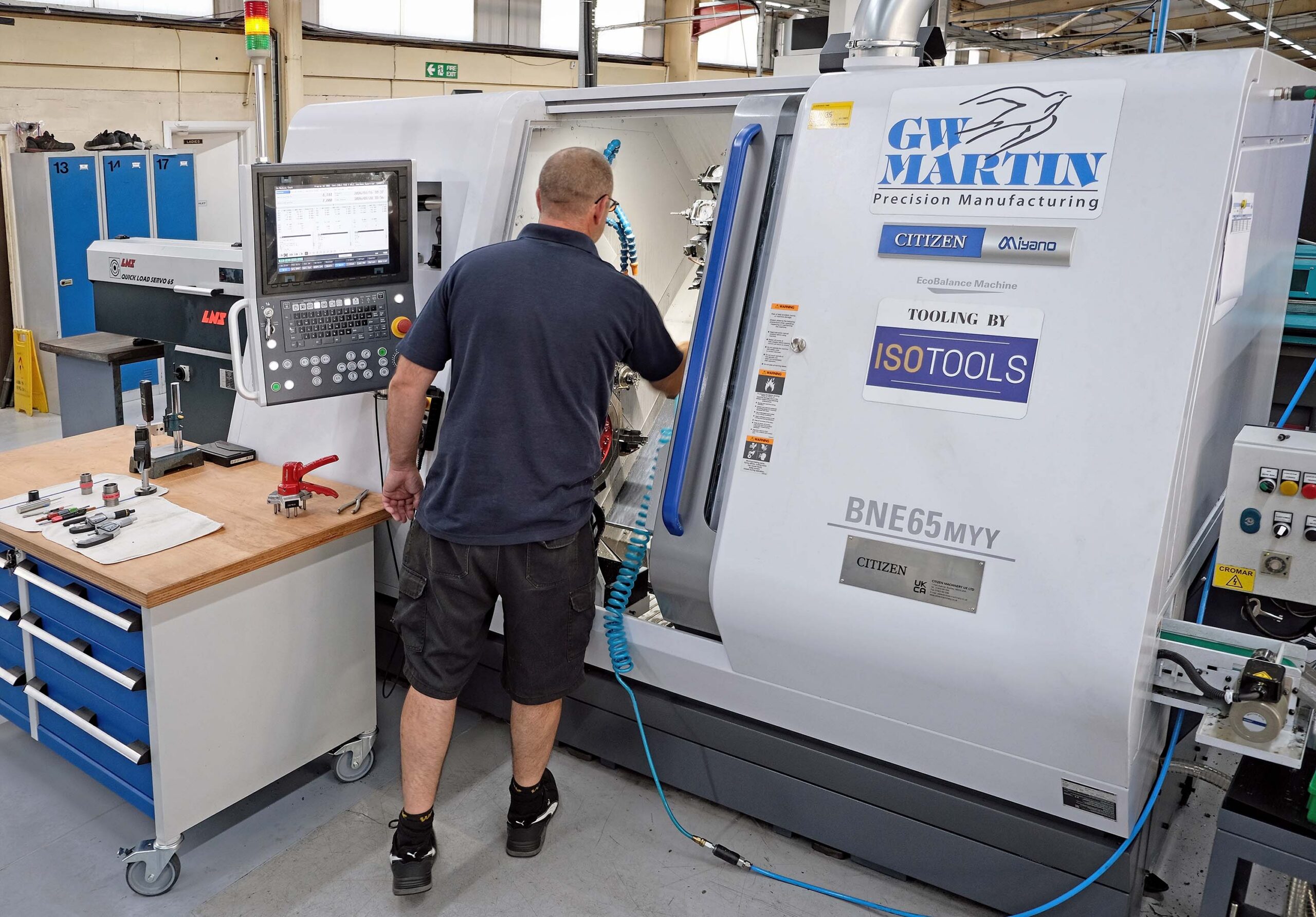
Cycle Times Slashed And Tooling Costs Reduced On Rigid Miyano Lathes
Family-owned precision manufacturing firm GW Martin, a majority of whose subcontract production involves turn-milling of complex components that frequently require surface treatment and assembly, was an early adopter of CNC…
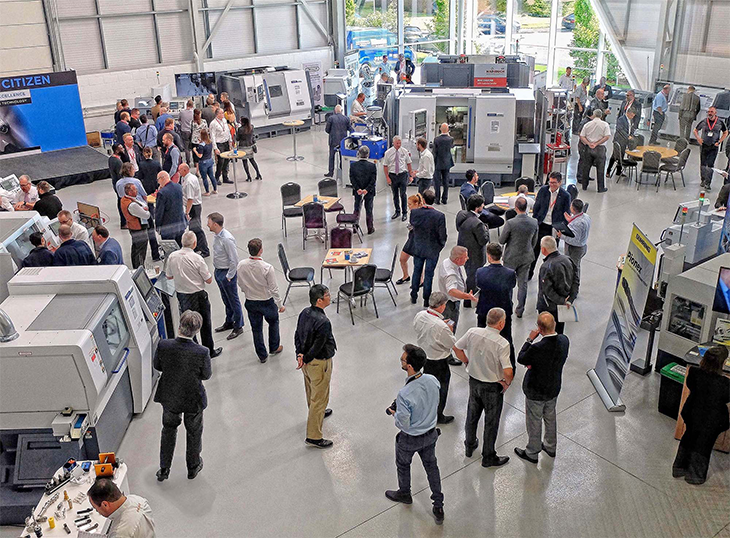
From 6th to 8th October 2026, Citizen Machinery will demonstrate to manufacturers how they can streamline workflows and boost profitability using Cincom sliding-head lathes and Miyano fixed-head lathes at an…
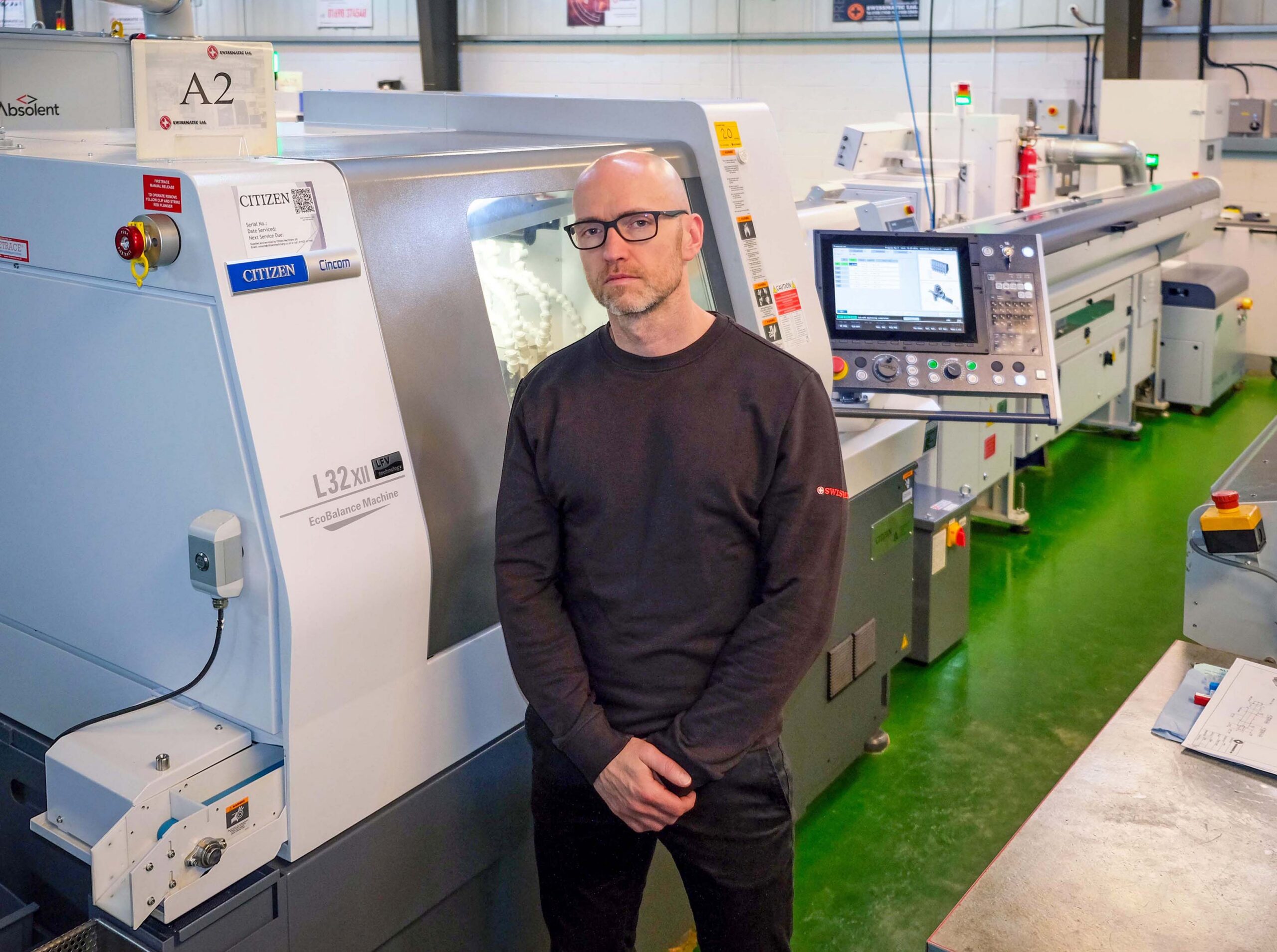
Energy Efficiency Drives Scottish Subcontractor’s Sliding-head Lathe Purchases
Citizen Machinery UK has supplied six of the sliding-head CNC lathes most recently installed at the Wishaw, near Glasgow, factory of turned parts subcontractor Swissmatic. Ian Corbally, son of the…